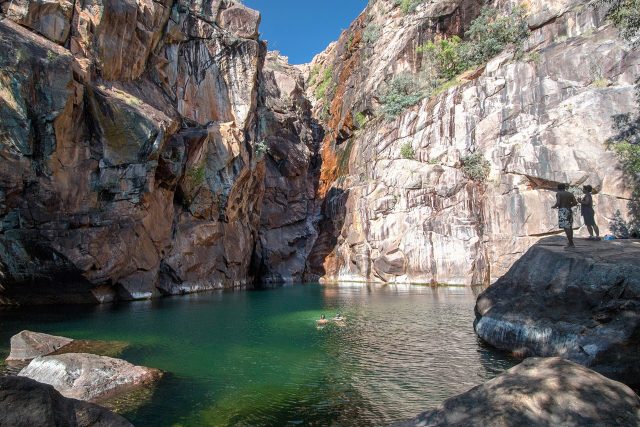
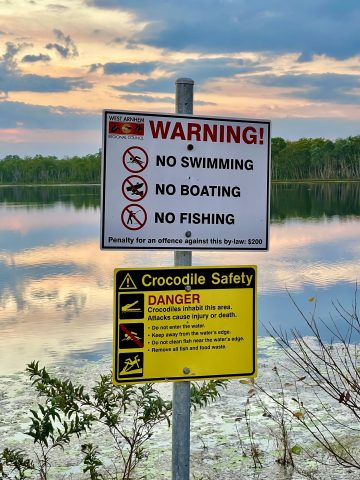
Jabiru Bowling Club might not be the first place that comes to mind when you think of Australia’s Top End, but in this small town carved out of the vastness of Kakadu National Park, it’s exactly the kind of spot that quietly holds everything together. Jabiru itself is better known for its dramatic landscapes—waterfalls tumbling into plunge pools, ancient rock art that tells stories older than memory, and wetlands teeming with birds and crocodiles. Yet for those who live here, or even just pass through for a while, the bowling club is where the rhythm of the town really plays out.
The club’s story is inseparable from Jabiru’s own. The town didn’t exist before the 1980s, when it was hastily built to house workers for the Ranger Uranium Mine. Back then, it was little more than a cluster of prefab buildings, dusty roads, and the kind of heat that doesn’t let up, even after dark. The bowling club came later, once it became clear that people needed somewhere to gather beyond the mine site or the pub. With Darwin over two hundred kilometres away, isolation makes community spaces like this essential. It’s not just about the game; it’s about having a place where the town can breathe.
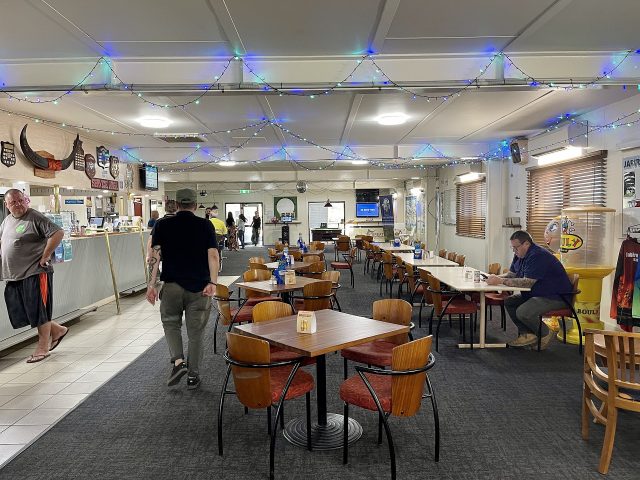
From the outside, the club is as unassuming as the rest of Jabiru. A single-story building with a wide veranda, painted in light colours to deflect the sun, it blends into the landscape without fuss. Inside, the space is simple: a few bowling lanes, a bar, and a handful of tables where people can sit with a cold drink. There’s no grand design, no polished luxury—just the kind of comfort that comes from familiarity. The walls are lined with wooden panels, the noticeboard is cluttered with old photos, and shelves hold trophies that have seen better days. It’s the kind of place that feels lived-in, not because it’s fancy, but because it’s been part of people’s lives for decades.
For Jabiru, the bowling club is far more than a place to roll a ball down a lane. It’s where weddings and birthdays are celebrated, where the end of a workweek is marked with a beer and a laugh, and where the occasional live music night or fundraiser brings everyone together. In a town with few other gathering spots, the club fills a gap, offering a space to catch up with neighbours, swap stories, or just unwind. For those who work fly-in-fly-out shifts at the mine or in Kakadu’s tourism industry, it’s a touchstone—a place that feels like home after days or weeks away.
The bowling here isn’t the slick, high-tech kind you’d find in a city. The lanes are basic, the scoring is often done by hand, and the players don’t take it too seriously. For many, it’s just an excuse to be together, not a competition. You’ll see families with kids running around, groups of friends joking between turns, and regulars who treat the club like a second living room. On scorching afternoons, when the heat outside is relentless, the cool interior becomes a refuge, a place to escape the sun and the dust.
Despite its modest appearance, the Jabiru Bowling Club plays a vital role in keeping the town’s spirit alive. Jabiru’s existence is tied to industries that bring people in and out—mining, tourism, seasonal work—and in that kind of transient community, the club is one of the few constants. It doesn’t matter where you’re from or what you do for a living; once you walk through the door, you’re part of the fabric of the place. That sense of belonging is why the club has endured, even as similar spots in other towns have faded away.
For travellers passing through, the bowling club might not seem like an obvious stop. There are no sweeping vistas or grand historical sites to draw the crowds. But if you want to understand what life in this corner of Australia is really like, it’s worth stepping inside. Maybe you’ll catch a game in progress, the sound of laughter and clinking glasses filling the air, or the smell of barbecued food drifting from the kitchen. Maybe you’ll strike up a conversation with a local who’s lived here for years, or a mine worker just back from a long shift. In that moment, Jabiru stops being just another dot on the map and becomes a place with its own pulse, its own stories—unremarkable at first glance, but deeply human.