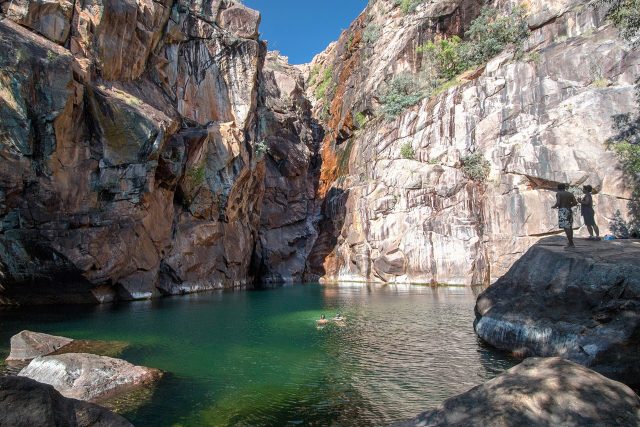
Jabiru sits quietly in Australia’s far north, a small town best known as the gateway to Kakadu National Park. Yet even here, away from the usual tourist trails, there’s a place where the continent’s wild heart beats strongest. The Jabiru Wildlife Centre isn’t a zoo or a museum in the traditional sense. It’s more like an invitation—an opportunity to step into the natural world as a guest rather than an observer. There are no cages or artificial enclosures, just landscapes that mirror the surrounding bush, where animals move freely and visitors are encouraged to watch, listen, and learn.
The centre’s origins are tied to the region’s complex history. In the 1970s, when uranium mining began in Kakadu, Jabiru grew from a remote outpost into a company town for miners. But alongside industrial development came a growing awareness of the park’s fragile ecosystems. The wildlife centre emerged as a way to protect and showcase the area’s biodiversity without disrupting it. Today, it serves as both an educational space and a quiet reminder of how easily human activity can tip the balance between progress and preservation.
The architecture here is deliberately understated. Low wooden buildings with roofs made from local materials blend into the landscape, allowing the focus to remain on the animals and their habitats. Walking paths wind through stands of eucalyptus and past termite mounds, while information boards offer insights without overwhelming visitors with facts. There are no flashy signs or intrusive directions—just a sense of being in a place where nature sets the pace.
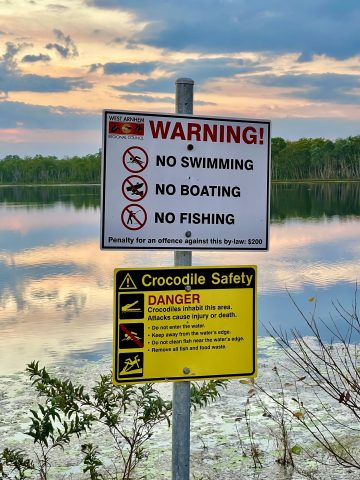
Kakadu’s most famous residents, the saltwater crocodiles, are a major draw. In specially designed ponds, you can see everything from young crocs to massive males stretching over six metres long. But the centre is home to far more than just reptiles. Goannas lurk in the undergrowth, parrots perch on branches, and at dusk, flying foxes take to the sky. Birdwatchers will find plenty to admire, from rainbow lorikeets to wedge-tailed eagles and the elusive black cockatoo. Each animal here is part of a larger ecosystem, and the centre does a good job of showing how these connections work.
One of the most intriguing parts of the centre is the nocturnal house. As daylight fades, many of Kakadu’s creatures come to life, and this space offers a rare glimpse into their nighttime world. Bats, quolls, and owls move through dimly lit enclosures, revealing a side of the park most visitors never see. It’s a reminder that even after dark, the bush is full of activity—just on a different schedule.
Beyond its role as a visitor attraction, the centre plays an important part in conservation. Researchers study animal behaviour here, and injured or orphaned wildlife often find refuge within its boundaries. Some animals are rehabilitated and released back into the wild, while others, unable to survive on their own, remain as permanent residents. The staff take pride in these stories, and it shows in the way they talk about the animals—with care, respect, and a deep sense of responsibility.
The centre also offers a window into Indigenous culture. For tens of thousands of years, Aboriginal people have lived in harmony with Kakadu’s landscapes, and their knowledge of the land is unparalleled. Visitors can join workshops on traditional crafts, hear Dreamtime stories, or learn how plants were used for food, medicine, and tools. These experiences help bridge the gap between modern visitors and the people who have called this place home for generations, showing how deeply culture and nature are intertwined.
Jabiru’s wildlife centre isn’t the kind of place that leaves you with a camera roll full of dramatic photos. There are no thrill rides or staged performances, just quiet moments of connection. In a world where wild spaces are shrinking, places like this take on a special significance. They don’t just show you animals—they ask you to slow down, pay attention, and consider your own place in the natural world. That’s why a visit here feels less like entertainment and more like a small but meaningful encounter with something much larger than yourself.