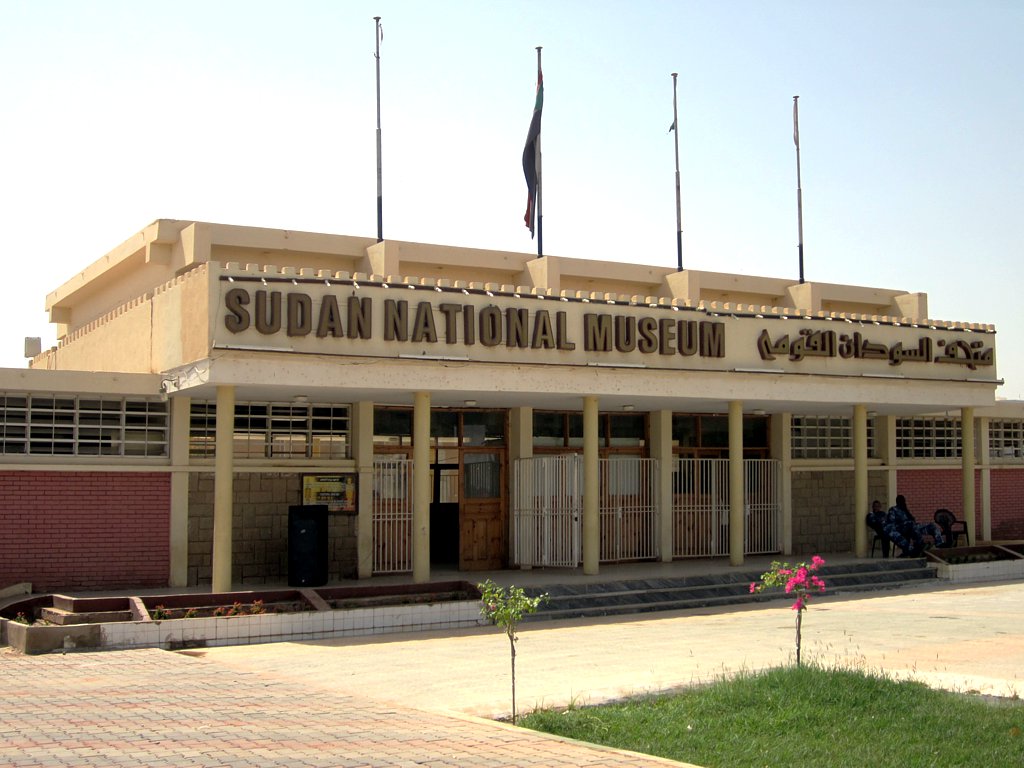
The National Museum of Sudan sits quietly along the banks of the Nile in Khartoum North, a place where the country’s layered history feels almost tangible. Unlike grand museums in more tourist-heavy cities, this one doesn’t announce itself with flashy facades or crowds of visitors. Instead, it offers something more subdued—a chance to piece together Sudan’s past through artifacts that have survived centuries of shifting kingdoms, foreign rule, and the slow march of time.
The museum’s collection spans millennia, from the earliest traces of human settlement to the rise and fall of ancient civilizations that once flourished along the Nile. One of its most striking features is the relocated temples of Buhen and Semna, rescued from the rising waters of Lake Nasser when the Aswan High Dam was built. These structures, originally part of Nubian fortresses, were carefully dismantled and reassembled here, their weathered stones standing as silent witnesses to a time when this region was a crossroads of trade and power. Walking through them, you can almost hear the echoes of ancient rituals and the murmur of merchants haggling over goods.
Inside the main building, the exhibits unfold in a way that feels more like a conversation than a lecture. The displays on the Kingdom of Kush, which once rivaled Egypt in influence, are particularly compelling. Statues of Kushite kings, their faces carved with a mix of strength and serenity, hint at a culture that was both fiercely independent and deeply connected to its neighbors. The museum also holds a remarkable collection of Meroitic artifacts, including delicate jewelry, pottery, and the enigmatic Meroitic script, which remains only partially deciphered. These objects suggest a society that was sophisticated in its artistry and complex in its beliefs, yet much of its story is still waiting to be uncovered.
Beyond the ancient world, the museum doesn’t shy away from Sudan’s more recent history. Exhibits on the medieval Christian kingdoms of Nubia, with their distinctive frescoes and crosses, reveal a period when the region was a center of faith and learning. Later displays trace the arrival of Islam, the rise of the Funj Sultanate, and the turbulent 19th century, when Sudan became a battleground for colonial ambitions. The artifacts from this era—weapons, documents, and personal items—paint a picture of resilience and adaptation, even as outside forces sought to reshape the country.
What makes the National Museum of Sudan feel different from many others is its unpretentiousness. There are no high-tech interactive displays or dramatic lighting to guide your experience. Instead, the focus remains on the objects themselves, each with its own quiet story. The building, a modest structure with high ceilings and wide corridors, allows the artifacts to breathe. On a quiet afternoon, it’s easy to linger in front of a case of ancient tools or a faded manuscript, letting the weight of history settle in.
The museum’s location in Khartoum North, away from the bustle of central Khartoum, adds to its sense of being a hidden gem. The area around it is unassuming—dusty streets, a few small shops, and the ever-present Nile flowing nearby. There’s no grand plaza or tourist infrastructure, which can make a visit feel like a discovery rather than a checklist item. For those who take the time to explore, the museum offers a rare opportunity to see Sudan not just as a place on a map, but as a living thread in the broader tapestry of human civilization.
It’s worth noting that the museum, like many cultural institutions in Sudan, operates with limited resources. Some exhibits may feel sparse or in need of updating, and the labels can be brief. But this only adds to the sense that the museum is a work in progress, much like the country itself. The gaps in the displays invite questions rather than providing all the answers, and that’s part of the experience. Here, history isn’t neatly packaged—it’s something to be pieced together, one artifact at a time.
For anyone with an interest in the ancient world, the National Museum of Sudan is a place that lingers in the mind long after the visit. It’s not just about the objects on display, but the stories they represent—stories of kingdoms that rose and fell, of cultures that blended and clashed, and of people who shaped a land that has always been more than it seems. In a country often overlooked by travelers, the museum stands as a reminder that Sudan’s past is as rich and complex as any other, waiting to be explored.