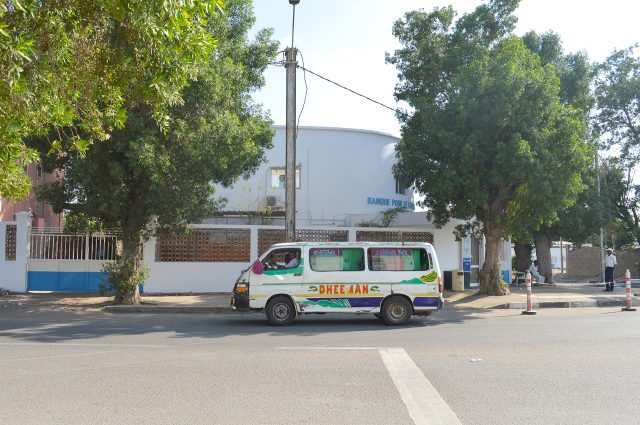
The National Museum of Djibouti sits quietly in the heart of the capital, a place where the country’s layered past feels almost tangible. Housed in a former French fort built in the late 19th century, the building itself is a relic of Djibouti’s colonial era, its thick stone walls and narrow windows a reminder of its original purpose as a defensive stronghold. The architecture carries the weight of history—local volcanic rock, weathered by time, and a layout designed for protection rather than comfort. Today, the fort no longer guards against invaders, but it still stands as a guardian of sorts, preserving the stories of the people who have called this land home for generations.
Inside, the museum’s modest collection offers a glimpse into the lives of Djibouti’s two dominant ethnic groups, the Afar and the Issa. The exhibits are small but telling: handwoven baskets, intricately carved wooden tools, leather water carriers, and jewelry made from beads and metal. These objects aren’t just artifacts behind glass—they’re everyday items that once held practical and cultural significance. A worn saddle speaks of nomadic journeys across arid landscapes, while a clay pot hints at meals shared under the shade of acacia trees. The museum doesn’t romanticize these traditions; it simply presents them as they were—functional, necessary, and deeply tied to the land.
One of the most compelling sections is devoted to Djibouti’s ancient past. Archaeological finds, including stone tools and fragments of rock art, reveal that this region was inhabited long before recorded history. The artifacts, some dating back thousands of years, suggest a time when the climate was far less harsh, when lakes and grasslands supported communities of hunter-gatherers. Nearby, displays of pottery shards and remnants of early settlements found near Lake Abbe and other sites paint a picture of a landscape that has changed dramatically over millennia. It’s a humbling reminder that the Djibouti of today—dry, rugged, and often overlooked—was once a very different place.
The museum also turns its attention to the country’s natural environment, which is far more diverse than many realize. A small but well-curated exhibit features taxidermied animals native to the region: the graceful gazelles that still roam the plains, the ostriches that once thrived here, and the hyenas that lurk in the shadows of the desert. Marine life is represented too, a nod to Djibouti’s strategic position along the Gulf of Aden and the Bab-el-Mandeb Strait. The displays also highlight the country’s dramatic geology—volcanic formations, salt flats, and the otherworldly landscapes of Lake Assal, one of the saltiest bodies of water on Earth, and Lake Abbe, with its towering limestone chimneys. These natural wonders are as much a part of Djibouti’s identity as its cultural heritage.
Opened in 1989, the museum arrived at a pivotal moment in Djibouti’s history. The country had only recently gained independence from France, and there was a pressing need to reclaim and preserve its identity. Many traditions were fading as urbanization and modernization took hold, and the museum became one of the few places where they could be documented and celebrated. It wasn’t an attempt to freeze the past in time but rather to acknowledge its influence on the present. Even now, the museum serves as an educational space, particularly for younger Djiboutians who may have little connection to the nomadic or rural ways of life that once defined the country.
A visit here is a quiet affair. There are no grand halls or flashy multimedia displays, just a series of rooms where the past feels close enough to touch. The wooden floors creak underfoot, and sunlight filters through the narrow windows, casting long shadows over the exhibits. Sometimes, a group of schoolchildren will pass through, their voices hushed as they listen to a guide explain the significance of a particular object. Other times, a lone traveler might wander the halls, pausing to study a display of traditional clothing or a map of ancient trade routes. The museum doesn’t demand attention; it invites contemplation.
It’s worth noting that the museum’s hours can be unpredictable, so checking ahead is wise. But if you do find it open, the experience is unlikely to be crowded. This isn’t a place that draws large tourist groups, and that’s part of its charm. There’s no pressure to rush, no need to follow a prescribed path. You can linger over a display of ancient tools or sit for a moment in the courtyard, listening to the sounds of the city beyond the fort’s walls. The museum doesn’t try to impress with scale or spectacle; its strength lies in its authenticity.
For travelers who come to Djibouti seeking more than just its famous dive sites or the stark beauty of its deserts, the National Museum offers a starting point for understanding the country’s deeper layers. It doesn’t provide all the answers—Djibouti’s history is too complex, too intertwined with regional politics and global trade, for that. But it does something perhaps more valuable: it sparks curiosity. Why did people settle here thousands of years ago? How did the Afar and Issa adapt to such a harsh environment? What does it mean to call a place like Djibouti home? The museum doesn’t offer easy conclusions, but it leaves you with questions worth exploring long after you’ve stepped back out into the heat of the city. And maybe that’s the point—not to tell you what to think, but to make you wonder.