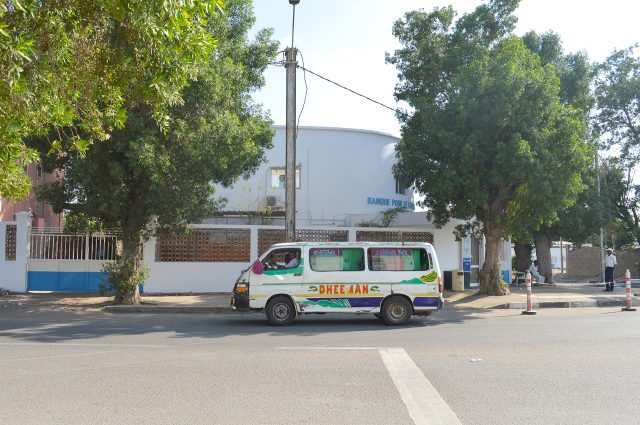
Hamli Mosque sits quietly in the heart of Djibouti City, a place that doesn’t demand attention but lingers in memory long after you’ve walked away. Surrounded by the hum of daily life—narrow streets, low-rise buildings, and the occasional call of a street vendor—it feels like a natural part of the landscape, though its presence is distinct in its understated way. The city itself is a crossroads of African and Arabian influences, and the mosque reflects that blend without trying too hard to stand out.
Built in the mid-20th century, Hamli isn’t an ancient monument, nor does it claim to be. There are no gilded domes or intricate tilework here, nothing that would mark it as a grand historical site. Instead, its charm lies in its simplicity, in the way it fits seamlessly into the rhythm of the city. The whitewashed walls, the modest minaret with its traditional finial, and the small courtyard all contribute to an atmosphere of calm, a quiet contrast to the bustle just beyond its walls.
For the local Muslim community, the mosque is more than just a place of worship. It’s a gathering spot, a space where people come together to pray, yes, but also to talk, to share news, and to connect. In Djibouti, where Islam is woven into the fabric of daily life, mosques like Hamli serve as anchors for social interaction. Here, religious rituals coexist with community events—lectures, small celebrations, and gatherings that reinforce the bonds between neighbors.
The architecture of Hamli is typical of the region, designed with both tradition and practicality in mind. The low ceilings, broad arches, and minimal decoration are hallmarks of Islamic design adapted to the local climate. Djibouti’s heat can be relentless, and buildings here are often constructed to keep interiors cool. Thick walls, small windows, and shaded courtyards help mitigate the midday sun, making the mosque a refuge from the heat as much as a spiritual one.
For visitors, Hamli isn’t the kind of place that makes it onto postcards or into guidebooks. There are no crowds of tourists, no souvenir stalls, no grand announcements. Instead, there’s a sense of authenticity, a glimpse into the everyday life of the city. If you’re lucky, you might see locals preparing for prayer, children playing in the courtyard, or elders chatting in the shade. The mosque doesn’t perform for an audience; it simply exists, as it has for decades.
It’s worth remembering that mosques are first and foremost places of worship, and Hamli is no exception. Visitors should dress modestly—women covering their shoulders and legs, men avoiding shorts—and be mindful of prayer times, when entry may be restricted. Even from the outside, though, the mosque has a presence. The late afternoon light, in particular, casts a warm glow on the white walls, stretching shadows across the courtyard in a way that feels almost meditative.
Hamli won’t impress you with grandeur or spectacle. What it offers instead is something quieter, something that feels real. It’s the kind of place that rewards those who travel not just to see, but to experience—to notice the small details that often go unmentioned in travel guides. In a city where the past and present coexist, the mosque stands as a reminder that some of the most meaningful moments in a journey are the ones that aren’t staged or scripted. They’re the ones that unfold naturally, in places like this.