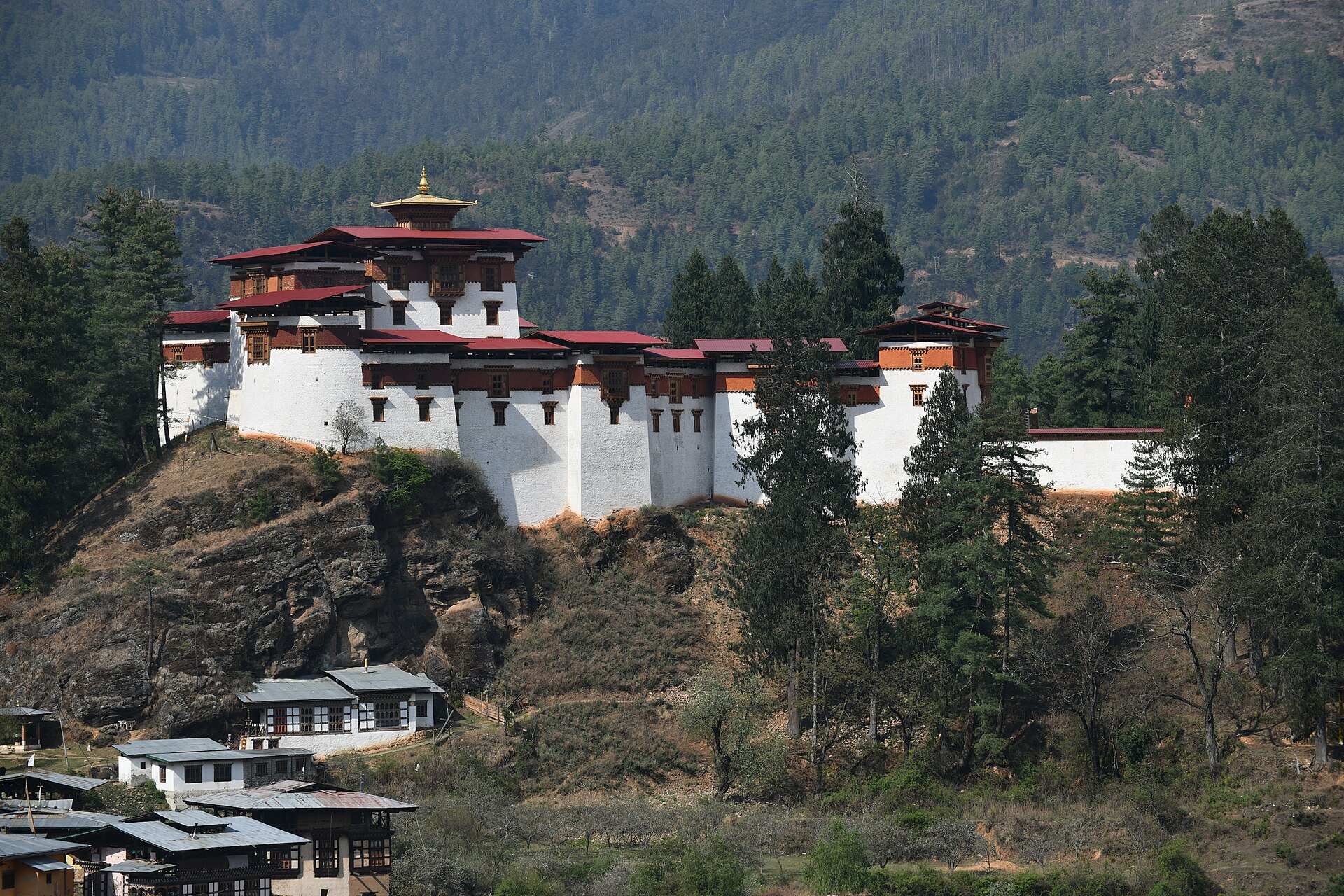
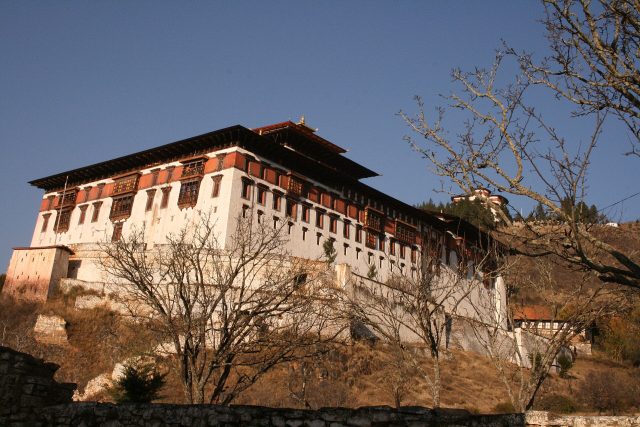
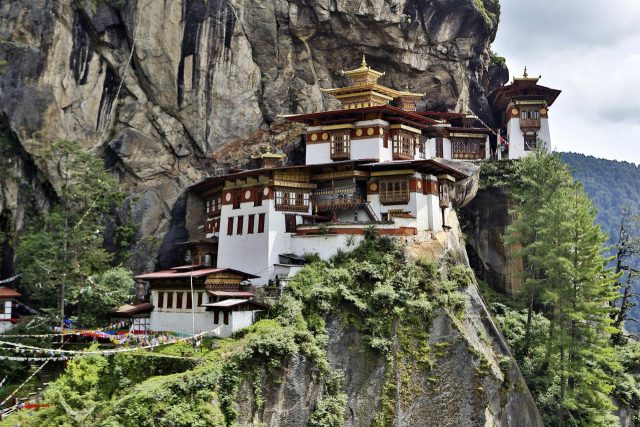
Perched on a rocky cliff above the Paro Valley, Drukgyal Dzong looks like part of the mountain. Its walls, built from stone and clay, match the gray rock, with red bands beneath the temple roofs adding color. No roads lead here—only a narrow footpath winds through pine and rhododendron forests, taking about an hour to walk. The climb is steady, and with each step, the silence grows deeper, almost tangible.
The dzong was built in the 17th century by Zhabdrung Ngawang Namgyal to defend against Tibetan invasions. He chose the site after dreaming of a dragon descending onto this ridge—*Druk* means dragon, *dzong* means fortress. Over time, its military role faded, and it became a spiritual center where monks study Buddhist texts and perform rituals. The fortress that once repelled invaders now preserves tradition.
The architecture follows Bhutanese dzong style, with its own distinct features. The main building, the *utse*, rises four stories, its walls tapering upward. Inside, you’ll find meditation halls, a library of ancient manuscripts, and sanctuaries with statues of Buddhas and bodhisattvas. One chamber holds murals depicting scenes from Padmasambhava’s life, the colors faded but the lines still sharp.
Life here follows ritual. Monks wake before dawn for meditation, then prayers, study, and labor. There’s no electricity; oil lamps light the halls at night. Winters are cold, but summers stay cool. Outsiders rarely stay overnight, but those who do remember the silence broken only by prayer flags in the wind.
From the terrace at the main entrance, the Paro Valley spreads below. On clear days, the Paro Chhu river winds through rice fields and forests. It’s easy to imagine sentries watching for enemies. The valley looks peaceful now, yet the remoteness remains.
This isn’t a typical tourist attraction. No souvenir stalls, guided tours, or signs dictate behavior. Visitors are met with quiet reserve, and those who show respect may explore the inner chambers. Photography inside is forbidden. No camera could capture the light through narrow windows, the scent of juniper during rituals, or the echo of prayers.
Drukgyal Dzong is part of Bhutan’s history. In 1907, Ugyen Wangchuk was crowned the first king here. The dzong has been restored but retains its original character. It remains an active religious site, and for Bhutanese, it’s a place of pilgrimage—a site to honor ancestors or sit in stillness.
The journey to the dzong matters. The trail starts near Shana village, where you can hire a horse. Stupas, prayer wheels, and shrines mark the path. Halfway up, a teahouse offers rest and butter tea. Locals say the trail was once dangerous, but now it’s safe—though winter snow can make the climb hard. Even in bad weather, the dzong emerging from mist makes it worth the effort.
Drukgyal Dzong isn’t a place for rushing. A full day leaves you feeling you’ve missed something. Maybe because the dzong isn’t just to observe—it’s to experience. Within its walls, time slows, and even your thoughts quiet. When you descend, the valley below feels sharper, more hurried. You realize the dzong lingers with you.