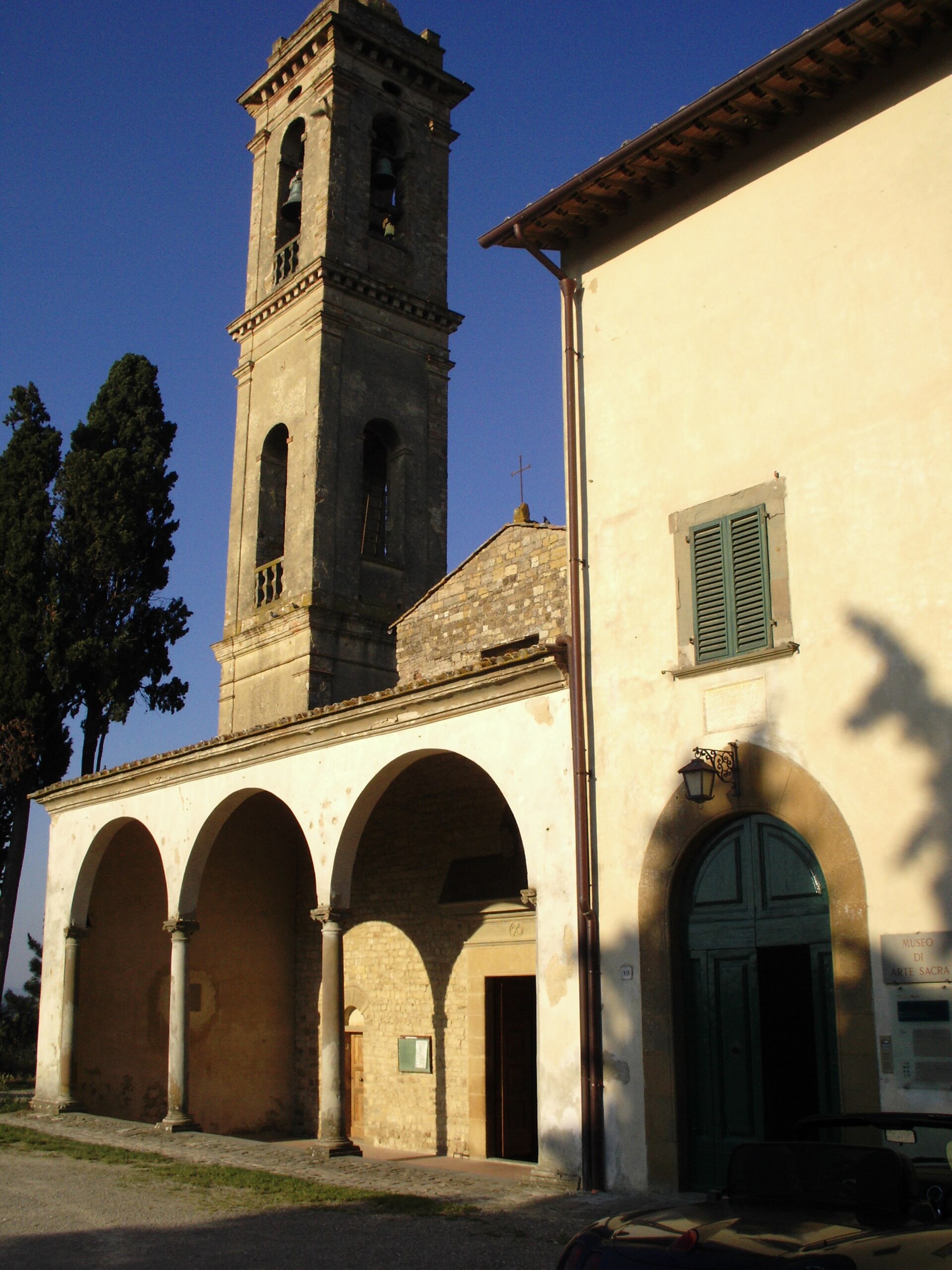
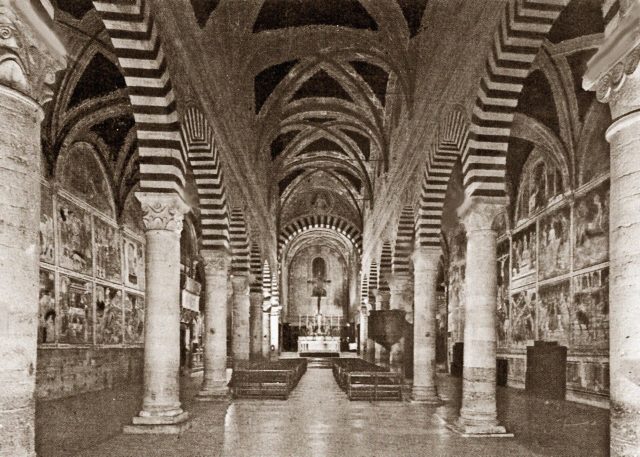
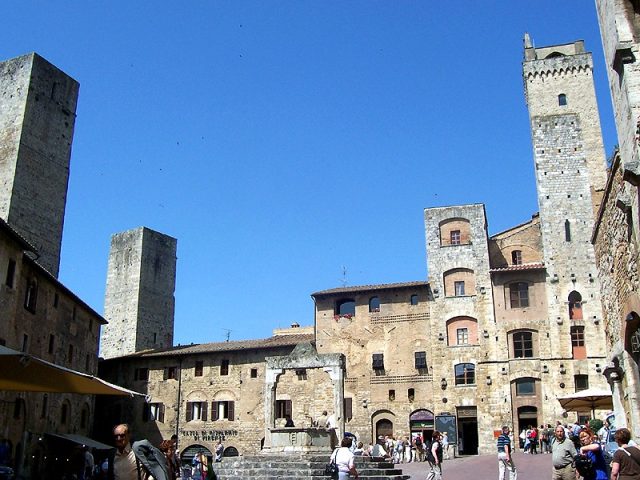
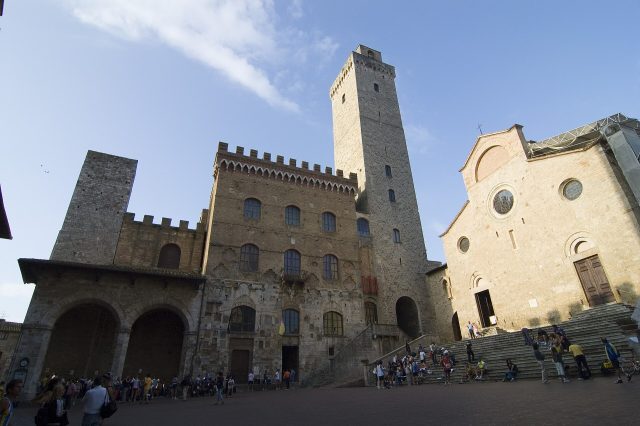
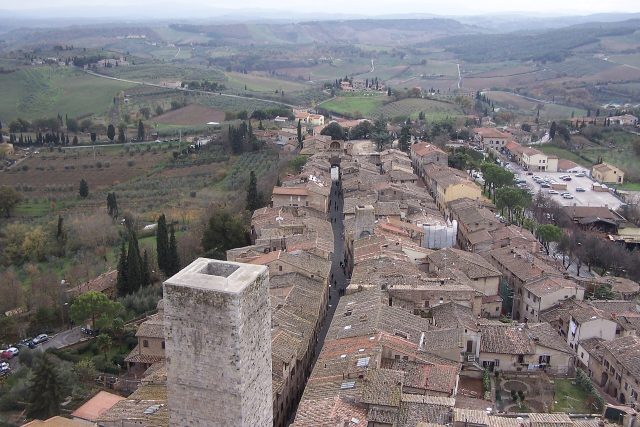
San Gimignano feels like a place where the Middle Ages never truly ended. Its narrow streets wind between tall stone towers, each one a silent testament to the wealth and ambition of Tuscany’s medieval merchants. The town rises from the Chianti hills like a mirage, its skyline unchanged for centuries, its churches and palaces still whispering stories of faith and artistry. Among these stories, the Museum of Sacred Art holds a quiet but essential place. Housed in what was once the Hospital of Santa Fina, it preserves the spiritual and creative legacy of a town where devotion and craftsmanship were inseparable.
The building itself is a work of art, its origins stretching back to the 13th century. The hospital was founded to care for pilgrims and the poor, its thick walls and vaulted ceilings built to endure. Over time, the structure absorbed elements of Gothic and early Renaissance design—narrow windows with delicate tracery, arched doorways, and ceilings that seem to float above the rooms. Today, these spaces no longer shelter the sick but instead cradle the paintings, sculptures, and religious objects that once adorned San Gimignano’s churches and convents. Walking through its halls feels like stepping into a different era, where time moves at the pace of candlelight.
The museum’s collection spans several centuries, from the late Middle Ages to the height of the Renaissance. Many of the works were created by local artists, their styles shaped by the broader currents of Tuscan art. The influence of the Sienese school is particularly strong here—its painters were known for their rich colors, graceful figures, and an almost mystical sense of devotion. Their altarpieces and frescoes don’t just depict saints and biblical scenes; they invite contemplation, their soft lines and luminous hues drawing the viewer into a world where the sacred feels tangible. Among the most striking pieces are those that tell the story of Saint Fina, the town’s beloved patron.
Fina’s life is woven into the fabric of San Gimignano. According to legend, she spent her days lying on a wooden board, enduring illness with extraordinary patience. Her faith was said to protect the town, and after her death, miracles were attributed to her intercession. The museum holds a series of paintings illustrating her life—her childhood, her suffering, and the wonders that followed her passing. These works are more than religious art; they’re historical documents, showing how faith was expressed through images and how a community’s identity was shaped by its saints. The colors are still vivid in places, the gold leaf catching the light as it must have done centuries ago.
Sculpture plays an equally important role in the collection. Wooden figures of saints, carved with remarkable skill, seem almost alive. Some still bear traces of their original paint and gilding, their faces worn smooth by time but no less expressive. These statues were meant to inspire awe, to make the divine feel present in the everyday. The craftsmanship is evident in every detail—the folds of a robe, the curve of a hand, the serene or sorrowful expressions that convey emotion without a word. Many were created for the town’s churches, where they stood as silent witnesses to generations of worshippers.
Beyond paintings and sculptures, the museum offers a glimpse into the practical side of medieval devotion. Liturgical objects—chalices, censers, vestments—fill the display cases, their materials speaking to the wealth and piety of the town. Some are simple, their silver surfaces polished by centuries of use. Others are lavish, adorned with enamel, gemstones, or intricate embroidery. A priest’s robe, stitched with gold thread, might have been worn during a feast day, its weight and richness a sign of reverence. These objects weren’t just tools of worship; they were offerings, each one a testament to the care and skill of those who made them.
What makes the museum special is its atmosphere. Unlike the crowded piazzas outside, its rooms are quiet, the air still. Sunlight filters through the old windows, casting shifting patterns on the stone floors. There’s no rush here, no need to hurry from one exhibit to the next. Instead, the space invites lingering—a moment to study the brushstrokes on a painting, to trace the grain of a wooden statue, to imagine the hands that once held a silver chalice. The building itself seems to breathe, its thick walls holding centuries of prayers and whispers.
San Gimignano is often called an open-air museum, and in many ways, it is. But the Museum of Sacred Art adds something deeper. It reveals how art and faith shaped the town’s identity, how local artists poured their skill into works meant to inspire and console. The collection isn’t just a record of the past; it’s a conversation between eras, a reminder that beauty and devotion are timeless. Here, the Middle Ages don’t feel distant. They feel close enough to touch.