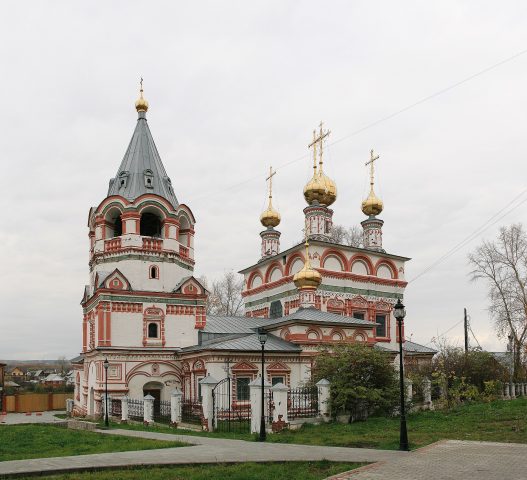
Solikamsk owes its name to salt, and for centuries, this mineral shaped the life of the entire region. The town emerged in the early 15th century as a small settlement along the Kama River, but within a hundred years, it had grown into one of Russia’s most important salt-producing centers. Here, salt wasn’t just a commodity—it was the foundation of the local economy, a resource so vital that entire industries and trade routes revolved around it. The process was labor-intensive: brine was pumped from deep underground, then boiled in vast pans called *varnitsy* until the water evaporated, leaving behind gleaming crystals. This method sustained not only the town but the entire country, as salt was essential for preserving food, tanning leather, and even paying taxes in some regions.
The Salt Museum itself is housed in a building that carries its own history. Once the home of the Surovtsev merchants, one of Solikamsk’s most influential families in the 18th century, the structure is a fine example of local architecture. Built from stone and wood, it features thick walls and high ceilings, designed to store not just goods but the secrets of salt production. Inside, the original interiors have been preserved—carved doors, tiled stoves, antique chests, and even part of the cellar where salt was once kept. Walking through these rooms feels like stepping into the past, where deals were struck and fortunes made in the flickering light of oil lamps.
The museum’s exhibits begin with geology, explaining how ancient seas once covered this land, leaving behind vast salt deposits that would later define the region’s fate. Visitors can see samples of salt in different forms—from coarse, glittering crystals to fine, powdery grains—as well as the tools used by salt workers: wooden shovels, iron ladles, and clay vessels for transporting brine. The displays detail the entire process, from drilling wells to pumping brine through wooden pipes and boiling it in enormous pans. It’s a reminder of how much skill and effort went into producing something so ordinary yet indispensable.
One of the most compelling sections of the museum focuses on the people behind the industry. Salt workers toiled for twelve hours a day in the scorching heat of the *varnitsy*, while burlaks hauled barges loaded with salt along the Kama River. Merchants risked their fortunes shipping the precious cargo to distant cities, where it was traded like currency. The museum holds documents from that era—contracts, promissory notes, letters—revealing the high stakes of the salt trade. There are records of theft, too, because salt was so valuable it was guarded like gold. A separate hall is dedicated to the Stroganovs, the powerful dynasty that received royal permission in the 16th century to develop the local salt deposits, effectively creating an industry that shaped the region’s future.
Salt wasn’t just an economic resource; it was woven into the fabric of daily life. The museum displays objects that once played a role in the lives of salt workers: intricately carved wooden salt cellars shaped like birds or animals, clay pots for pickling mushrooms and fish, and old recipes where salt was the key ingredient. There are also traditions tied to salt, like the custom of greeting guests with bread and salt, a practice that persists in Solikamsk to this day. Some families even kept salt passed down through generations as a family heirloom. In one display case, there are coins and medals made from salt, given as gifts to honored guests or awarded for special achievements.
A highlight of the museum is the reconstruction of an old *varnitsa*, a working model that shows how salt was produced centuries ago. At the center of the room stands a massive iron pan, identical to those used in the 17th century. Nearby are wooden vats for brine, pumps, and tools for stirring the crystals. Occasionally, the museum hosts demonstrations where visitors can watch as murky brine slowly transforms into sparkling salt. It’s a mesmerizing process, especially when you consider that this is exactly how people worked hundreds of years ago, relying on skill and patience rather than modern technology.
Solikamsk wasn’t just about salt, though. The museum also explores other crafts and industries that flourished alongside salt production. The surrounding area was rich in gypsum and alabaster, used for construction and decorative items. By the 18th century, the town had its first metallurgical plants, followed by paper mills. The exhibits include samples of their products—old locks, keys, knives, and even books printed on locally made paper. These artifacts serve as a reminder that Solikamsk was more than just a salt capital; it was a hub of industry where different trades intersected and thrived.
Today, the Salt Museum is more than a collection of artifacts—it’s a place where history comes alive. The museum hosts lectures, workshops, and school programs where visitors can try their hand at evaporating salt or carving wooden salt cellars. There’s a small library with books on salt production, geology, and the history of the Urals, as well as an archive of documents used by researchers. Occasionally, descendants of old salt-working families visit, bringing with them stories and heirlooms that add new layers to the museum’s narrative.
Solikamsk has changed over the centuries, but salt remains its defining symbol. The museum ensures that this legacy isn’t forgotten. There’s no exaggeration here, just the quiet power of objects and documents that tell their own story. Walking through its halls, you begin to understand how deeply this town’s history is intertwined with that of the entire country. The salt produced here fed not just the local population but armies, peasants, merchants, and even tsars. While modern methods have replaced the old *varnitsy*, the memory of that era lives on in every exhibit, a testament to the people who turned brine into wealth.