The Eritrean Revolution Museum in Addi Keyh offers a quiet but powerful encounter with the country’s past. Tucked away in a small town in central Eritrea, far from the usual tourist trails, it tells the story of a nation’s struggle not through grand narratives or abstract dates, but through the voices and belongings of those who lived it. The museum doesn’t just document history—it preserves the human experiences that shaped it, making the past feel immediate and personal.
The exhibits focus on Eritrea’s thirty-year fight for independence, a period marked by resilience and sacrifice. Visitors will find weapons, photographs, and personal items that belonged to fighters, each piece contributing to a larger story of how a small nation resisted occupation. The years between 1961 and 1991 take center stage, when Eritrean rebels waged a guerrilla war against Ethiopian forces. These decades were brutal, but they also forged a sense of national identity that still defines the country today. The museum doesn’t shy away from the hardships, presenting them with a raw honesty that leaves a lasting impression.
The building itself is unassuming, blending into the town’s quiet streets. Inside, the space is designed to draw visitors into the atmosphere of the era. Dim lighting casts a somber mood, while walls lined with photographs, battle maps, and handwritten slogans create a sense of intimacy. There’s no pomp or spectacle here—just a respectful acknowledgment of those who fought and those who didn’t survive. The exhibits feel more like a private collection than a formal display, as if the curators wanted to ensure the stories weren’t lost to time.
One of the most moving sections is dedicated to the personal accounts of ordinary people who became part of the struggle. Beside faded photographs and worn documents are brief narratives of individuals whose names might not be widely known but whose courage is legendary in Eritrea. There’s the woman who lost her family in a bombing raid yet continued to fight, or the teenager who joined the rebels at fourteen. These stories aren’t polished or sentimentalized; they’re presented as they were lived—messy, painful, and deeply human. It’s this unvarnished truth that makes the museum so compelling.
Beyond the military history, the museum also explores how people maintained their culture and daily lives amid war. Traditional clothing, household items, and musical instruments are on display, alongside reconstructions of makeshift rebel camps. Photographs show children playing between air raids, women cooking over open fires, and elders sharing stories by lamplight. These glimpses into everyday survival humanize the struggle, revealing how people held onto their dignity and traditions even in the darkest times.
Addi Keyh wasn’t chosen as the museum’s location by chance. During the war, the town served as a key stronghold for the rebels, and some of the most pivotal battles took place in its vicinity. The local community still carries the memories of that era, and many residents are willing to share their experiences with visitors. If you’re fortunate, you might meet a veteran who fought in those years, their firsthand accounts adding another layer to the museum’s exhibits. Here, history isn’t confined to glass cases—it’s alive in the voices of those who remember.
For travelers, the museum offers a rare perspective on Eritrea, one that goes beyond the usual tourist sites. There are no crowds, no souvenir stalls, just a quiet space where the past feels present. It’s not a place for quick selfies or superficial impressions; it’s for those who want to understand the country on a deeper level. The lack of fanfare only makes the experience more powerful—this is history without embellishment, told with quiet reverence.
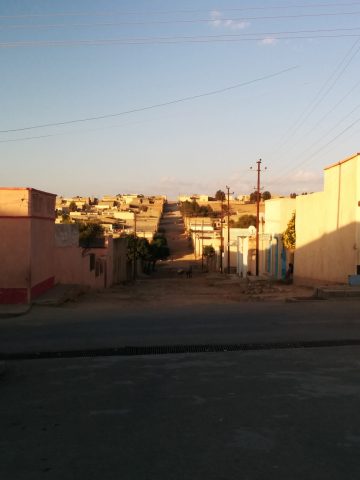
A visit to the museum can easily take a couple of hours, but it’s worth lingering longer if you have the chance, especially if you can speak with locals. Afterward, a walk through Addi Keyh reveals a town that has moved on but hasn’t forgotten. The streets are narrow, the buildings modest, and the market bustles with the same rhythms it has for decades. There’s no tourist infrastructure here, just the unfiltered reality of life in central Eritrea. It’s a place where the past and present coexist, each shaping the other in subtle ways.
The Eritrean Revolution Museum isn’t just a collection of artifacts—it’s a memorial to those who fought and a reminder of the cost of freedom. For Eritreans, it’s a sacred space, a place to honor the dead and reflect on the sacrifices that made the country possible. For outsiders, it’s an opportunity to see Eritrea beyond the headlines, to grasp the depth of its history and the resilience of its people. In the end, it’s these kinds of places that turn travel into something more meaningful—a chance to listen, learn, and carry a piece of someone else’s story with you.