
Addi Keyh
Eritrea · 8 places
Photo: Sailko, CC BY 3.0
Addi Keyh
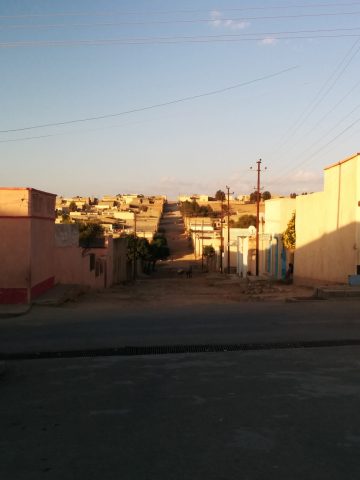
Addi Keyh is a place where time moves differently. In northern Eritrea, away from the usual tourist routes, it offers a quiet rhythm of life unchanged for decades. The streets are narrow and dusty, lined with low buildings that blend into the dry landscape. No grand attractions or crowds—just the unhurried pace of a small town.
The land around Addi Keyh is rocky and vast. Hills rise against the horizon, and semi-arid plains stretch endlessly. The climate is harsh, with intense heat and rare rains that turn roads to mud. Yet people here live in step with the land. Shepherds guide flocks along the outskirts, and women carry clay pots to fetch water—scenes that feel unchanged by time.
Addi Keyh’s history is tied to Eritrea’s colonial past. In the early 1900s, it was an Italian administrative hub. Some buildings still have flat roofs and narrow windows, their facades worn by years. A few older villas retain wrought-iron balconies, remnants of when the town was a key stop in the region. After independence, it remained a local center for trade and culture, though it never expanded as its rulers once imagined.
The markets define the town’s rhythm. Stalls sell fresh produce, spices, handwoven fabrics, and pottery. Vendors share stories about their goods, their voices blending with the hum of the crowd. There are no upscale restaurants, but small eateries serve teff bread, spicy stews, and strong Eritrean coffee.
This isn’t a place for luxury or entertainment. It’s for travelers who want to see Eritrea as it is—without polish or crowds. The quiet, the heat, and the warmth of locals make it what it is. Addi Keyh won’t be the highlight of most trips, but that’s why it matters. It’s real, unfiltered, and all the more meaningful.
See & Do
All of them

Places on the map
Marker colour follows the categoryClimate and weather
Detailed weather: Addi Keyh- Average temperature
- 18 °C
- Precipitation per year
- 603 mm
Average air temperature
°C
16
17
18
20
21
21
17
17
18
18
17
16
Jan
Feb
Mar
Apr
May
Jun
Jul
Aug
Sep
Oct
Nov
Dec


