Keila Open-Air Museum feels like a place where time has settled into a slower rhythm. Tucked on the edge of a quiet Estonian town, surrounded by trees and open space, it offers more than just a glimpse into the past—it lets you step into it. Unlike traditional museums with exhibits behind glass, this one unfolds across a wide stretch of land, where every building, path, and object carries the weight of real lives lived long ago.
The heart of the museum is a collection of historic farmsteads brought here from different parts of Estonia. Some belonged to prosperous farmers, their sturdy log houses built to last through harsh winters. Others are modest cottages, their low ceilings and simple furnishings telling stories of families who worked the land with little to spare. Barns, threshing houses, and granaries stand nearby, each serving a purpose in the daily rhythm of rural life. Inside the homes, you’ll find the things people used every day—wooden spoons, handwoven textiles, tools worn smooth by years of use. The most striking details are often the smallest: a cast-iron stove still blackened from decades of fires, a loom set up as if someone just stepped away, or faded photographs pinned to the walls, as though the people in them might walk back in at any moment.
One of the most impressive structures is a farmstead from Läänemaa, moved here in the mid-20th century. The main house, built from thick logs, feels solid and unshakable, a home meant to shelter generations. Around it, outbuildings stand in their original arrangement—a grain store, a drying shed for flax, a stable where animals once sheltered. Together, they paint a picture of a self-sufficient world where every structure had its role, and nothing was wasted. Walking through them, it’s easy to imagine the sounds of a working farm: the creak of a well rope, the lowing of cattle, the rhythmic thud of a flail beating grain.
Beyond the farmsteads, the museum holds other pieces of Estonia’s rural past. A towering windmill, once a vital part of the landscape, stands with its massive blades still poised as if ready to turn. These mills were scattered across the countryside, grinding grain into flour for bread, the staple of every household. Though it no longer operates, the sheer size of the millstones and the craftsmanship of the wooden gears make it clear how much effort went into something as ordinary as a loaf of bread. Nearby, a blacksmith’s forge and a cooper’s workshop show how tools and containers were made by hand, each piece shaped to fit its purpose.
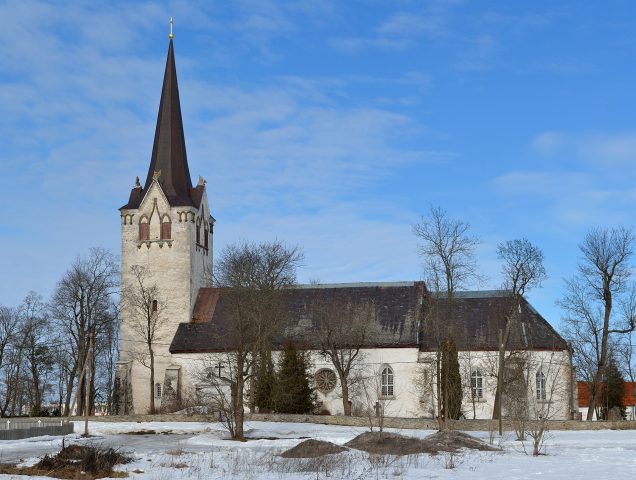
A small wooden church from the village of Harju-Madise adds another layer to the museum’s story. Built in the 18th century, it was once the spiritual center of its community. Today, it still feels like a place of quiet reflection, with its simple altar, worn pews, and an old organ that no longer plays but still holds the echoes of hymns sung long ago. Occasionally, the church hosts small concerts, where the acoustics of the wooden walls give even the softest notes a warm, resonant quality. It’s one of those rare places where the past doesn’t feel distant—just present in a different form.
The museum isn’t just about looking at old things; it’s about experiencing them. In the summer, the grounds come alive with folk festivals, craft workshops, and markets where you can taste traditional foods or watch artisans at work. There’s a sense of continuity here, as if the skills and traditions of the past are still very much alive. In winter, the museum takes on a different mood. Snow drifts over the paths, and the houses seem to huddle closer together, their windows glowing with soft light. It’s easy to imagine how people once gathered around stoves, telling stories or mending tools by the flicker of an oil lamp.
The museum’s layout encourages wandering. There’s no set route, no rush to see everything at once. You might stumble upon a well with its long wooden lever, once the heart of a village’s water supply, or find a small garden where the same vegetables that fed families a century ago are still grown. Some of the buildings are left open, inviting you to step inside and linger. The air smells of wood and earth, and the silence is broken only by the occasional rustle of leaves or the distant call of a bird. It’s a place where you can lose track of time, where the past doesn’t feel like a relic but something tangible, almost within reach.
For those who want to dig deeper, guided tours offer a chance to learn about the details of daily life in different eras. You might hear how families moved their entire homes when they relocated, dismantling the wooden structures and reassembling them elsewhere. Or how light was once measured not in watts but in the flicker of a kerosene lamp, casting long shadows across the walls. Some traditions, like the way bread was baked or linen was woven, were passed down through generations, while others faded as new tools and materials took their place. The guides don’t just explain the objects—they tell the stories behind them, making the past feel personal and real.
What makes Keila Open-Air Museum special is its lack of pretension. There are no grand narratives here, no attempt to romanticize the past. Instead, it feels like a quiet conversation between then and now, a reminder that the way we live today is built on layers of history. The museum doesn’t just preserve buildings; it preserves the sense of a world that was once ordinary but is now extraordinary in its simplicity. Whether you come to learn, to wander, or just to sit on a bench and listen to the wind in the trees, it’s a place that lingers in your memory long after you’ve left.