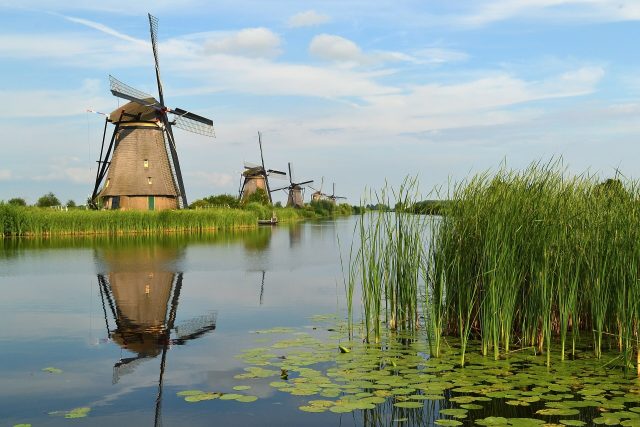
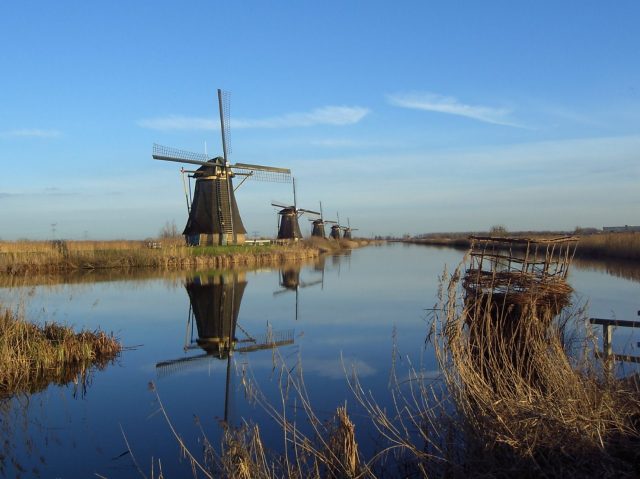
Kinderdijk is one of those rare places where history isn’t just preserved—it’s still alive. The windmills here, those iconic symbols of the Netherlands, aren’t relics behind glass or static monuments. They’re working machines, part of a landscape that has shaped the country for centuries. Walking among them, you can almost hear the creak of wooden gears and the rush of water being pumped away, a reminder of how the Dutch turned swamps into farmland, one gust of wind at a time.
The nineteen windmills of Kinderdijk were built in the 18th century as part of an ingenious drainage system, a solution to a problem that had defined the Netherlands for generations. Before their construction, much of the land here was either underwater or too marshy to farm. The windmills worked together, lifting water from the low-lying polders and channeling it into rivers, making the soil usable. It was an early form of large-scale engineering, a testament to how necessity can drive innovation. Today, the entire system is recognized as a UNESCO World Heritage site, not just for its technical brilliance, but for what it represents—a society learning to coexist with water rather than fight it.
The Miller’s Museum is housed inside one of these windmills, a structure that has barely changed since it was first built. Stepping inside feels like entering a time capsule. The massive wooden gears, still intact, show how wind power was harnessed to turn the sails, driving the pumps below. The millstones, once used to grind grain, sit in the dim light, their surfaces worn smooth by decades of use. Even the living quarters remain, with simple furniture and a hearth that once kept the miller’s family warm. The air smells of aged wood and damp stone, and every floorboard groans underfoot, as if the building itself is telling its story.
Being a miller in Kinderdijk was never just a job—it was a way of life. The work demanded strength, patience, and a deep understanding of the elements. Millers had to know when to unfurl the sails to catch the wind, how to adjust the blades for maximum efficiency, and when to shut everything down before a storm. They were part mechanic, part weather forecaster, and often the only source of medical knowledge in their isolated communities. The museum does more than explain the mechanics; it gives a sense of the daily rhythms of life here. How families lived in these cramped spaces, how they coped with long hours during windy seasons, and how they relied on each other when the weather turned against them.
There’s something magical about seeing the windmills in motion. On certain days, when the wind is just right, the sails are unfurled, and the blades begin their slow, steady turn. The sound is unforgettable—the groan of timber, the rush of air through the canvas, the distant splash of water being moved from one canal to another. It’s easy to imagine the scene centuries ago: carts loaded with grain rolling down the paths, millers shouting instructions over the wind, the constant hum of industry. These moments make history feel tangible, as if the past isn’t something you read about, but something you can step into.
Beyond the windmills, Kinderdijk is a place of quiet beauty. The surrounding landscape is a patchwork of green fields, narrow canals, and winding footpaths that invite long, unhurried walks. In spring, wildflowers dot the meadows, and in autumn, the trees along the waterways turn shades of gold and russet. Winters here can be harsh, but they bring their own kind of magic—when the canals freeze, locals and visitors alike lace up their skates, continuing a tradition that dates back hundreds of years. The pace of life in Kinderdijk is slower, measured by the turning of the windmill blades rather than the ticking of a clock.
What makes Kinderdijk special isn’t just its history, but the way it makes you think about the relationship between people and their environment. The windmills weren’t built as monuments to human achievement; they were practical solutions to a very real problem. They remind us that progress isn’t always about grand gestures—sometimes it’s about finding harmony with the natural world. The Dutch didn’t conquer the water; they learned to work with it, and in doing so, they created a landscape that is both functional and beautiful.
There’s a humility to Kinderdijk that sets it apart from other historic sites. There are no palaces here, no grand cathedrals or battlefields where kings and generals made their mark. Instead, it’s a place that tells the story of ordinary people—farmers, millers, laborers—who shaped the land through persistence and ingenuity. That’s why it resonates. It’s a reminder that history isn’t just about the powerful; it’s also about the quiet, everyday efforts that keep the world turning. And perhaps that’s why Kinderdijk feels so timeless. It doesn’t just preserve the past—it shows how the past is still part of the present.