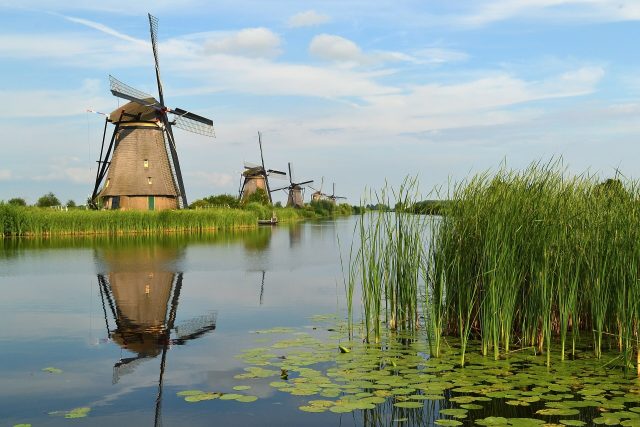
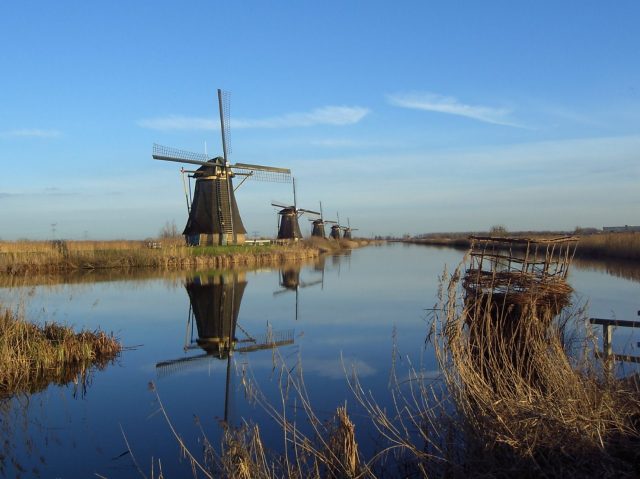
Kinderdijk feels like a place where time moves differently. Nestled in the flat polder lands of the Netherlands, nineteen windmills stand in quiet formation, each one a testament to both engineering and the living history of the country. The Mill Information Centre sits at the heart of this landscape, offering the best starting point for anyone wanting to understand what makes this corner of the Netherlands so distinctive.
The windmills of Kinderdijk were built in the eighteenth century, a time when the Netherlands faced the challenge of managing its water resources more effectively. As the country expanded by reclaiming land from the sea and rivers, these structures became essential. They weren’t just for grinding grain—their primary role was to pump water out of the polders, keeping the land dry enough for farming and settlement. Each mill was part of an intricate system, moving water from one level to the next until it could be safely discharged into the river. The entire process relied on precision, cooperation, and an intimate understanding of the landscape.
The Information Centre brings this history to life not just through exhibits but through the space itself. Visitors can see detailed models demonstrating how the mills functioned, along with old maps and photographs that reveal how the land has changed over centuries. One of the most compelling stories is that of the millers themselves—men whose work was physically demanding and required deep knowledge of wind, water, and mechanics. The centre also explains why Kinderdijk became such a crucial location: it sits at the intersection of several waterways, where the mills were vital in maintaining the delicate balance between them.
The windmills themselves are striking in their simplicity and craftsmanship. Built from wood and brick, with tall, conical roofs that turn with the wind, each one has its own name and story. Some are still operational, and in the summer, millers dressed in traditional clothing demonstrate how they work. Visitors can even step inside, where the space is narrow and filled with the scent of wood, oil, and old paper. Through small windows, the view stretches across endless fields and canals, a reminder of the vast landscape these structures helped shape.
Kinderdijk is more than an open-air museum; it’s a place where history feels tangible at every turn. Walking along the canal, with the mills reflected in the water, it’s easy to imagine stepping back in time. The light is especially beautiful at dawn or dusk, when it softens the wooden blades and the only sounds are the rustle of the wind and the distant ripple of water. In those moments, it’s clear why this place holds such significance for the Dutch—it embodies their struggle with nature, their patience, and their ability to find harmony in even the most challenging conditions.
The Information Centre helps visitors see Kinderdijk not just as a tourist attraction but as part of a larger narrative. It explains how the mills shaped the country’s development, becoming a symbol of Dutch ingenuity, and how this heritage is preserved today. In the twentieth century, many mills were replaced by electric pumps, but Kinderdijk chose to keep them in their original form, ensuring that future generations could witness the way their ancestors lived and worked.
A visit here is more than just a tour; it’s a chance to reflect on how humans interact with the natural world. The windmills of Kinderdijk serve as a reminder that even in an age of advanced technology, there’s still value in simple, brilliant solutions. They show how wind can be harnessed to control water and why it’s important to preserve the lessons of the past. In that sense, Kinderdijk isn’t just a place on a map—it’s a living history lesson that remains relevant today.
If you find yourself in the Netherlands, take the time to visit. This isn’t a place for rushing. To truly appreciate it, you need to wander the paths, step inside the mills, sit by the water, and watch the blades turn slowly in the wind. Kinderdijk isn’t just about the past—it’s about a present where time moves at its own pace, and history unfolds right before your eyes.