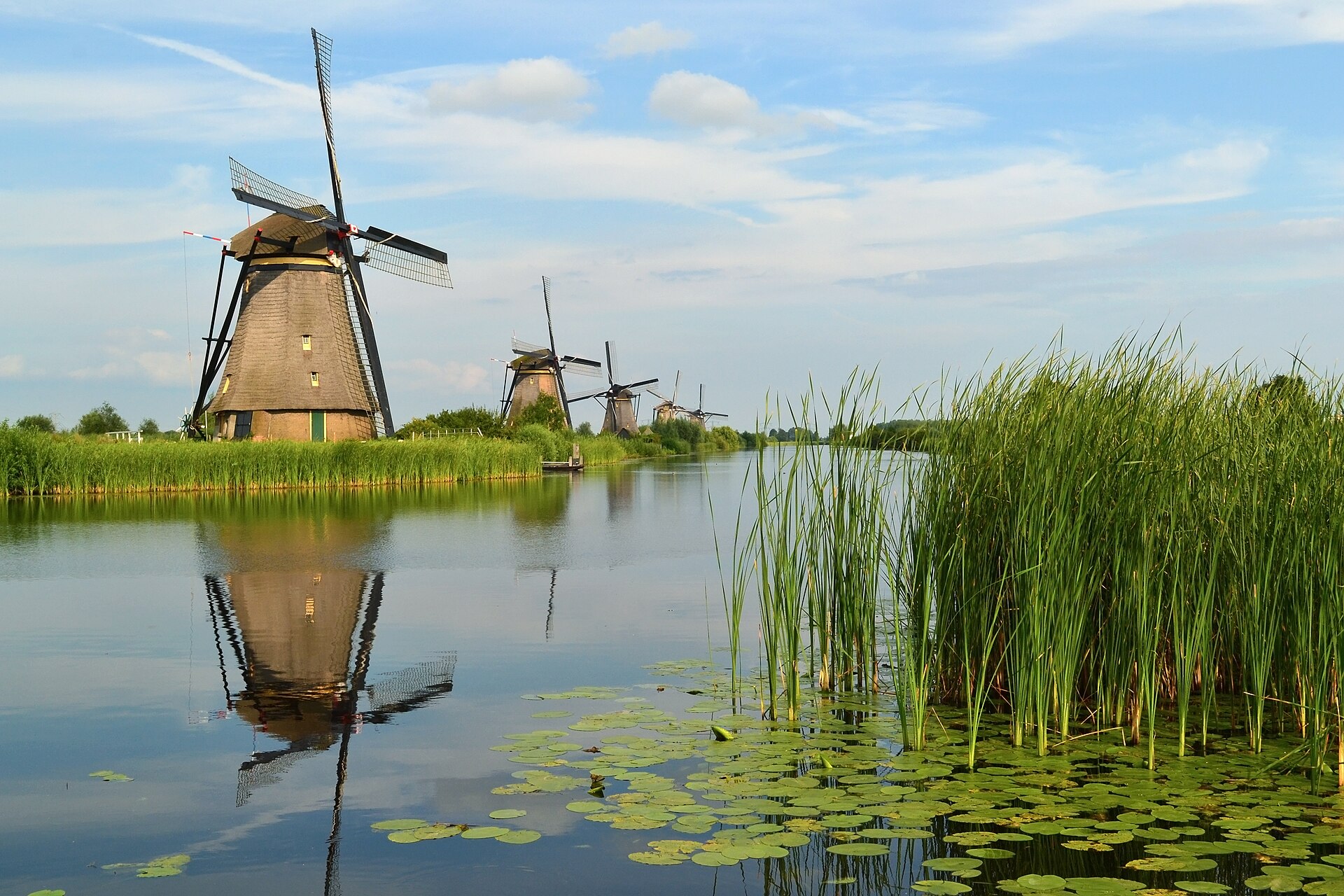
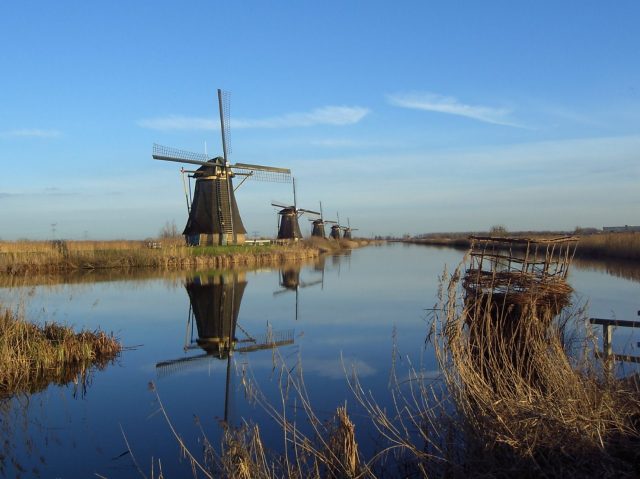
There are places where time seems to slow down, where the past lingers in the air like the scent of damp earth after rain. Kinderdijk is one of them. Nestled in the Dutch province of South Holland, nineteen windmills stand along a network of canals, their wooden frames weathered by centuries of wind and water. They are not relics of a forgotten era but living monuments, still turning when the wind allows, still whispering stories of a time when the Netherlands was locked in a quiet, relentless battle with the sea.
The story of Kinderdijk is the story of the Netherlands itself—a country shaped by water, both feared and harnessed. In the 17th and 18th centuries, this land was little more than a swamp, a sodden expanse where few dared to settle. But the Dutch, with their characteristic ingenuity, saw potential where others saw only marsh. They built dikes to hold back the tides, dug canals to redirect the flow, and erected windmills to pump water from the lowlands. The mills of Kinderdijk were part of the Alblasserwaard polder system, one of the earliest large-scale drainage projects in the country. Their purpose was simple yet vital: to keep the land dry, to make it habitable, to turn a waterlogged wilderness into fertile soil. Without them, much of the Netherlands as we know it would still be underwater.
The windmills themselves are a study in practical beauty. Tall and slender, their wooden bodies clad in thatch or shingles, they rise above the flat landscape like sentinels. Each has its own character—some appear sturdy and unyielding, others almost delicate—but all share the same functional design that has come to symbolize Dutch engineering. Inside, the original mechanisms remain, a tangle of wooden gears and shafts that once powered the pumps. Visitors who step inside can almost hear the creak of turning wheels, the groan of timber under strain, the faint echo of voices from another century. It’s easy to imagine the miller descending the narrow stairs, lantern in hand, to check the machinery before dawn.
Kinderdijk is not a museum, though it might feel like one at first glance. It is a place where history and daily life still intersect. Some of the mills are still operational, particularly during floods when their pumps are called into action to protect the surrounding land. Others have been repurposed—turned into small museums, workshops, or even homes. The people who live here treat them with quiet reverence, as if they were elderly relatives whose stories must be preserved. In summer, the sails turn lazily in the breeze, while in winter, when the canals freeze, the scene transforms into something almost surreal: black silhouettes against a white sky, the only sound the distant crack of ice shifting beneath the surface.
The best time to visit is in the warmer months, when the countryside is lush and the canals teem with life. You can walk along the dikes, rent a bicycle to explore the quiet roads, or take a boat out onto the water for a different perspective. From the canal, the windmills seem to float, their reflections rippling in the current. Autumn brings a softer beauty—golden fields, mist curling over the water, the mills standing like ghosts in the half-light. Winter, if you’re lucky, offers a stillness that feels almost sacred, the landscape hushed under a layer of frost.
This is not a place for those seeking the hustle of tourist hotspots. There are no souvenir stalls, no neon signs, no crowds jostling for the perfect photo. Kinderdijk is for travelers who want to see the Netherlands as it truly is—not the postcard version, but the quiet, working heart of the country. The canals are still used by farmers to irrigate their fields, the land is still shaped by the same forces that have governed it for centuries, and the windmills still turn, not for show, but because they are needed. When you visit, you might find yourself watching a farmer guide his boat along the waterway or a cyclist pause to let a flock of sheep cross the road. It’s a reminder that this place is not frozen in time; it’s alive, evolving at its own unhurried pace.
Today, Kinderdijk is a UNESCO World Heritage site, a recognition of its historical significance. But for the Dutch, its value has always been deeper than that. It’s a testament to their relationship with the land, a reminder that their country exists because of human determination and adaptability. The windmills are not just a picturesque backdrop; they are a symbol of what can be achieved when necessity meets innovation. They stand as proof that even the most daunting challenges—like reclaiming land from the sea—can be overcome with patience and ingenuity.
If you find yourself in the Netherlands, resist the urge to rush straight to Amsterdam or Rotterdam. Take a detour to Kinderdijk instead. There’s no need to hurry here, no pressure to capture the perfect shot for social media. Just walk along the paths beside the canals, listen to the wind rustling through the sails, and let your thoughts drift back to the generations of people who shaped this land. In places like this, you begin to understand a country not through its grand monuments, but through its quiet, enduring spirit. And perhaps that’s the most authentic way to experience the Netherlands—one slow, thoughtful step at a time.