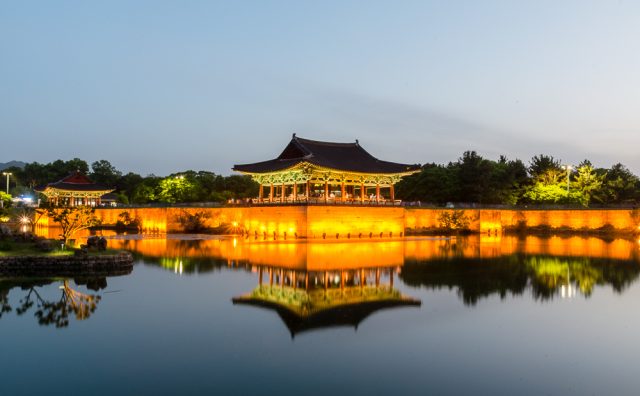
Gyeongju Museum is where Silla’s past is kept. The kingdom ruled this city for nearly a thousand years, and its traces remain in the streets, temples, and tombs around. The museum holds what was left behind: crowns, statues, and tools that tell how people lived, worked, and believed.
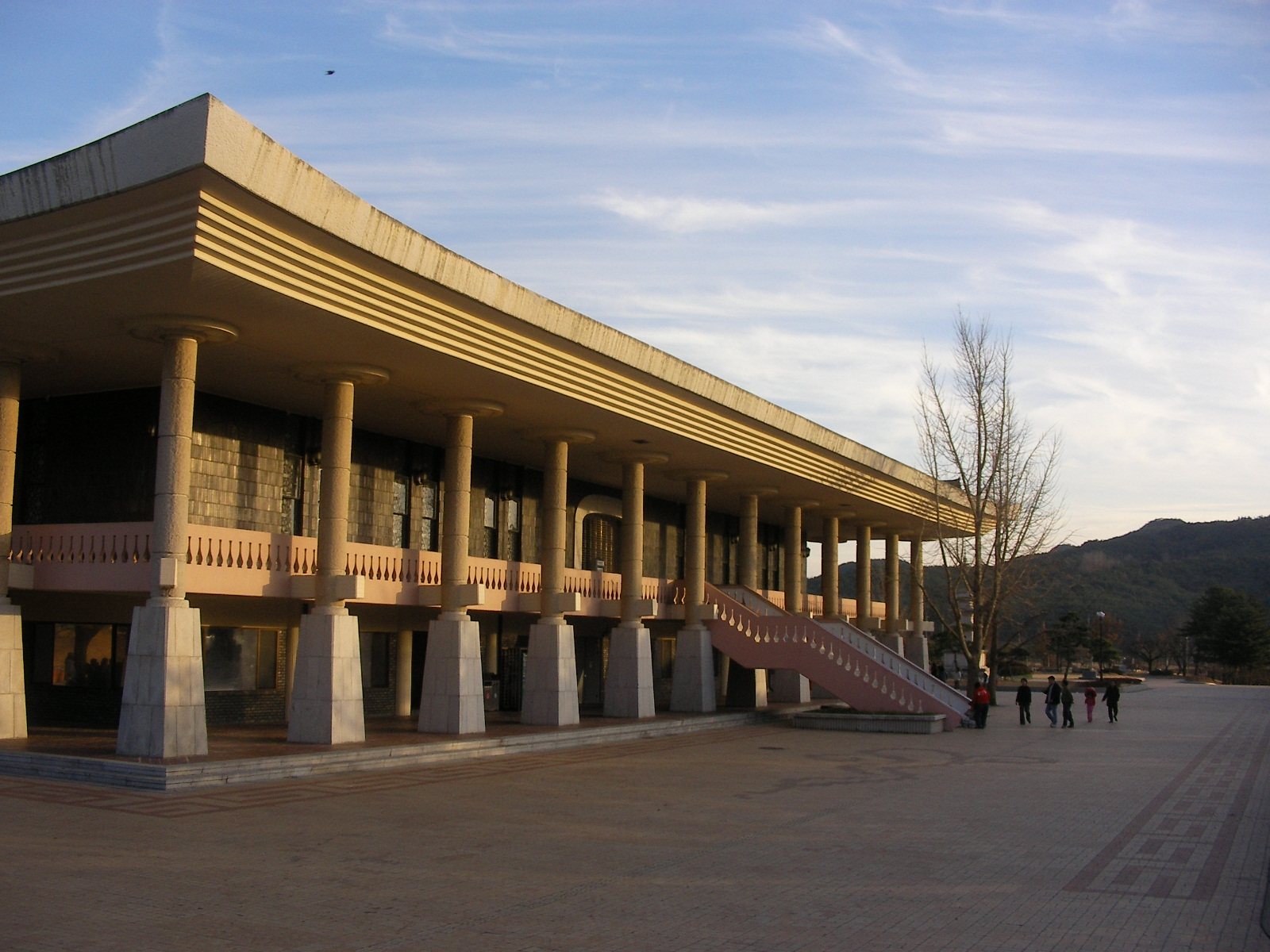
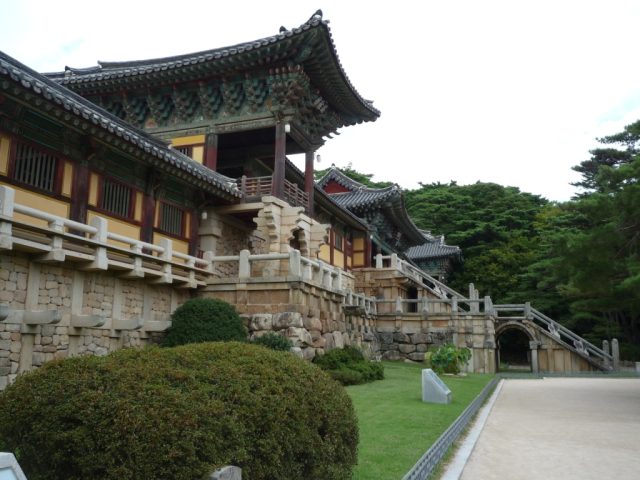
The building blends modern lines with traditional Korean elements—wooden beams, sloping roofs, and open courtyards that let daylight in. Inside, the galleries are quiet, with soft lighting that keeps the focus on the objects. A bronze mirror, still smooth after centuries underground. A ceramic bowl, its glaze cracked but its shape unchanged. These things were used in rituals, meals, and ceremonies long before they became exhibits.
The royal tombs outside the city yielded the most striking finds. Gold crowns rest on stands, their designs catching the light. Some have jade beads or pendants shaped like leaves and antlers. Nearby, a pair of earrings—thin gold wires twisted into a dragon—shows what people once valued. Jewelry wasn’t just for adornment; it carried meaning, protection, or status. The workmanship is precise, especially given the tools available a thousand years ago.
Stone faces line the walls of another hall. Some are calm, others stern, their expressions softened by time. These are the Buddhas and bodhisattvas of Silla, carved when Buddhism first took root in Korea. The largest statues are nearly life-sized, their robes carved in deep folds. Smaller ones feel personal, like the seated figure with a gentle smile, its hands in a teaching gesture. Many were found in temple ruins or along old pilgrimage routes.
The museum grounds hold fragments of the past under the open sky. Stone lanterns that once lit temple paths. Pillars with faded inscriptions. Reconstructed wooden structures that hint at how people lived. Roof tiles, some stamped with officials’ names or kiln marks, show the scale of Silla’s bureaucracy and industry.
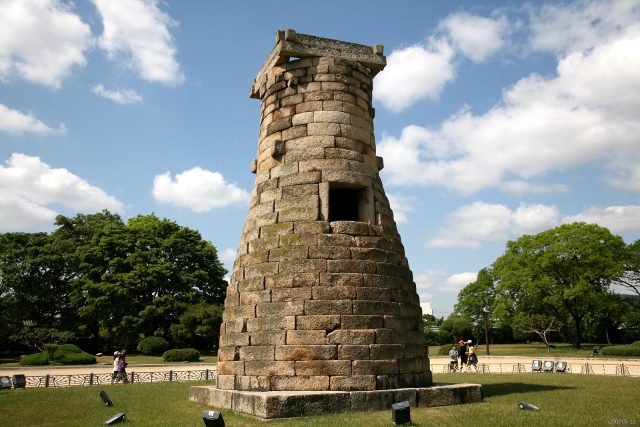
A small section is devoted to astronomy. Replicas of ancient instruments—armillary spheres, sundials, star charts—explain how Silla’s scholars tracked the heavens. The stars guided harvests, festivals, and military campaigns. One silk chart maps constellations as they appeared over a thousand years ago.
The museum lets you move at your own pace. There’s no need to rush. You can stand in front of a clay pot, its surface marked by the hands that shaped it, or examine a sword hilt worn smooth by use. In one gallery, everyday objects—wooden combs, iron nails, scraps of fabric—sit beside the treasures. They reveal as much as the gold and jade do.
History feels close here. You notice the weight of a stone Buddha in the corner of your eye. The faint scent of aged wood. The way light falls on a ceramic bowl, as if it still expects to be used. The museum doesn’t overwhelm. It lets the past speak quietly.
If you want to understand Korea beyond its modern cities, this is where to start. Gyeongju’s hills are dotted with burial mounds, its streets lined with relics. The museum gathers those fragments, preserves them, and gives them meaning. It doesn’t tell the whole story—no place could—but it gives you the pieces to make sense of it yourself.