Prague has a way of revealing its quieter corners just when you think you’ve seen it all. Tucked away on Kampa Island, the Museum Kampa feels like a secret the city keeps for those willing to step off the well-trodden path. It’s only a short walk from Charles Bridge, yet the moment you cross onto the island, the noise of the crowds fades into the gentle murmur of the Vltava River. The island itself is a place where time moves differently—narrow lanes wind past old houses with sagging roofs and ivy-covered walls, their facades bearing the marks of centuries. This was once the domain of Prague’s artisans and craftsmen, a neighborhood where the river’s light played on workshop windows and the scent of wood shavings mixed with the damp air.
The museum occupies what was once a wool mill, built in the 18th century when the island was a hub of industry rather than art. The building’s thick stone walls and soaring ceilings still carry the weight of its past, their rough textures softened only slightly by the modern interventions that turned it into a gallery. There’s a deliberate restraint in the way the space has been adapted—white walls and uncluttered layouts ensure the focus stays on the art, but the original structure isn’t erased. The high windows let in slanted light that shifts with the time of day, casting long shadows across the floors in a way that makes even the most contemporary pieces feel grounded in history.
At the heart of the museum’s collection is the legacy of Jan and Meda Mládek, a couple whose passion for art shaped not just the institution but the cultural landscape of the Czech Republic. Their tastes were eclectic, spanning abstract pioneers like František Kupka, whose vibrant canvases seem to pulse with movement, to the stark, almost brutal honesty of Josef Čapek’s works. The Mládeks didn’t just collect paintings; they sought out pieces that told a story—whether through the bold strokes of a modernist master or the quiet resilience of a child’s drawing. Their approach was personal, almost intimate, and that sensibility still defines the museum today.
One of the most striking parts of the collection is the archive of children’s art gathered by Meda Mládek. These aren’t the sanitized, cheerful sketches you might expect. Many were created by children who lived through war, displacement, or political upheaval, their drawings raw and unfiltered. A house with no doors, a sky filled with falling bombs, stick-figure families separated by jagged lines—these images don’t just hang on the walls; they demand attention. Placed alongside more polished works, they create a dialogue between innocence and experience, a reminder that art isn’t always about beauty but about truth.
The museum’s temporary exhibitions often push boundaries, showcasing artists who challenge conventions or tackle difficult subjects. Past shows have explored themes like migration, identity, and the role of art in times of crisis. The curators don’t shy away from controversy, and the result is a space that feels alive, where visitors aren’t just passive observers but participants in a larger conversation. Sometimes the exhibitions spill beyond the galleries—into performances, discussions, or workshops that invite people to engage with the ideas behind the art. It’s this willingness to experiment that keeps the museum from feeling like a static repository of the past.
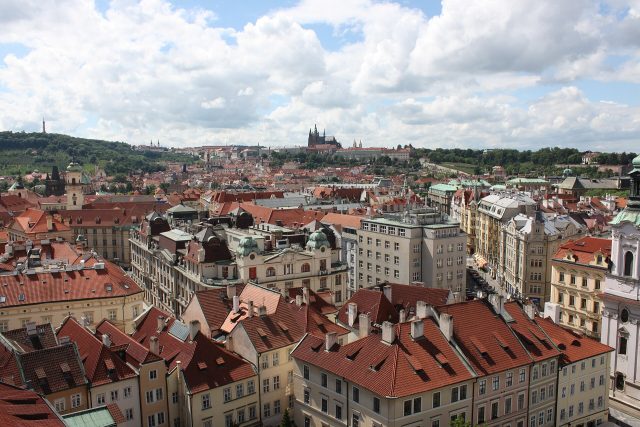
Kampa Island is the kind of place where you might come for the museum but stay for the surroundings. After wandering the galleries, it’s worth lingering outside. The riverbank is lined with benches where locals and visitors alike sit with coffee or a book, watching the water lap against the stone embankments. In summer, the island is lush and green, the trees casting dappled shadows on the paths. In winter, the bare branches and frost-tipped grass give it a stark, almost melancholic beauty. The park slopes gently toward the water, offering views of the city’s spires and rooftops, a reminder that even in this quiet corner, Prague is never far away.
What makes Museum Kampa special isn’t its size or the fame of its collection. It’s the way it balances reverence for art with a lack of pretension. There are no grand entrances or hushed, marble-clad halls here—just a series of rooms where the art feels accessible, even approachable. The museum doesn’t tell you what to think; it simply presents the work and lets you decide what resonates. That openness is rare in a city filled with museums that often feel like temples to the past. Here, the past and present coexist, not as opposites but as layers of the same story, waiting to be discovered.