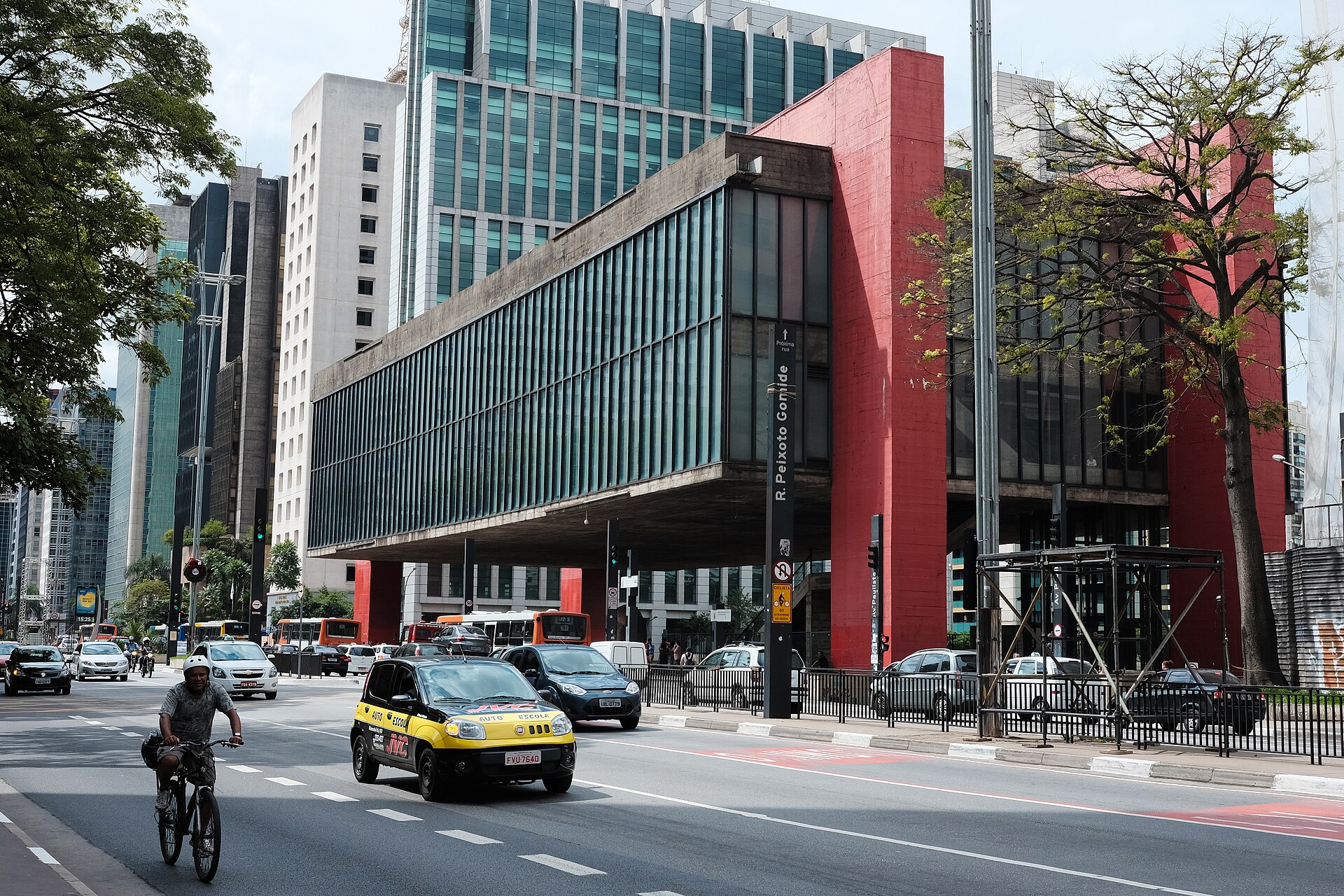
The museum stands on Avenida Paulista, where protests, festivals, and gatherings unfold around its glass-and-steel structure. Four red columns lift the building above the ground, a design meant to signal openness. This wasn’t just architecture—it was a way to say art belongs to everyone.
MASP opened in 1947, founded by Assis Chateaubriand. For two decades, its collection moved between temporary spaces. In 1968, it settled into the building designed by Lina Bo Bardi, an Italian architect who had made Brazil her home after the war. She rejected the idea of paintings hanging on walls. Instead, she placed them on glass panels mounted on concrete bases, letting visitors walk right up to each work.
The collection spans continents and centuries. European masters—Rembrandt, Van Gogh, Renoir, Degas—share space with Brazilian artists like Candido Portinari and Tarsila do Amaral. The Italian Renaissance holdings are among the strongest in Latin America. But the museum also hosts exhibitions of contemporary art, photography, and design, often asking visitors to look again at what they thought they knew.
The building itself draws the eye. The ground floor’s transparent walls dissolve the boundary between street and gallery. Upstairs, the main hall stretches wide, with paintings suspended in midair. Bo Bardi wanted art to feel present, not preserved. The benches invite you to sit, to stay, to let a single piece hold your attention.
MASP is more than a gallery. It hosts lectures, workshops, concerts, and film screenings. It works with schools, bringing students into conversations about art. In recent years, it has given more space to African and Indigenous artists, reflecting Brazil’s layered identity. The museum isn’t just about what’s already been made—it’s about who gets to shape what comes next.
The terrace overlooks São Paulo: skyscrapers, parks, the constant movement of the city. Avenida Paulista hums with street musicians and weekend markets. The museum’s doors stay open to all, with admission often free or low-cost.
There are no rigid rules here. You can photograph the works, talk about them, or sit on the floor to study the ceiling. The museum doesn’t tell you how to experience art—it lets you find your own way in. That’s why locals return, not just tourists. For many in São Paulo, MASP is where art and life meet.