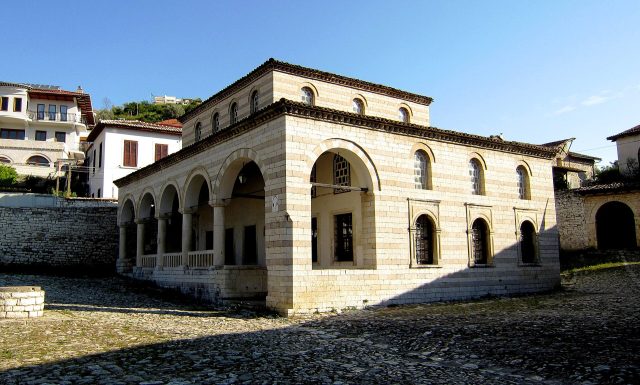
The Onufri Icon Museum in Berat is one of those rare places where time seems to pause, where the walls don’t just hold history but carry the weight of craftsmanship and faith passed down through centuries. Tucked within the Mangalem quarter, the museum occupies part of the Church of the Dormition of St. Mary, a 13th-century structure that feels less like a building and more like a living relic. Its white stone walls, arched doorways, and faded frescoes have weathered the years with quiet dignity, preserving an atmosphere that lingers between the medieval and the modern. The church remains an active place of worship, so visitors might find themselves sharing the space with the murmur of prayers or the soft echo of a hymn, a reminder that this is not just a museum but a place where devotion still breathes.
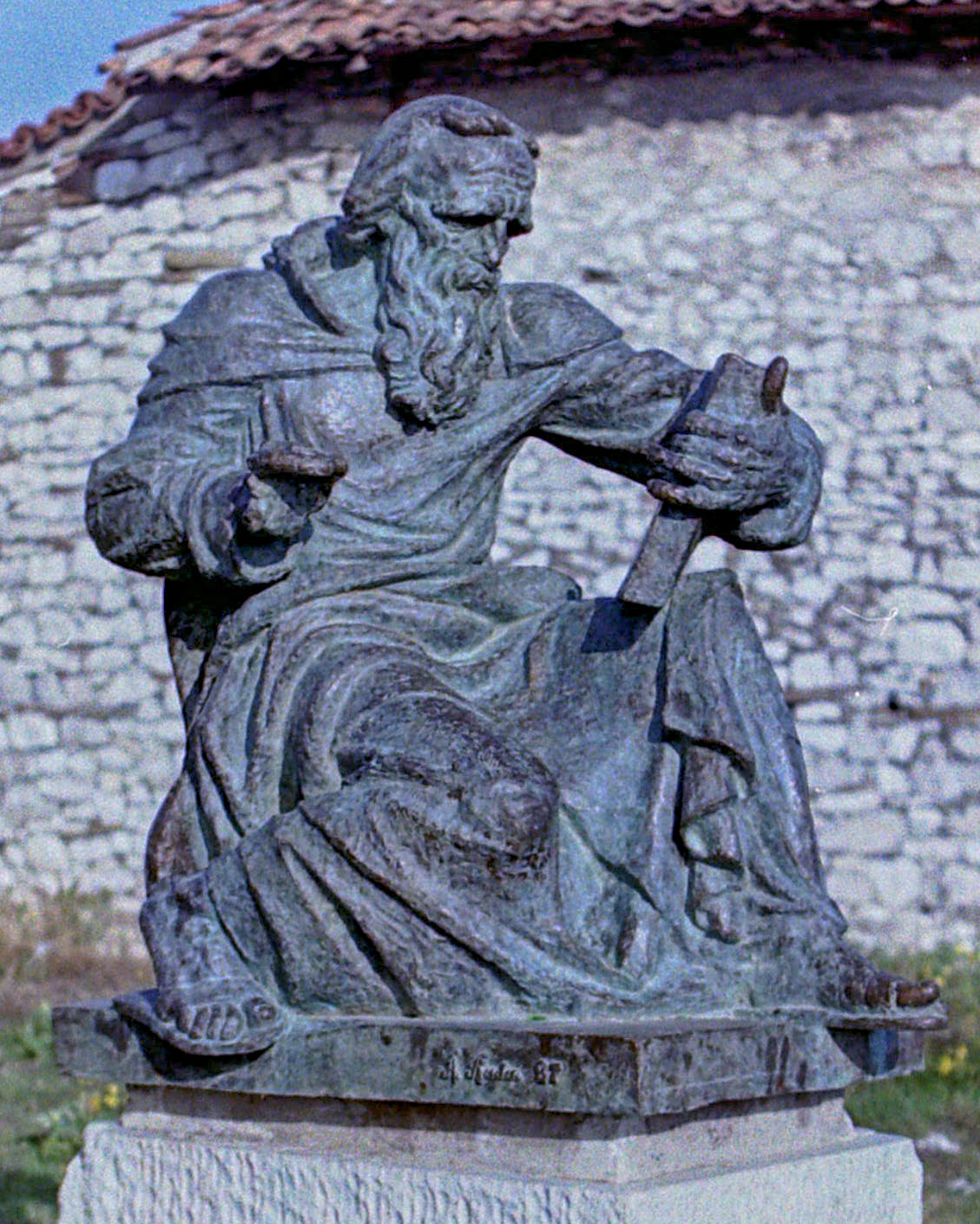
The museum takes its name from Onufri, a 16th-century Albanian icon painter whose work became a defining force in late Byzantine art across the Balkans. Onufri didn’t just create icons—he crafted a visual language that spoke to anyone who stood before his paintings. His mastery lay in his ability to blend sacred tradition with a startling human touch. Among his most celebrated works is the *Virgin Hodegetria*, where Mary and the Christ Child are rendered with such warmth and tenderness that they seem almost alive, their expressions soft and immediate. But what truly set Onufri apart was his inclusion of donors—local figures whose portraits appear with near-photographic realism, their faces gazing out from the gold-leaf backgrounds with an intimacy rare for the time.
The museum’s collection extends far beyond Onufri’s own works, spanning centuries of religious art from the Byzantine era to the 19th century. Here, you’ll find icons by his followers, artists who inherited not just his techniques but his reverence for color and light. One standout is the *Christ Pantocrator*, where the golden halo behind the figure seems to radiate its own glow, and the eyes of Christ feel piercing yet compassionate. Other icons depict local saints like Cosmas of Aetolia, a figure who became a symbol of resistance during Ottoman rule, his image a quiet testament to faith in turbulent times. The craftsmanship varies—some pieces are rough-hewn, others meticulously detailed—but each carries the unmistakable imprint of its era.
Beyond the icons, the museum houses intricately carved wooden iconostases, their surfaces alive with vibrant colors and elaborate patterns. These screens, which separate the altar from the nave, are more than functional—they’re storytelling devices, depicting scenes from the Bible, the lives of saints, and the creation of the world. Some bear the marks of restoration, where later hands have tried to preserve the original vision while leaving their own subtle traces. It’s a reminder that these objects weren’t meant to be static; they were cared for, repaired, and passed down, each generation adding its own layer to the story.
The museum is small, but its size only enhances the experience. There’s no rush here, no jostling for space. The lighting is soft, almost reverent, designed to draw your eye to the details—the cracks in the ancient plaster, the delicate brushstrokes on an icon, the way the gold leaf catches the light. Even when groups visit, the atmosphere remains hushed, as if everyone instinctively understands that this is a place for quiet reflection. Occasionally, you might hear someone whispering a translation of an inscription or sharing an observation, but more often than not, the only sounds are the creak of wooden floors and the distant echo of footsteps.
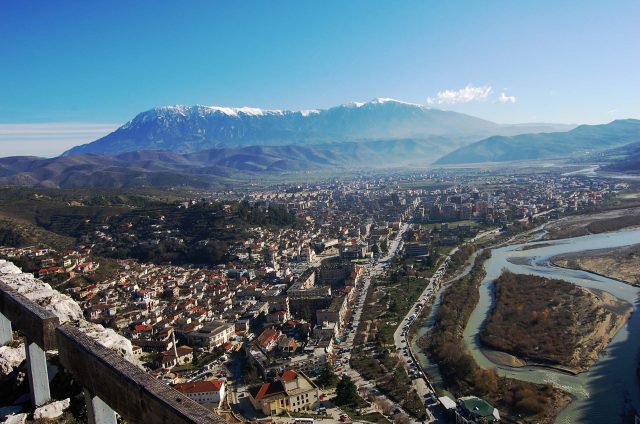
Berat itself is often called a "city of a thousand windows," a place where history seeps from every stone. But the Onufri Icon Museum feels like its heart. There’s no grand spectacle here, no attempt to dazzle with scale or modernity. Instead, there’s a sense of quiet grandeur, the kind that comes from centuries of skill and devotion being handed down, one artist to the next. For those interested in Byzantine art, Balkan history, or simply the chance to step into a space untouched by the noise of the modern world, this museum offers something rare: a connection to the past that feels immediate and real.
What makes the museum particularly compelling is that it’s not just a repository of the past—it’s a living space. Occasionally, it hosts exhibitions of contemporary icon painters, workshops on traditional techniques, and lectures on preserving cultural heritage. These events bridge the gap between then and now, proving that the traditions Onufri helped shape are still evolving. Even if you’re not religious, there’s a palpable energy here, the kind that lingers in places where people have poured their souls into their work for generations.
Visiting the Onufri Icon Museum isn’t like walking through a typical gallery. There’s no detachment here, no sense of observing from a distance. Every icon, every fragment of fresco, every carved detail is part of a larger narrative—one that began centuries ago and continues to unfold. And when you leave, the experience doesn’t fade quickly. It stays with you, not as a memory of something seen, but as a quiet understanding of what it means to create something that lasts.