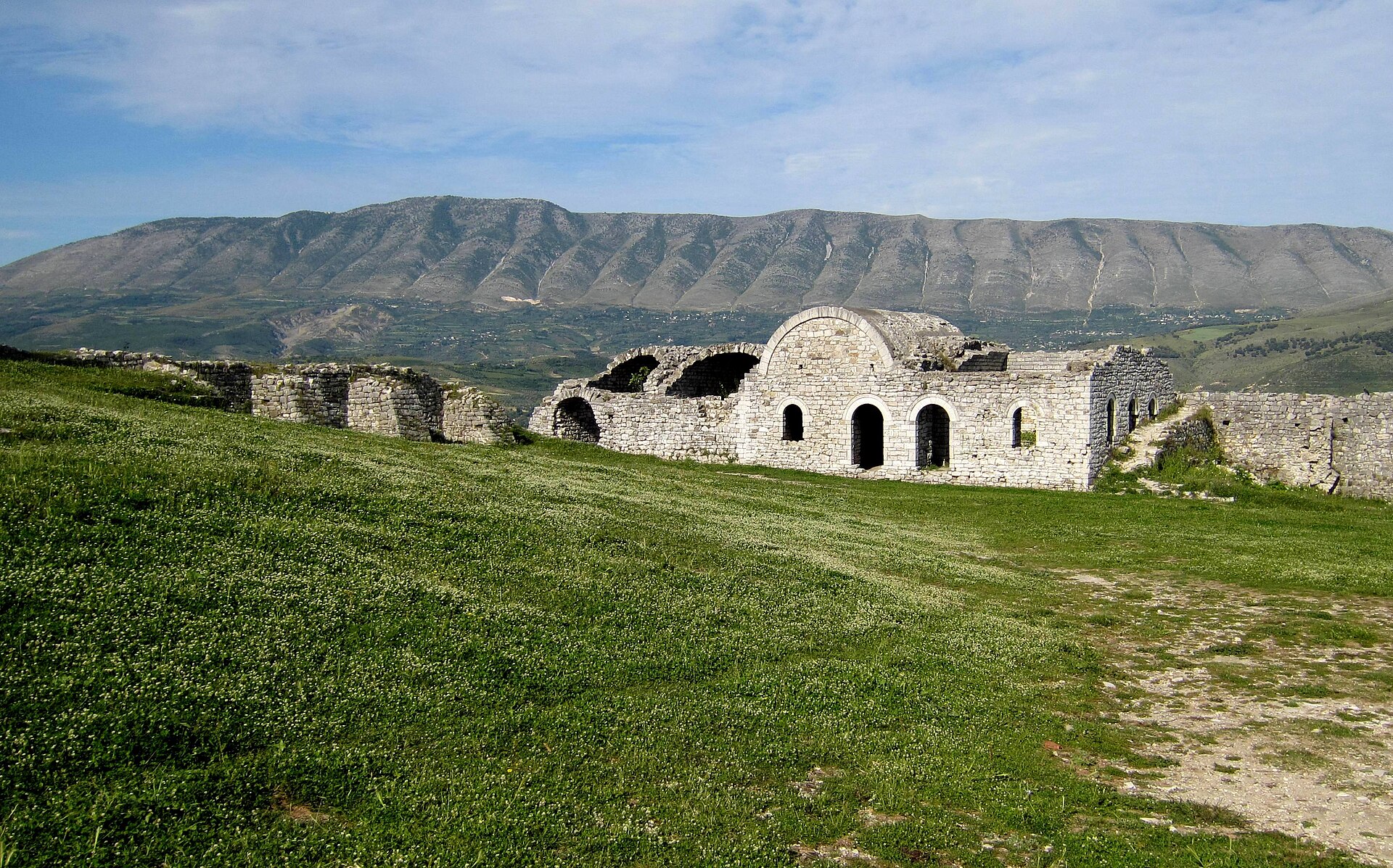
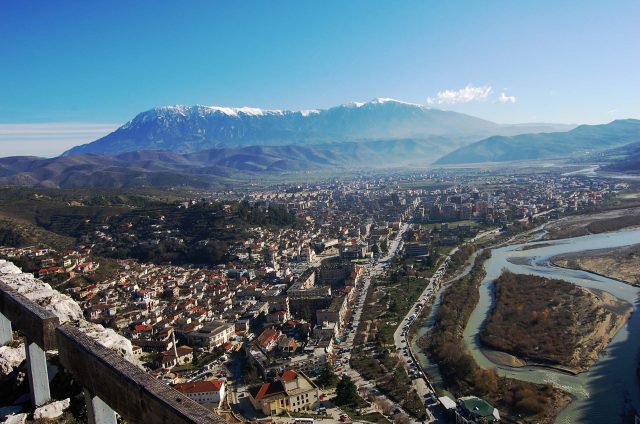
Perched on a rocky hill overlooking Berat, the fortress feels like a place where time moves differently. Its weathered stone walls blend seamlessly with the landscape, rising above the city as if they’ve always been there. Unlike many ancient citadels frozen in time, this one remains alive—people still call it home, their daily routines weaving through centuries-old streets. There’s no glass barrier between past and present here; history isn’t preserved behind ropes or plaques but lived, quietly and without fanfare.
The hill has been fortified since at least the 4th century BC, when Illyrian tribes first recognized its strategic value. Romans later reinforced it, and the Byzantines expanded it into a formidable stronghold. But it was under Ottoman rule in the 15th and 16th centuries that the fortress took on much of its current form. The Turks rebuilt the walls, added towers, and adapted the defenses to new military needs. Yet the castle was never just a military outpost. Even then, life thrived within its walls, and today it stands as one of the few inhabited fortresses in the world, where the rhythm of modern existence hums alongside the echoes of the past.
The main entrance, flanked by a sturdy clock tower, leads into a maze of narrow lanes. The streets twist between houses with terracotta roofs, many dating back to the 18th and 19th centuries. There are no grand boulevards or souvenir stalls here—just quiet courtyards where laundry dries in the breeze and elderly women sit on doorsteps, watching the world go by. Some homes still have the intricately carved wooden balconies typical of Ottoman architecture, their details softened by time.
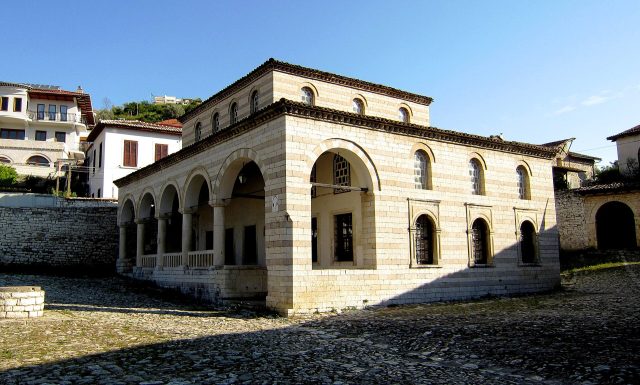
Among the most striking landmarks inside the fortress is the Church of St. Mary of Blachernae, built in the 13th century. It’s one of Albania’s oldest Christian churches, and its frescoes are considered masterpieces of Byzantine art. Nearby stands the Sultan Bayazid Mosque, constructed in the 15th century, its slender minaret rising above the rooftops. The mosque is small but elegant, a reminder of how different cultures and faiths coexisted in Berat. Other religious sites dot the fortress, including the ruins of an ancient synagogue, though many are now in various states of decay.
What makes Berat’s fortress truly special is its atmosphere. Even in peak season, it rarely feels crowded. You can wander its lanes for hours without encountering more than a handful of people. As evening falls, the setting sun bathes the stone in golden light, stretching shadows across the walls. From the higher points, the view unfolds over the city and the Osum River winding below like a ribbon of liquid silver. It’s easy to see why Berat is called the "city of a thousand windows"—each one frames a different scene, whether it’s a crumbling Ottoman house or a modern guesthouse perched on the hillside.
Despite its ancient air, life here hasn’t stood still. Some families have lived within these walls for generations, their ancestors’ stories woven into the very fabric of the place. They still practice traditional crafts, tend vineyards and olive groves, and distill raki according to age-old recipes. In recent years, small family-run guesthouses and cafés have sprung up, offering a taste of local flavors—dishes like *tavë kosi*, lamb baked with yogurt, or *byrek*, flaky pastry layered with cheese and herbs. These places feel nothing like tourist traps; they’re unassuming, warm, and deeply rooted in the community.
This isn’t a place where history is put on display. There are no clear lines between past and present, and that’s what makes it so compelling. You could spend hours exploring its labyrinthine streets, deciphering faded inscriptions on walls, listening to stories from locals, or simply sitting on a bench as the light shifts over the city. There’s nothing staged or artificial about it—just an authenticity that lingers in the stones, the quiet corners, and the way the fortress breathes with the lives of those who still call it home. That’s why, long after you’ve left, the memory of it stays with you.