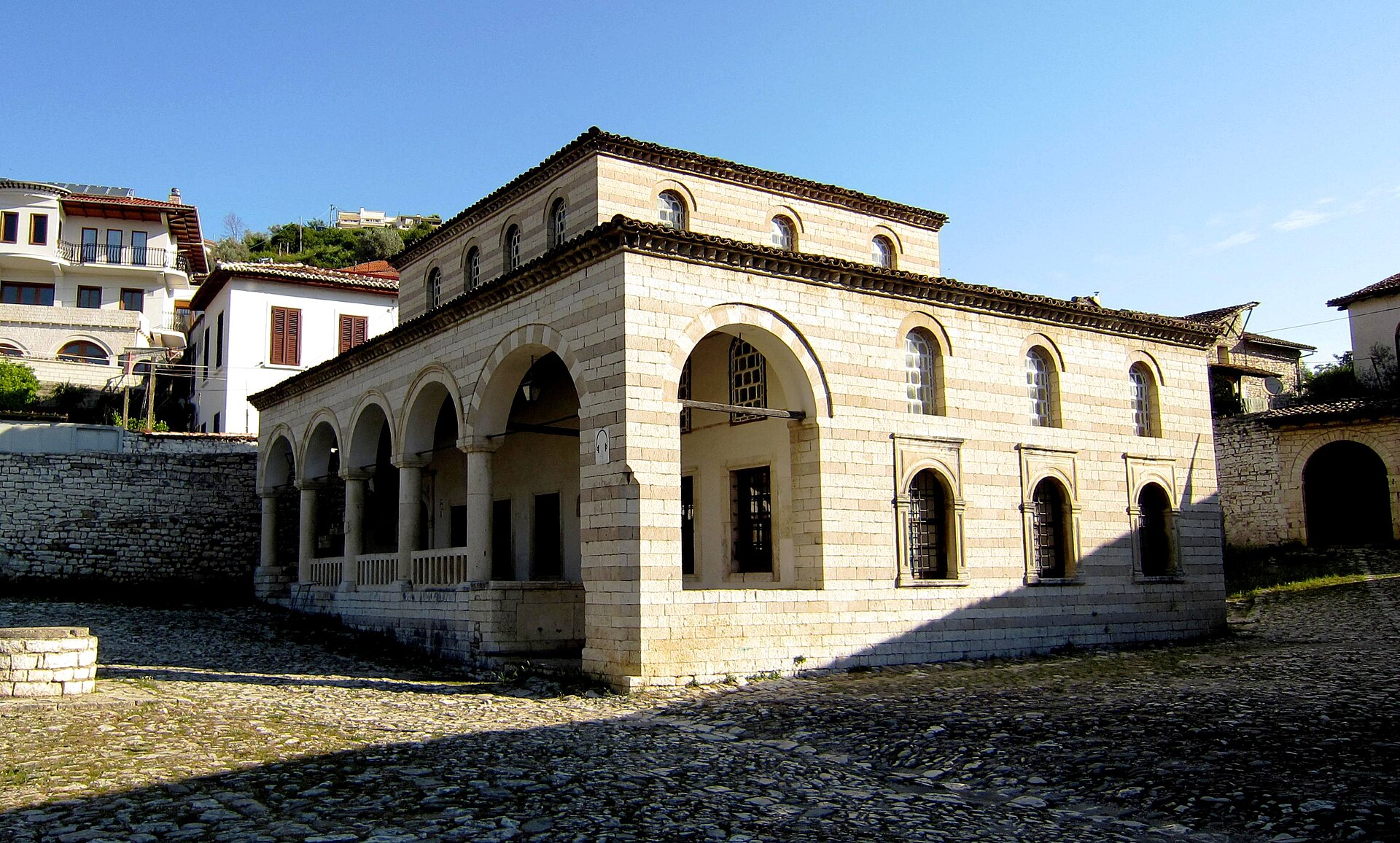
The Queen’s Mosque in Berat is one of those rare places that feels untouched by time, a quiet witness to an era when this city was a vital center of Ottoman culture in the Balkans. Built in the 16th century, it carries the hallmarks of classical Ottoman architecture, though with subtle details that set it apart as distinctly Albanian. The mosque is modest in size, but its proportions and craftsmanship reveal the skill of the builders who shaped it nearly five hundred years ago. Its whitewashed walls, tiled dome, and slender minaret rise above the narrow streets of the old town, forming a silhouette that has become part of Berat’s identity.
The mosque’s name is tied to a legend—one of those stories that history often weaves around places connected to powerful figures. It is said to have been commissioned by Hürrem Sultan, the influential wife of Suleiman the Magnificent, better known in the West as Roxelana. There is no definitive proof of her involvement, but the tale persists, adding a layer of intrigue to the building’s past. Whether true or not, the mosque was undeniably an important spiritual hub for Berat’s Muslim community, which played a significant role in the city’s life for centuries.
Architecturally, the mosque reflects the Ottoman style of its time, though with local influences that make it feel rooted in its surroundings. Constructed from stone and brick, materials sourced from the nearby hills, it blends seamlessly into Berat’s landscape. The dome, covered in terracotta tiles, rests on four sturdy columns inside the prayer hall, creating an airy, open space. The interior is adorned with delicate stucco work and faded frescoes, their colors softened by time but still elegant. The mihrab, the niche pointing toward Mecca, is particularly striking, crafted with the meticulous attention to detail characteristic of Ottoman art.
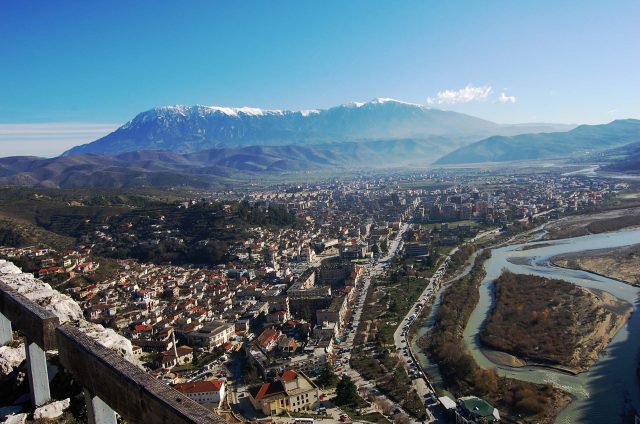
Berat, often called the "city of a thousand windows," has long been a place where cultures and religions intersected. The Queen’s Mosque stands as a symbol of that diversity. During the Ottoman period, Muslims, Christians, and Jews coexisted here, and the mosque was more than just a place of worship—it was part of the fabric of daily life. Today, it remains an active religious site, though the number of worshippers has dwindled. Visitors are welcome, and those who step inside often remark on the sense of tranquility that has lingered within these walls for generations.
The mosque is nestled in Berat’s old quarter, where time moves at a slower pace. Cobblestone streets wind past houses with wooden balconies and tiled roofs, small shops, and cafes, evoking a sense of stepping back in time. The Queen’s Mosque fits naturally into this setting, neither grand nor unassuming, but perfectly in harmony with its surroundings. It feels like a living part of the city, one that has endured despite the changes around it.
Remarkably, the mosque survived not only the passage of centuries but also the upheavals of the 20th century. During Albania’s communist era, when religion was banned, many mosques and churches were closed or destroyed. The Queen’s Mosque endured, though it fell into disrepair. After the regime’s collapse, restoration efforts began, and today it appears much as it did centuries ago. The work done to preserve it was careful, ensuring that the spirit of the place remained intact—a spirit that continues to draw visitors.
A visit to the Queen’s Mosque is more than just a chance to see a historic building; it’s an opportunity to connect with Berat’s layered past. The city, a UNESCO World Heritage site, is full of such places, each telling a story of the people and empires that shaped it. The mosque is one of the most evocative, a reminder that even in small towns, echoes of great histories can still be heard.
Today, the mosque is open to anyone who wants to glimpse the past. Inside, the silence is broken only by the occasional footsteps of visitors or the whisper of wind through the old windows. There are no crowds here, which makes the experience all the more meaningful. You can take your time examining the details, sit on a bench in the courtyard, and reflect on the countless lives that have passed through these walls over the centuries. The Queen’s Mosque is not just a landmark—it’s a living piece of history, still breathing in the modern world.