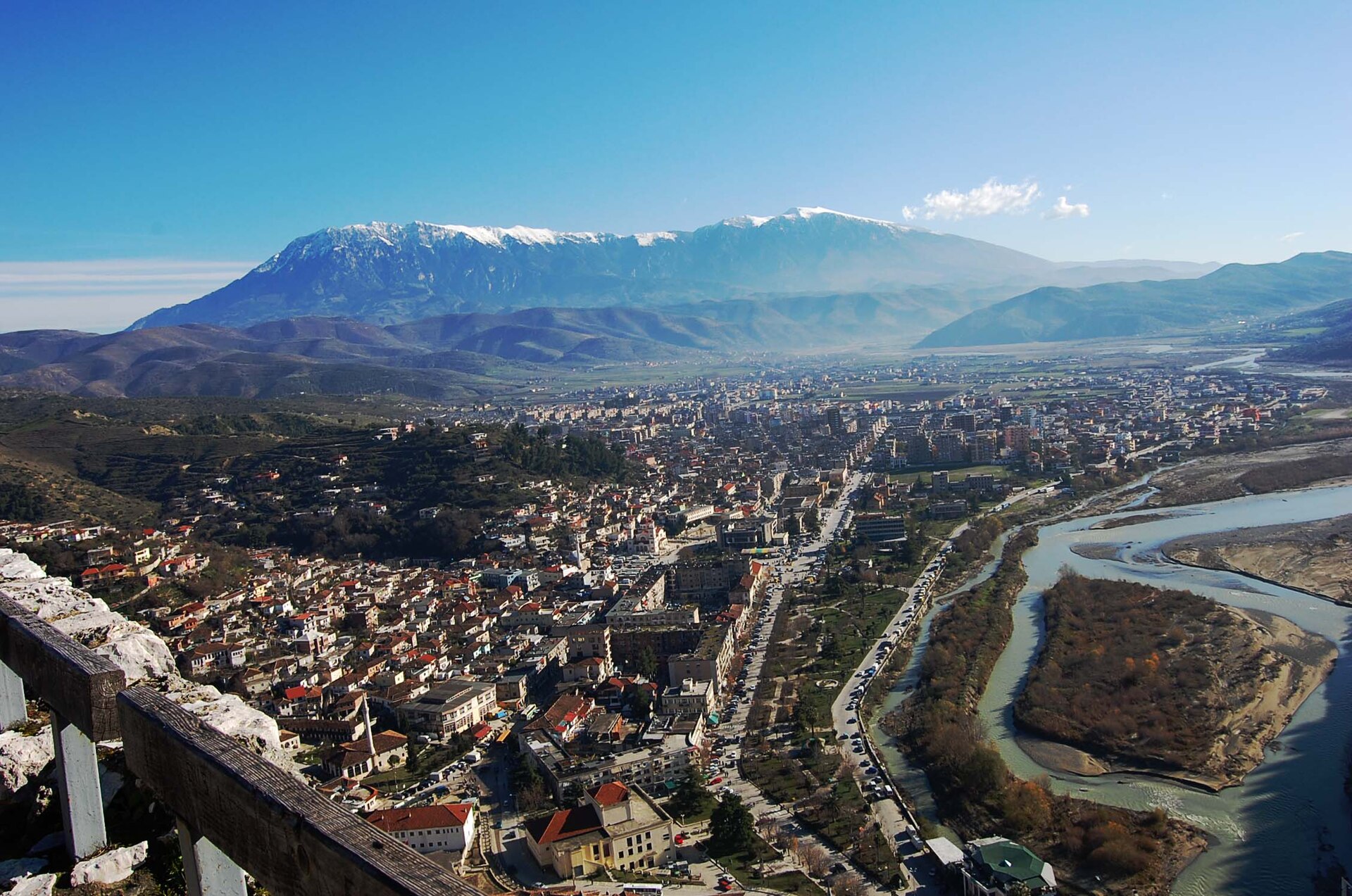
Berat is often called the city of a thousand windows, and the name fits more than just poetically. The white houses clinging to the hillsides, their rows of symmetrical windows catching the light, give the impression that someone—or something—still lingers behind each one. The city sprawls along the banks of the Osum River, its skyline shaped for centuries by two fortresses: one crowning the hill above the old Mangalem quarter, the other perched on the opposite shore. But Berat is no open-air museum. It’s a place where medieval mosques stand beside Orthodox churches, where narrow lanes lead past artisan workshops and quiet courtyards heavy with pomegranate trees, and where the past feels less like a relic than a living presence.
The city’s history stretches back over two and a half millennia, a span that has seen it ruled by Illyrians, Romans, Byzantines, Bulgarians, Serbs, and Ottomans. Each era left its mark, but the Ottoman period stands out most vividly. By the 15th century, Berat had become a key Islamic stronghold in the Balkans, and today, nearly twenty mosques remain, many still in use. Yet the city never lost its multicultural character. Albanians, Greeks, Armenians, Jews, and Roma once lived side by side here, and their legacy lingers in the architecture, the food, and even the local stories passed down through generations.
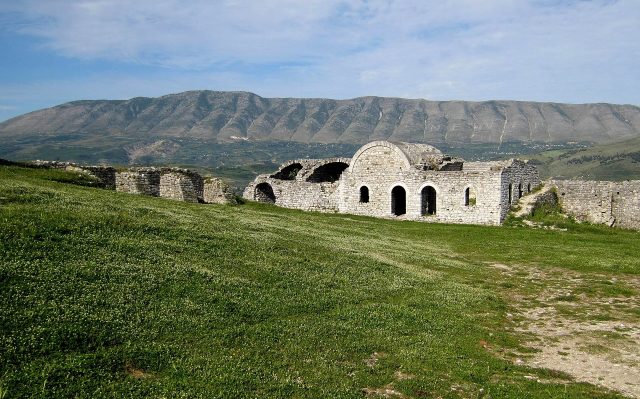
The most striking landmark is the fortress known as Kala, perched on a hill about two hundred meters above the city. Its massive walls, in places several meters thick, enclose not just ruins but entire neighborhoods—houses, churches, mosques, and a small museum displaying fragments of ancient mosaics and medieval icons. Walking through Kala feels like stepping into another era. The stone and timber houses huddle along winding paths, and from the ramparts, the view stretches across the Osum Valley and the surrounding mountains. The light is especially beautiful at sunset, when the white walls glow gold, as if the city itself is exhaling the day’s last warmth.
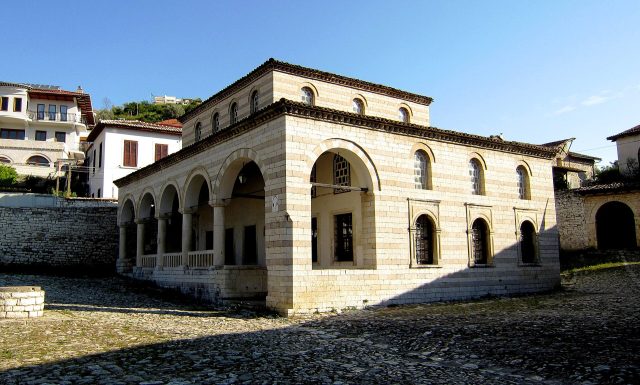
Below the fortress lies Mangalem, the heart of old Berat. This is where the city’s history feels most tangible. The houses, with their carved wooden balconies, line cobblestone streets where locals stroll at an unhurried pace. Small shops sell honey, olive oil, and traditional sweets, their wares displayed with quiet pride. Among the Orthodox churches here, the Church of St. Mary of Blachernae stands out, its 14th-century frescoes still vivid despite the centuries. Nearby, the Ethnographic Museum occupies an 18th-century mansion, its rooms filled with everyday objects—clothing, tools, household items—that tell the story of Albanian life in past eras.
Across the Osum River, the Gorica quarter rises on a hillside, its name derived from a Slavic word meaning "hill." Once a separate settlement, it now feels like a natural extension of the city, its houses stacked in tiers like steps. Gorica is known for its churches, particularly the Church of St. Spyridon, with its striking frescoes and intricately carved wooden iconostasis. Connecting Mangalem and Gorica is an 18th-century bridge, its stone arches spanning the river. More than just a crossing, it’s a symbol of the city’s endurance and its role as a meeting point of cultures.
Berat moves to its own rhythm, one set by the changing seasons rather than the demands of modern life. In spring, the city blooms with flowers; in summer, the air is thick with the scent of ripe pomegranates and figs. Autumn brings the aroma of fermenting grapes, while winter dusts the rooftops with a thin layer of snow. The locals are warm and unhurried, quick to offer a glass of homemade raki or a cup of Turkish coffee, along with stories about the city they call home. Cafés along the riverbank are perfect for whiling away an afternoon, watching the water flow and listening to the tales of older residents who remember Berat as it once was.
The food here is a story in itself, prepared much as it has been for centuries—over open fires, with local ingredients and time-honored techniques. Dishes like *tavë kosi*, a baked casserole of lamb and yogurt, or *fërgesë*, a layered pie with cheese and herbs, are staples. Many restaurants and family-run taverns serve fresh fish from the Osum, marinated vegetables, and crusty homemade bread. Desserts like baklava and halva, made from recipes passed down through generations, are often drizzled with olive oil from the surrounding villages, considered some of the finest in Albania. The flavors are simple but rich, a reflection of the land and the people who have shaped it.
What makes Berat special isn’t just its architecture or its history, but the way it makes you slow down. There’s no rush here, no need to tick off sights or chase experiences. You could spend days wandering the streets, peering into small shops, or sitting by the river, listening to the water and the cries of gulls. You could climb the fortress walls and imagine the guards who once stood watch, scanning the horizon for invaders. Or you could simply find a café, order a coffee, and let the city reveal itself in its own time. Berat doesn’t shout for attention. It doesn’t need to. It’s a place that has seen empires rise and fall, that has absorbed the influences of countless cultures, and yet remains quietly, stubbornly itself—a city that carries its past with grace and lets you discover it at your own pace.