The Toy Museum in Sergiev Posad is one of those rare places where visitors come not just to see exhibits, but to step into a quieter, more reflective world—one that feels like flipping through the pages of childhood. Unlike larger museums where people rush from one hall to the next, this space invites you to linger. To pause in front of a display case and remember the weight of a similar doll in your own hands, or the way a wooden horse once stood on your shelf. The collection spans centuries, but it’s not just a gathering of old toys. It’s a record of everyday life, showing how ideas about childhood, craftsmanship, and even beauty have shifted over time.
The building itself is part of the experience. Housed in a former merchant’s mansion in the heart of the city, its architecture is typical of the late 19th century—high ceilings, intricate plasterwork, large windows that soften the light. Some original details remain: creaking parquet floors, antique doors, the kind of small touches that make the past feel tangible. The museum doesn’t just preserve its collection; it lives alongside it, as if time here moves at a slower pace.
The earliest exhibits are simple, handmade toys from Russian villages—clay and wooden figures, whistles, faceless rag dolls. They lack the precision of modern toys, but that’s part of their charm. There’s a directness to them, a connection to folk traditions. Many were sold at fairs, where children might have spent their last kopecks on a tiny wooden bird or a painted horse. These objects tell stories beyond play: they hint at the materials people had, the skills they valued, the way life was lived in another era.
By the early 20th century, toys had changed. The museum’s collection from this period reflects the rise of industrial production—porcelain dolls with delicate faces, mechanical toys that moved or made noise, tin soldiers, board games. There’s a clear European influence; many of these items were modeled after German or French designs. But Russian traditions held their own, too. Matryoshka dolls, already a national symbol, appear alongside toys inspired by folktales and epic poems. These pieces mark a shift: toys were no longer just homemade treasures, but mass-produced goods with their own cultural weight.
The Soviet era is particularly well-represented. This was a time when toys became widely accessible, and the museum’s collection reflects that democratization—plastic robots, rubber animals, board games featuring cartoon characters, construction sets. Some items are instantly nostalgic: dolls in pioneer uniforms, toy tractors modeled after real machines. But they also reveal something deeper. Soviet toys weren’t just for fun; they were tools of education, promoting ideals of labor, science, and collective effort. They carried messages about the kind of society the country wanted to build.
A separate hall is dedicated to one-of-a-kind pieces by individual artists. These aren’t mass-produced playthings, but carefully crafted works—handmade dolls, wooden sculptures, soft toys so detailed they feel like art. Some blur the line between toy and artwork entirely. They show how toys can be more than just objects for play; they can be a form of expression, a way to explore creativity. Many of these pieces are recent, proving that handcrafted traditions haven’t disappeared, even in an age of factory production.
The museum isn’t just about looking. Visitors can try their hand at making toys during workshops—painting matryoshkas, shaping clay whistles, or assembling simple wooden figures. For children, it’s a chance to create something tangible. For adults, it’s a reminder of the satisfaction that comes from working with your hands. The museum also hosts temporary exhibitions, often focusing on specific themes, like the history of dolls or the evolution of Russia’s toy industry.
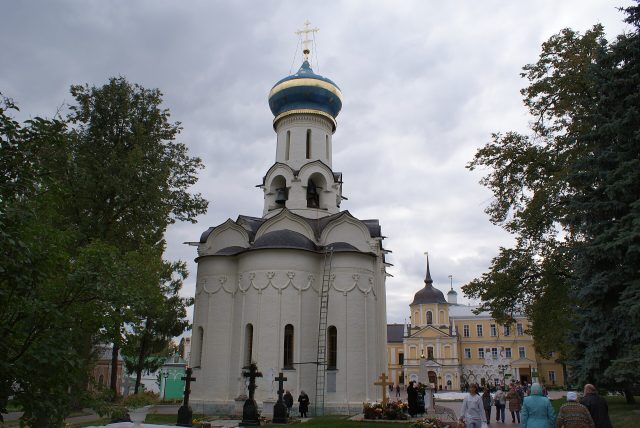
Sergiev Posad itself has a distinct atmosphere, and the Toy Museum fits naturally into its rhythm. The city is quiet, with cobblestone streets, ancient churches, and monasteries that have stood for centuries. After visiting the museum, it’s pleasant to wander the center, stop for tea in a small café, or browse handmade souvenirs from local artisans. The Toy Museum isn’t just a place where old things are kept. It’s a space where history comes alive, where each object has a story, and where visitors, even briefly, become part of that story. You might spend an hour here, or half a day, and still leave feeling like there’s more to discover.