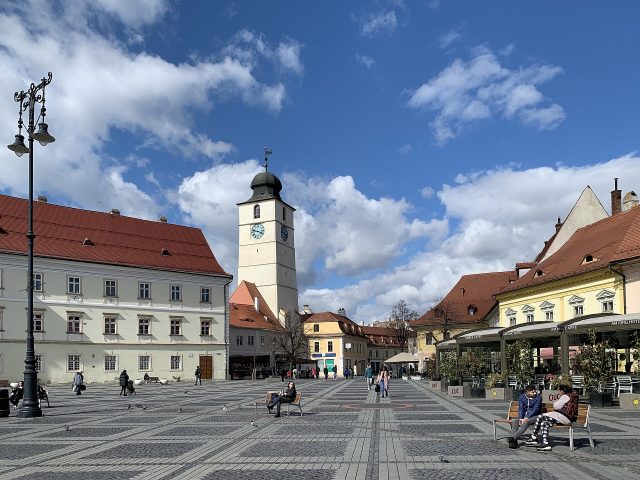
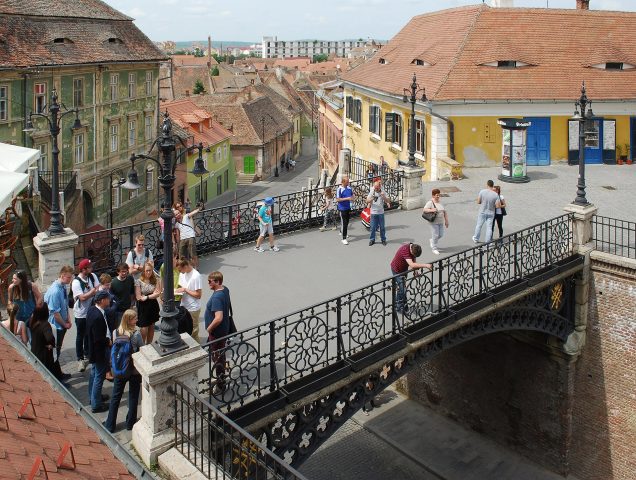
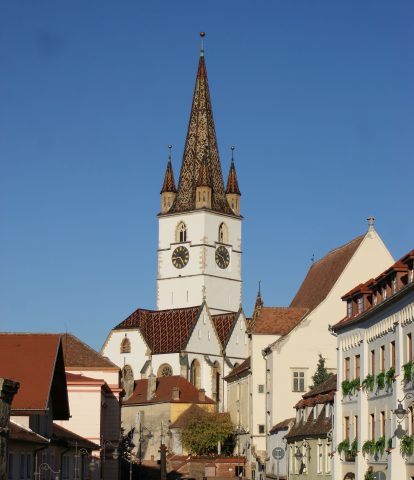
The Pharmacy Museum in Sibiu is one of those rare places where history doesn’t just sit behind glass—it lingers in the air, woven into the grain of old wooden cabinets, the faint scent of dried herbs, and the yellowed pages of handwritten prescriptions. Tucked away in the heart of the city’s historic center, the museum occupies a building that is itself a piece of the past. Constructed in the late 18th century, when Sibiu was flourishing as a commercial and cultural hub of Transylvania, its tall windows and sturdy oak door hint at the prosperity of its original owners—likely merchants or craftsmen whose names have long faded, though their legacy endures within these walls.
Stepping inside feels like entering a slower, quieter world. A narrow staircase leads to the second floor, where a fully functional pharmacy once operated, established in 1569 and recognized as one of the oldest in Romania. Its founder, Thomas Altmann, was a city physician whose work straddled the line between medicine and alchemy. In those days, pharmacists were more like scholar-experimenters than modern-day dispensers of pills. They foraged for herbs in the surrounding hills, ground powders in mortars, and distilled tinctures in copper stills, relying as much on inherited knowledge as on their own trial and error. The museum’s collection of tools—scales, presses, and distillation apparatuses—paints a vivid picture of a time when every remedy was crafted by hand, its recipe carefully transcribed and passed down through generations.
The exhibits are arranged with such care that the pharmacy feels almost alive, as if the pharmacist has just stepped out for a moment. Wooden cabinets line the walls, their countless small drawers labeled in Latin, each one holding not just ingredients but fragments of a profession’s history. A massive prescription cabinet stands in one room, its shelves once stocked with everything from headache powders to elaborate syrups for consumption. Nearby, a collection of glass and ceramic vessels holds remnants of the past: mercury and opium, dried chamomile and valerian root, even powdered pearl and snake venom tinctures—substances that might seem bizarre today but were once considered essential. The museum doesn’t shy away from the strangeness of old remedies; instead, it invites visitors to imagine the logic and hope behind them.
A separate room is dedicated to traditional Romanian folk medicine, where the line between science and superstition blurs. Here, the tools of apothecaries share space with those of village healers: clay pots for poultices, wooden spoons for measuring herbs, and amulets made of bone and stone, believed to ward off illness. In Transylvania, where ancient beliefs persisted well into the 20th century, people often turned to both plants and incantations to cure what ailed them. Garlic and wormwood, for instance, were thought to have protective powers, while certain rituals were performed to drive away disease. This part of the museum feels deeply connected to the rural way of life, where knowledge was passed down orally, and the healer was as much a guardian of tradition as a practitioner of medicine.
The technical side of the museum offers a fascinating glimpse into how medicines were once produced. One room displays the intricate machinery of early pharmacology: distillation devices for extracting essential oils, presses for shaping pills, and capsule-filling machines. Some of these tools are almost works of art in their own right—a copper still engraved with delicate patterns, brass scales precise enough to weigh a single grain of powder. Before mass production, every dose of medicine was unique, its quality dependent on the skill of the pharmacist. The museum also showcases early attempts at standardization, like printed pharmacopoeias that listed recipes and dosages, or herbariums with pressed plants serving as references for foragers.
More than just a collection of artifacts, the Pharmacy Museum tells the story of how humanity’s understanding of health and illness has evolved over centuries. In the Middle Ages, a pharmacy was a place of refuge, where people came not only for medicine but for advice and comfort. By the 18th and 19th centuries, as chemistry advanced, pharmacology became more scientific, though no less mysterious. The exhibits trace this shift through the changing packaging of medicines—from simple paper packets to branded boxes with printed warnings and instructions. By the early 20th century, with the rise of synthetic drugs, pharmacies began to resemble the ones we know today, their shelves stocked with ready-made tablets.
Yet in Sibiu, the memory of old pharmacies isn’t confined to museums. The city still has several operational pharmacies dating back to the 19th century, their interiors nearly identical to the museum’s exhibits. This continuity makes a visit here feel less like a step into the past and more like a quiet conversation with it. There’s no hustle, no flashy advertisements—just the hush of old books, the scent of wood and dried herbs, and the faint impression that if you listen closely, you might hear the scratch of a quill pen or the rustle of a page being turned in a centuries-old herbal.
Sibiu itself is a city where history is etched into every cobblestone, but the Pharmacy Museum stands out because it reminds us that medicine has always been intertwined with culture. Within these walls, science and faith, tradition and innovation, life and death are all part of the same story. Today, we take for granted that medicine is readily available, but this museum reveals the labor, knowledge, and even danger that once went into every bottle of syrup or box of pills. It doesn’t feel like a relic of the past so much as a place that’s still at work, quietly insisting that the care of human health has always been—and always will be—a fundamental part of our shared history.