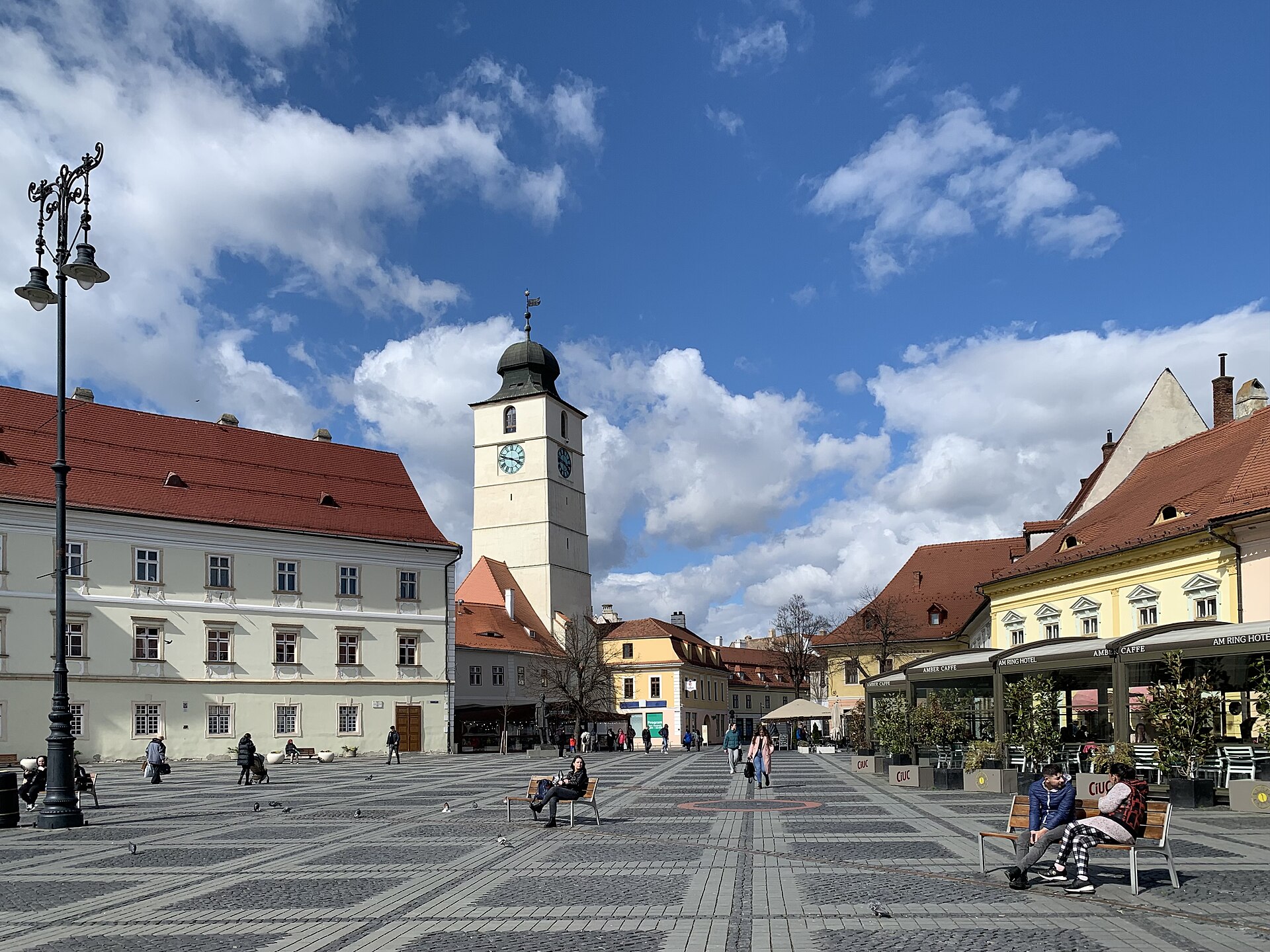
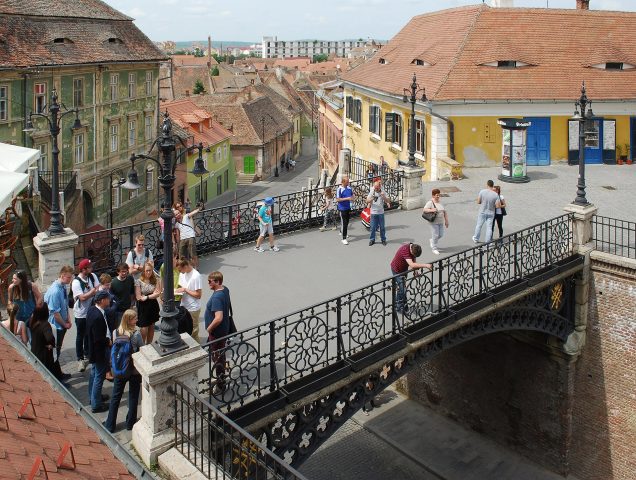
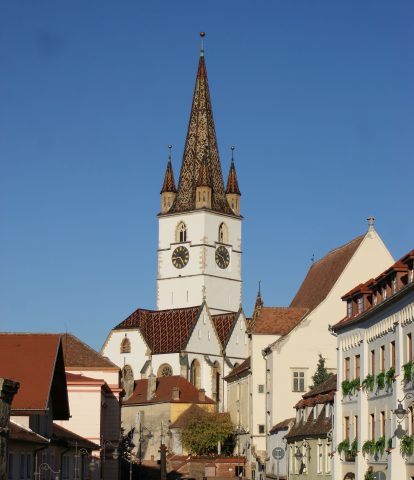
Sibiu’s Great Square is where the city unfolds in its most authentic form, a place where medieval charm and everyday life blend seamlessly. At the heart of the historic center, narrow cobblestone streets converge here, framed by old houses with steep, tiled roofs and towers that once guarded the city against invaders. This isn’t just a postcard-perfect spot—it’s where locals and visitors alike gather for coffee, leisurely strolls, or quiet moments on benches, watching the unhurried rhythm of the city.
The architecture surrounding the square tells a story of layers and time. The buildings, constructed across different eras, come together in a surprisingly harmonious whole. Some facades bear faded frescoes, while others retain Gothic arches or Renaissance flourishes. The most striking structure is the old town hall, once the administrative and symbolic heart of Transylvanian Saxon rule. Their influence lingers in the street names, the intricate stonework, and even the way the square feels—like a place where history hasn’t just been preserved but is still alive.
Centuries ago, Sibiu was a fortified stronghold, one of Transylvania’s most important cities, and the Great Square was its beating pulse. Markets thrived here, townspeople gathered for announcements, and occasionally, public punishments took place in full view. The square has softened with time, but traces of its past remain—thick wooden doors that once locked at dusk, windows shaped by centuries of use, the occasional iron ring embedded in a wall. It’s easy to imagine the clamor of merchants, the murmur of negotiations, or the hush of a crowd awaiting a proclamation.
Today, the square bridges the gap between old and new. In summer, open-air concerts fill the air with music; in winter, an ice rink draws skaters beneath strings of lights. Year-round, cafés and restaurants spill onto the pavement, their tables shaded by umbrellas or warmed by heaters. A statue of Octavian Tăutu, a 19th-century mayor who modernized the city, stands in one corner, as if keeping watch over the square’s daily life. It’s a quiet reminder that Sibiu has always adapted, even as it holds onto its roots.
What makes the Great Square special is its scale. Unlike many European squares, it’s neither cramped nor overwhelmingly grand. There’s enough space to breathe, yet it retains an intimate feel. The buildings, mostly two or three stories tall, are modest in height but rich in character. Even during peak tourist season, the square never feels crowded—just lively enough to be engaging, without losing its sense of calm.
For the best view of Sibiu, climb the Council Tower that overlooks the square. The narrow spiral staircase is worth the effort; from the top, the city spreads out like a patchwork of red roofs, rolling hills, and distant valleys. The Great Square itself looks almost perfectly composed from above, as if the buildings were arranged with deliberate care. It’s one of the few places where you can see the city from a bird’s-eye perspective, and the panorama is unforgettable.
Scattered around the square are small museums and galleries, but the real attraction is the atmosphere. This is a place to sit and observe—children playing near the fountain, elderly men debating on benches, tourists framing photos of ornate facades. Sibiu moves at its own pace, and the Great Square embodies that unhurried spirit. A short walk here can feel like stepping back in time, where the past isn’t just remembered but still lingers in the air.
As evening falls, the square transforms. Streetlamps cast a warm glow over the cobblestones, and the hum of the city softens. The clink of glasses from outdoor cafés mixes with the occasional melody drifting from a restaurant. It’s in these moments that Sibiu’s reputation as one of Romania’s most beautiful cities becomes undeniable. The Great Square isn’t just a landmark—it’s the soul of the city, a place where history and modern life coexist without pretense.