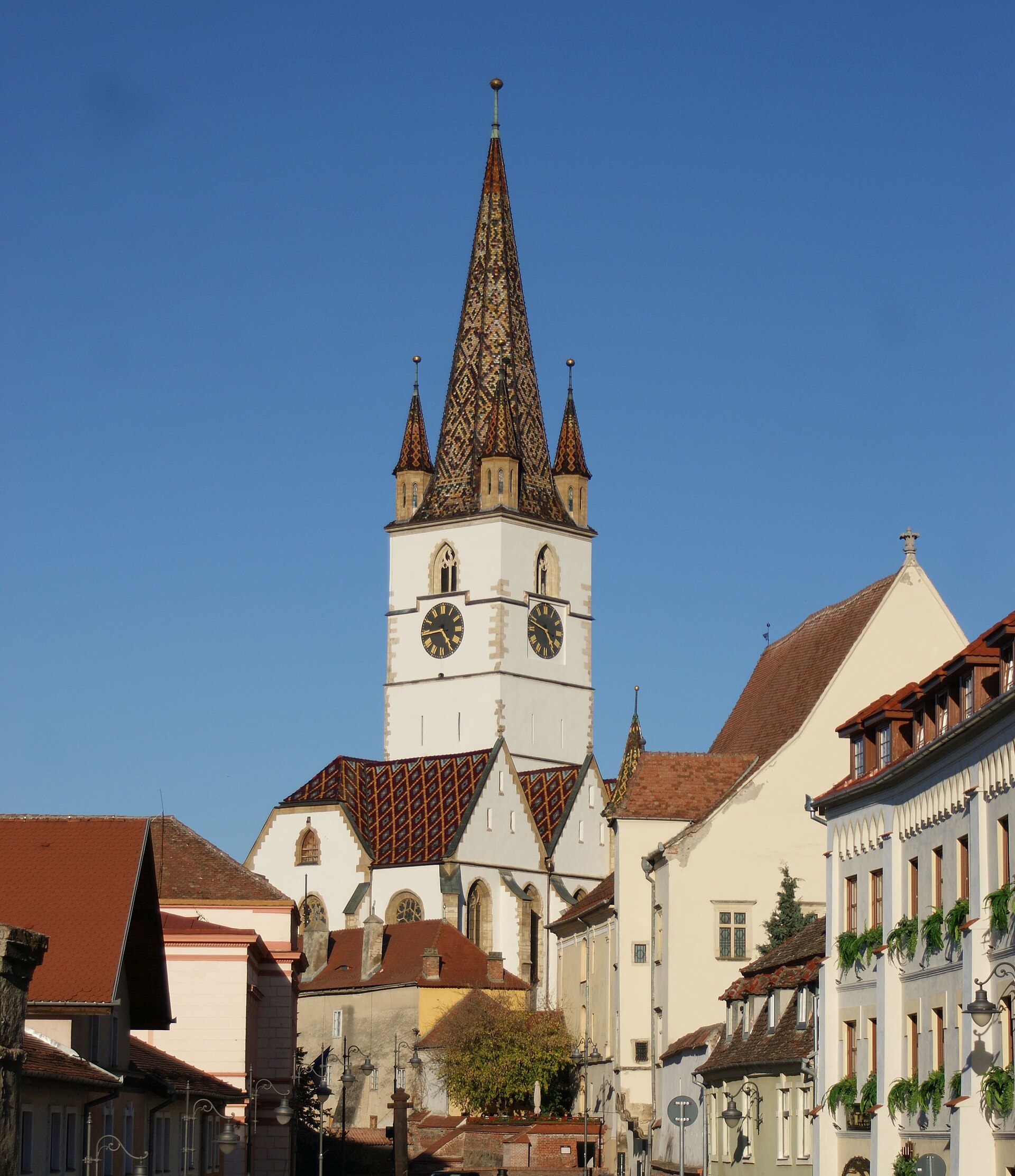
Sibiu is a city where the Middle Ages aren’t just preserved—they’re still alive, quietly shaping the rhythm of daily life. Its cobbled streets wind between houses with steep, tiled roofs, and at the heart of this timeless landscape stands the Evangelical Church. Located in Huet Square, it’s more than just a place of worship; it’s a symbol of the city’s layered history, a silent witness to centuries of change.
Construction began in the 14th century, when Sibiu was one of Transylvania’s most important centers. Saxon settlers had arrived, bringing their traditions and architectural tastes with them. The original structure was built in the Gothic style, but over time, it evolved. The most striking addition came in the 16th century, when a towering bell tower was added—one of Romania’s most recognizable. Its spire, crowned with a weather vane shaped like a rooster, has become an iconic part of Sibiu’s skyline.
Inside, the church feels vast and airy. High vaulted ceilings, supported by slender columns, give the space a sense of lightness despite the weight of its stone walls. Some of the 14th-century frescoes have survived, though time and restoration have left their marks. The most intriguing is the depiction of the Last Judgment on the western wall—a common medieval theme, but rendered here with local touches. The Baroque altar, added in the 18th century, stands in contrast to the Gothic severity of the rest of the interior.
The church’s organ tells its own story. Installed in 1915, it has since become a cornerstone of the city’s musical life. Known for its powerful sound, the instrument is often used for classical concerts. During the summer, organ evenings draw music lovers from across Romania and beyond. The notes fill the church, creating an atmosphere that’s both solemn and slightly mysterious.
The bell tower isn’t just an architectural landmark—it’s also a viewpoint. Climbing the narrow spiral staircase rewards you with a sweeping view of Sibiu. The red-tiled roofs of the old town stretch out below, winding streets leading toward the distant Carpathian Mountains. On clear days, the horizon seems endless, and it’s easy to see why this city has long captivated visitors.
The Evangelical Church is more than just a historical monument; it’s a living place where the past and present intersect. Services are still held here, and the congregation gathers as it has for centuries. Tourists come not just for photographs but to feel the spirit of old Transylvania. Around the church, life goes on—cafés hum with conversation, vendors sell handmade crafts, and in the evenings, musicians and street performers add to the atmosphere. It’s a place where you can almost hear the echoes of the past.
The church has weathered more than just time. It began as a Catholic place of worship, became Lutheran after the Reformation, and today serves an Evangelical community. This evolution mirrors Sibiu itself—a city that has always been a crossroads of cultures and faiths. Germans, Hungarians, and Romanians have all left their mark here, shaping its architecture, language, and traditions.
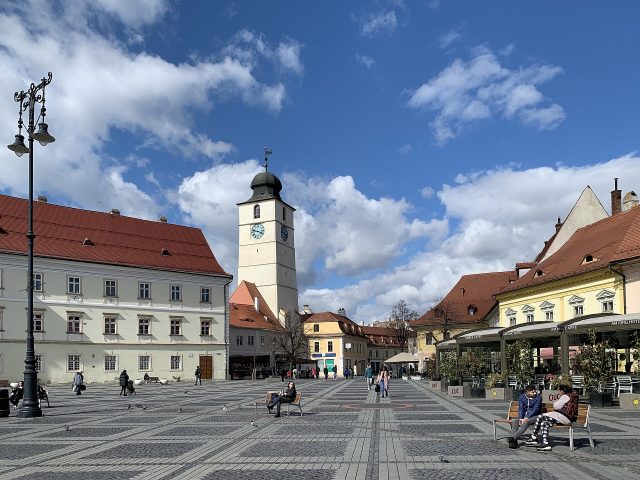
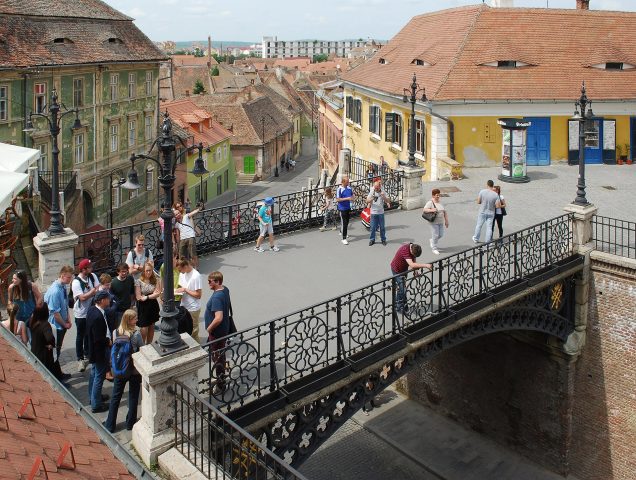
A short walk from the church leads to other remnants of the past: the old town hall, houses with intricately carved facades, and small shops selling local crafts. The pace of life here feels different, as if time moves to its own rhythm. The Evangelical Church isn’t just a landmark; it’s part of the city’s living soul, a place where history isn’t just remembered—it’s still being made.