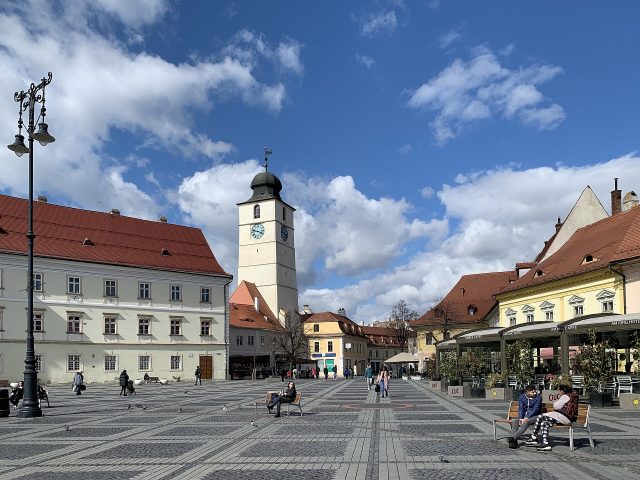
The Brukenthal National Museum in Sibiu is one of those rare places where history doesn’t just sit behind glass—it lingers in the air, in the details of the building itself, in the way light falls across the old paintings and books. Housed in the former palace of Samuel von Brukenthal, an 18th-century Transylvanian nobleman and governor under the Austrian Empire, the museum carries the name of a man who was as much a collector as he was a statesman. His personal trove of art, books, and curiosities became the foundation of what visitors see today, but the palace itself is part of the story. Built in the Baroque style, its high ceilings, ornate moldings, and grand halls still feel alive with the echoes of balls and diplomatic gatherings that once filled them.
The museum’s collection began as Brukenthal’s private passion, but over time it grew into something far larger. Today, it spans several distinct sections: a picture gallery, a historic library, and departments dedicated to history and natural sciences. The art collection is particularly notable, featuring works by European masters from the 16th to the 18th centuries. Flemish and Dutch paintings share space with Italian and German pieces, alongside rarer examples of Transylvanian art from the same period. The works aren’t just displayed—they offer a glimpse into the tastes and priorities of their time, the techniques that were revered, the stories that mattered. There’s no rush here, no modern distractions, just the quiet presence of centuries-old craftsmanship waiting to be noticed.
The Brukenthal Library is a world of its own. Founded in the late 1700s, it holds over three hundred thousand volumes, including rare editions, incunabula, and manuscripts. For anyone who loves books, stepping into its halls is like entering a sanctuary. Leather-bound folios line the shelves, their pages yellowed with age, each one a relic of the ideas and knowledge that shaped Europe. The library isn’t just a collection of texts—it’s a record of how people once thought about the world, how printing evolved, how information was preserved and passed down. Access to the stacks is limited, but even the sight of the towering shelves, the scent of old paper, and the weight of history in the air make it unforgettable.
The natural history section might come as a surprise to those who expect a museum like this to focus solely on art and artifacts. Yet in the 18th and 19th centuries, collecting specimens from the natural world was just as fashionable as acquiring paintings. Here, you’ll find minerals, taxidermied animals, herbariums, and even anatomical preparations—relics of an era when science was still grappling with the mysteries of life. Some of the displays have an eerie quality, a reminder of how people once tried to make sense of the world long before modern technology. It’s a stark contrast to the refined elegance of the art galleries, but no less fascinating.
The palace itself is a work of art. Built in stages, its architecture reflects the tastes of different periods. The main façade, with its symmetrical windows and balcony, is a textbook example of Baroque design, while the interiors are adorned with frescoes and stucco work. The grand hall, where receptions were once held, is particularly striking. Its walls depict scenes from classical mythology, and the ceiling is a canvas of intricate paintings. Standing there, it’s easy to imagine the rustle of silk gowns and the murmur of conversation in a language that hasn’t been spoken here in centuries.
Sibiu is a city steeped in history, and the Brukenthal Museum is one of its quiet treasures. Unlike the more famous museums in Bucharest or Cluj, it doesn’t draw crowds, which only adds to its charm. There’s no need to rush, no jostling for space—just the freedom to wander, to linger over a painting or a book, to let the past settle around you. The museum doesn’t try to be flashy or interactive; it simply exists, a repository of memory, and that’s its greatest strength. For anyone curious about history, art, or the lingering spirit of old Europe, it’s a place that feels like a discovery.
Beyond its permanent collections, the museum occasionally hosts temporary exhibitions, lectures, and cultural events. These might focus on contemporary art, specific historical periods, or notable figures, offering fresh perspectives on the collections. Such events keep the museum from feeling like a static archive, breathing new life into the old walls and reminding visitors that history is never truly fixed—it’s always being reinterpreted.
Visiting the Brukenthal Museum isn’t just about seeing things; it’s about stepping into a different time. There’s no hurry here, no pressure to move on to the next attraction. You can sit on a bench in one of the galleries and think about all the people who have walked these halls over the past two and a half centuries. That’s the magic of places like this—they don’t just tell stories about the past; they make you reflect on the present, on the quiet threads that connect us to those who came before. In a world that moves too fast, the Brukenthal Museum offers a rare chance to slow down and listen.