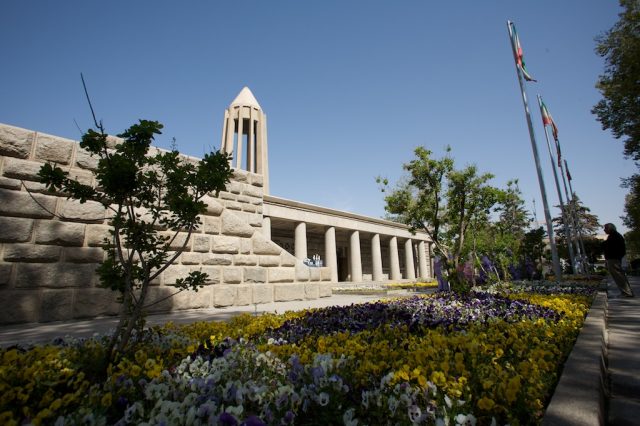
Hamedan’s Museum of Natural History is one of those quiet places where the past doesn’t need words to speak. Tucked away in the heart of a city layered with centuries, it holds collections that tell the story of Iran’s landscapes—how they shifted over millennia, what creatures once roamed here, and how the land itself has been shaped by time. There are no flashy displays or interactive screens, and that’s precisely what makes it worth visiting. The museum doesn’t entertain; it invites you to slow down and notice what usually slips past unobserved.
The building itself is part of the experience. It occupies a historic mansion that once belonged to a local dignitary, blending Persian architectural traditions with the European influences that crept into Iran in the late 19th and early 20th centuries. High ceilings, intricately carved wooden doors, and a central courtyard with a fountain create an atmosphere that feels like stepping into another era. Even if natural history isn’t your main interest, wandering through its halls and corridors can feel like a brief journey through time, where the weight of the past lingers in the details.
The museum’s collection is divided into several sections, each focusing on a different aspect of the natural world. The paleontology hall is where ancient Iran comes to life through fossils uncovered across the country. Here, you’ll find the remains of mastodons, giant rhinos, and other prehistoric creatures that once wandered these lands. Some of the most striking exhibits are those tied to marine life—ammonite shells, fish imprints, and coral fragments—remnants of a time when much of Iran was submerged beneath the ancient Tethys Ocean. For many visitors, these displays are a revelation, offering a glimpse into a geological past that few associate with the country today.
The zoology section brings Iran’s modern wildlife into focus. Taxidermied animals from across the country line the shelves, including snow leopards, bears, wolves, and rare birds like the bearded vulture. Some exhibits highlight endangered species, serving as a quiet reminder of how fragile ecosystems can be. The most compelling displays are the dioramas, which recreate the natural habitats of Iran’s diverse regions—the rugged slopes of the Zagros Mountains, the arid expanses of the central deserts, and the lush forests along the Caspian Sea. They offer a sense of how dramatically the country’s wildlife varies with its climate and terrain.
A separate hall is dedicated to botany, showcasing the plant life that thrives in Iran’s extremes. Herbarium specimens range from alpine meadows to desert shrubs, with some species found nowhere else in the world. Among the most intriguing are the rare tulips native to the region, as well as displays on medicinal plants that have been used in Persian traditional medicine for centuries. The exhibits also explain how these plants have adapted to survive in harsh conditions, enduring scorching heat and prolonged droughts.
Beyond its permanent collections, the museum occasionally hosts temporary exhibitions on pressing environmental issues—climate change, species extinction, and conservation efforts. Lectures and seminars sometimes bring in researchers and scientists, turning the space into a hub for discussion. For students, the museum is where textbook lessons take on tangible form. Instead of abstract facts, they encounter real fossils, animal specimens, and plant samples, making the natural world feel more immediate and understandable.
Hamedan itself is a city steeped in history, and the Museum of Natural History fits seamlessly into its cultural fabric. Unlike the bustling tourist hubs of Tehran or Isfahan, Hamedan moves at a slower pace, allowing visitors to engage more deeply with its layers. A visit here pairs well with other historical sites in the city, like the tomb of Avicenna or the ancient Elamite inscriptions at Ganjnameh. Together, they create a fuller picture of the region—not just its human history, but the landscapes and creatures that shaped it.
A trip to the museum doesn’t take long, but it leaves a lasting impression. It’s a place that reminds you how much more there is to the world than what meets the eye. For those who prefer real objects over digital screens, who like to turn things over in their hands and examine them from every angle, this is the kind of museum that lingers in the mind. In an age where everything is designed to be fast and flashy, Hamedan’s Museum of Natural History offers something rare: the chance to pause, observe, and reflect. And perhaps that’s why, long after you’ve left, you might find yourself wanting to return.