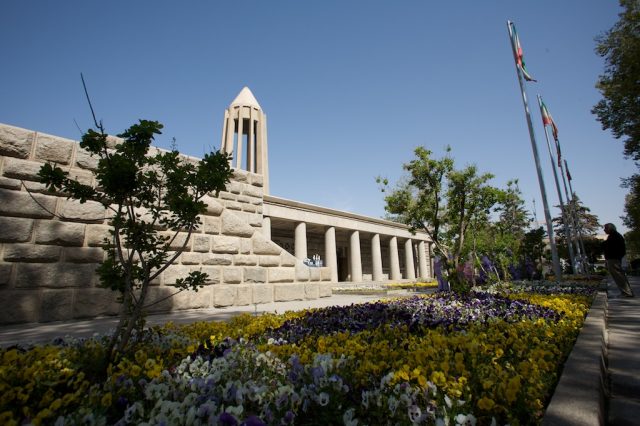
The mausoleum of Baba Tahir sits quietly in the heart of Hamadan, a city where time seems to move at its own unhurried pace. Unlike the grand mosques or bustling bazaars that draw crowds elsewhere in Iran, this place feels intimate, almost personal. The building itself is modest—a white dome adorned with blue tilework rising above the low rooftops of the surrounding neighborhood. There’s no ostentation here, just a sense of quiet reverence, as if the very air carries the weight of centuries.
Baba Tahir, often called Baba Tahir Uryan, was a poet and Sufi mystic who lived in the 11th century. Little is known about his life, but the stories that endure paint him as a wandering figure, a man who roamed the roads of Persia composing verses in a language that ordinary people could understand. His poetry, written in the Luri dialect, is simple yet profound, free of the elaborate metaphors that often characterize Persian literature. Instead, his quatrains speak of love, longing, and the search for meaning in everyday existence. Perhaps that’s why his words still resonate today—they feel timeless, as if they could have been written yesterday.
The mausoleum we see now was built in the 20th century, but the site itself has been a place of pilgrimage for much longer. For centuries, people have come here to pay their respects, drawn by the legacy of a poet who spoke to the heart rather than the intellect. The original structure was far simpler—a small domed building surrounded by a garden—but even then, it held a certain magic. The current design, completed in the 1970s, blends traditional Iranian architecture with modern minimalism. The clean lines, pale stone, and delicate blue mosaics create a space that feels both sacred and serene.
Inside, the mausoleum is bright and airy, with sunlight streaming through high windows to illuminate the white walls and marble floors. At the center of the room lies the poet’s tomb, draped in green fabric embroidered with gold calligraphy—lines from his own verses. Visitors often leave small notes here, tucked into the latticework around the grave, as if sharing their thoughts with someone who might understand. The atmosphere is hushed, broken only by the soft murmur of prayers or the occasional footsteps of those who come to reflect.
Hamadan is one of Iran’s oldest cities, a place where layers of history are visible at every turn. Zoroastrians, Christians, and Muslims have all left their mark here, and the mausoleum of Baba Tahir stands as a quiet testament to that cultural richness. His poetry, steeped in Sufi philosophy, emphasizes inner truth over outward ritual, a message that transcends time and religion. That universality is perhaps why the mausoleum attracts not just the devout, but anyone seeking a moment of stillness in a busy world.
A visit here is best paired with a walk through old Hamadan. The city is smaller than Isfahan or Shiraz, but its charm lies in its unassuming authenticity. Narrow streets wind past spice markets and carpet shops, while ancient caravanserais hint at the days when Hamadan was a stop on the Silk Road. Nearby, Ekbatan Park offers shade and quiet, and a short walk away lie the ruins of the ancient Median capital. Hamadan doesn’t reveal itself all at once—it takes time to uncover its stories, but those who linger are rewarded.
The mausoleum is open year-round, and there’s no admission fee. The best times to visit are early morning or late afternoon, when the light is soft and the air carries the scent of flowers. These are the hours when the place feels most alive, yet most peaceful. If you’re lucky, you might hear someone reciting Baba Tahir’s poetry in a low, melodic voice—a tradition that has been passed down through generations.
Today, the mausoleum is more than just a monument. It’s a living part of Hamadan’s cultural life, hosting poetry readings, music performances, and gatherings of writers. For many locals, it’s a place of personal significance—a spot to seek inspiration, solace, or simply a moment of quiet. In that way, the mausoleum bridges the past and present, reminding visitors that some questions—about love, loss, and the meaning of life—are eternal.