Ecbatana
Ecbatana is a place where history lingers in the ground beneath your feet. Today, it’s a quiet hill on the edge of Hamadan, but once, this was the heart of empires. The Greeks knew it as Ecbatana, the Persians called it Hagmatana, and ancient texts name it Achmetha. Founded in the 8th century BCE, it became the first political center of the Median Empire, later serving as a stronghold for the Achaemenids. Kings like Cyrus the Great and Darius I ruled from here, their decrees shaping lands from Egypt to India. This was where royal treasuries were kept, where decisions echoed across centuries.
The remains of Ecbatana are modest—foundations, fragments of walls, and broken pottery on the slopes of Tepe Hegmatane. There are no towering ruins like those of Persepolis or Susa. But the site was built as a fortress city, designed with seven concentric walls, each rising above the last. According to legend, these walls were painted in colors—white, black, purple, blue, orange, silver, and gold—each representing a planet. Alexander the Great, who captured the city in 330 BCE, was said to have been awed by its splendor.
Artisans, merchants, priests, and soldiers filled its streets. Markets offered goods from across the known world. Ecbatana was known for its goldsmiths, whose work rivaled that of Babylonian and Lydian craftsmen. Its location on the Silk Road ensured its importance long after the Achaemenids fell. Under the Seleucids and Parthians, it remained a stop for caravans traveling between East and West.
Even when the Parthian capital shifted to Ctesiphon, Ecbatana stayed a summer retreat for rulers. Roman historians wrote of it as a city where Parthian kings stored treasures and received envoys. With the rise of Islam, its influence waned as new power centers like Baghdad and Isfahan drew attention. Yet its past never entirely disappeared.
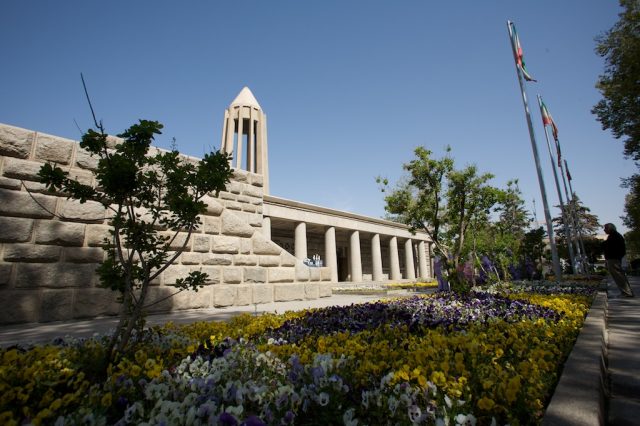
Tepe Hegmatane is home to a small museum. It displays artifacts unearthed during excavations—clay tablets with cuneiform, coins, jewelry, and weapons. These are fragments of what might still lie buried, as much of the ancient city remains unexplored.
The hill overlooks modern Hamadan, with its minarets and bazaars. Locals speak of their city’s ancient roots. The wind carries whispers of Persian kings, Greek mercenaries, Parthian traders, and Roman diplomats who once walked these paths.
What makes Ecbatana special is how its history blends with the present. The stones beneath your feet, the view of the Zagros Mountains—it feels like a bridge between then and now. You can sit on the hillside and imagine when this was the center of the world. Here, the past isn’t just remembered; it’s alive.