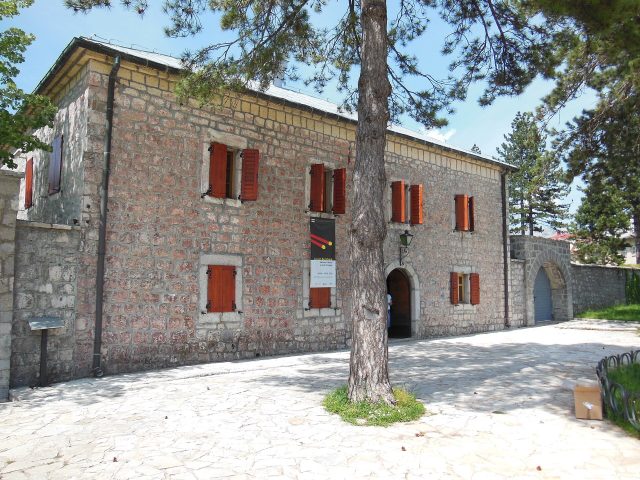
Cetinje has long been considered Montenegro’s cultural heart, a place where history lingers in the quiet streets and the grand facades of old buildings. Among its museums and landmarks, the Central Bank of Montenegro’s Money Museum offers a perspective that goes beyond mere artifacts—it tells the story of a nation’s economic journey, shaped by centuries of change. Housed in a building that once served as a financial hub when Cetinje was the country’s administrative capital, the museum feels like a natural extension of the city’s layered past.
The collection spans from ancient times to the present day, beginning with coins that circulated in the region long before Montenegro existed as a state. Visitors can see early drachmas and medieval dinars, but the real fascination lies in the currency that emerged when Montenegro first gained independence. The coins and banknotes from the era of the Principality and later the Kingdom reflect not just economic shifts but also the country’s political ambitions and its place in Europe. These pieces were more than money—they were symbols of sovereignty, minted at a time when Montenegro was carving out its identity on the world stage.
One of the most striking exhibits features the first Montenegrin perpers, introduced in the early 20th century. These coins marked a bold step for a young nation still finding its footing, and their design carries the weight of that moment. The museum also includes banknotes from the Yugoslav period, when Montenegro was part of a larger federation, as well as the modern euro, adopted after the country regained full independence in 2006. Each item is presented with enough context to understand its significance, whether it’s a coin from a turbulent wartime economy or a banknote from a period of relative stability.
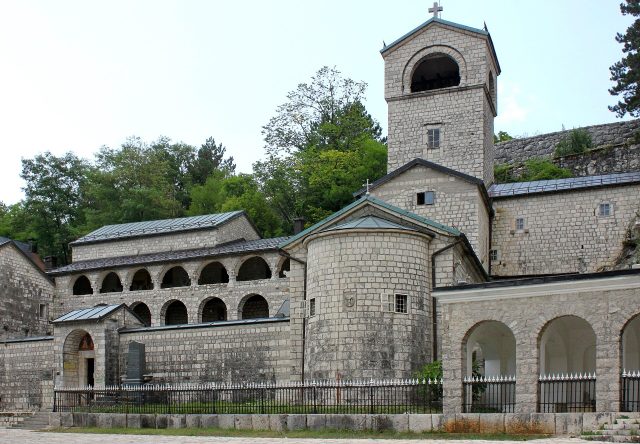
The building itself is worth noting. Constructed in the early 1900s, it blends seamlessly with Cetinje’s architectural character—solid, understated, and built to last. Inside, the museum’s design is clean and uncluttered, allowing the exhibits to take center stage. There’s a sense of quiet reverence here, as if the space itself respects the history it preserves. It’s not a flashy museum, but that only adds to its appeal; there’s room to linger over details without feeling rushed.
What makes this museum unusual is how it connects economic history to broader themes. The rise and fall of currencies mirror Montenegro’s political fortunes—wars, occupations, alliances, and independence movements all left their mark on the money in circulation. For instance, the brief period of Austro-Hungarian rule in the early 20th century introduced coins and banknotes that now serve as reminders of a time when Montenegro’s sovereignty was under threat. These pieces don’t just document financial systems; they reflect the resilience of a nation determined to maintain its identity.
The museum also dedicates space to Montenegro’s more recent history. After the breakup of Yugoslavia, the country faced the challenge of establishing its own currency before eventually adopting the euro. The exhibits here include early post-independence banknotes and materials explaining the transition, offering a glimpse into the practical and symbolic steps Montenegro took to align itself with Europe. It’s a story of adaptation, one that resonates in a country still navigating its place in the modern world.
Cetinje itself feels like a living museum, where every corner holds a piece of history. The former royal palace, the Cetinje Monastery with its revered relics, and the quiet squares all contribute to the sense that this is a city shaped by time. The Money Museum fits naturally into this setting, providing a different lens through which to view Montenegro’s past. It’s not the kind of place that draws crowds, which makes it all the more rewarding to explore at a leisurely pace.
There’s something quietly powerful about seeing how money has evolved alongside a nation. The coins and banknotes on display aren’t just relics—they’re evidence of how ordinary life was affected by larger forces. A worn dinar from the Middle Ages or a crisp euro note from the 2000s might seem like small things, but they carry the weight of history. In this museum, those small things come together to tell a much bigger story—one of struggle, adaptation, and endurance. It’s a reminder that behind every currency lies a country’s journey, and Montenegro’s has been anything but simple.