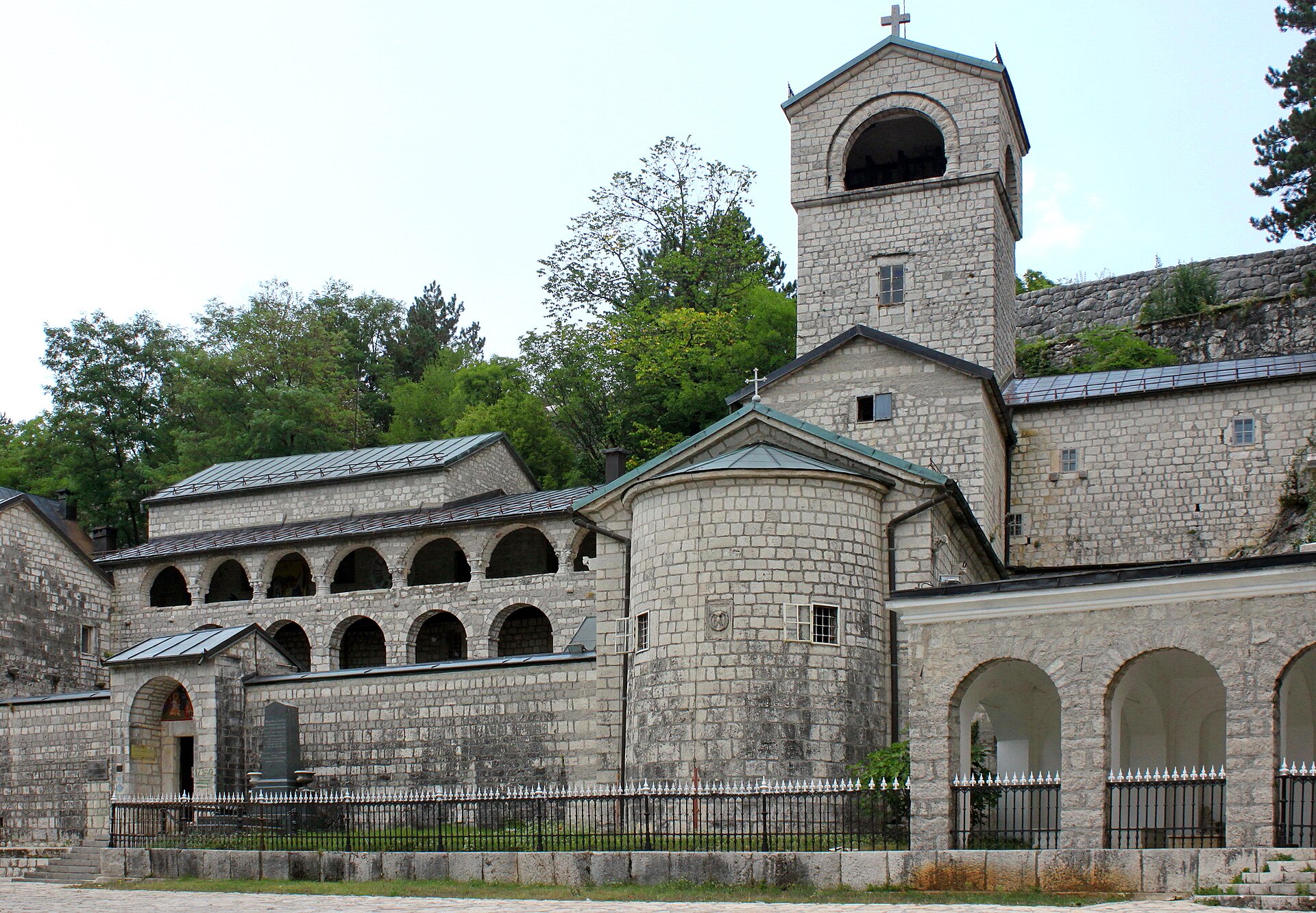
Cetinje Monastery stands quietly at the heart of Montenegro’s old royal capital, a place where history feels almost tangible. Built in the late 15th century, it has witnessed the rise and fall of empires, the shifting borders of the Balkans, and the slow unfolding of a nation’s identity. The monastery was founded by Ivan Crnojević, the ruler of the medieval state of Zeta, who chose this spot not just for its spiritual significance but also for its strategic position in the mountains. The original structure was destroyed by the Ottomans in the 17th century, but what stands today is a reconstruction from the early 18th century, a testament to the resilience of both the place and the people who rebuilt it.
The architecture of the monastery is a blend of simplicity and solemnity, typical of Orthodox monastic design. Thick stone walls, low arches, and a modest bell tower give it an unassuming presence, though its location on a gentle hillside ensures it remains a focal point of Cetinje. Inside, the air is cool and dim, the light filtering through narrow windows to illuminate frescoes that have faded with time. The most revered relic here is the right hand of John the Baptist, a holy artifact that has drawn pilgrims for centuries. The monastery also houses a collection of religious manuscripts, some dating back to the medieval period, their pages filled with intricate calligraphy and delicate illustrations.
Beyond its religious importance, the monastery has played a crucial role in Montenegro’s cultural and political life. During the 19th century, when Cetinje was the capital of the Principality of Montenegro, the monastery served as a center of learning and national resistance. It was here that the first Montenegrin printing press was established in the 15th century, a revolutionary step for the region at the time. The monks were not just spiritual guides but also keepers of knowledge, preserving texts and traditions that might otherwise have been lost during centuries of foreign rule. Even today, the monastery remains a symbol of Montenegrin identity, a place where the past is not just remembered but actively lived.
Visitors to the monastery often remark on the sense of stillness that pervades the place. Unlike some of Europe’s grander religious sites, Cetinje Monastery does not overwhelm with opulence or scale. Instead, it invites quiet reflection, its modest interiors and peaceful courtyards offering a respite from the outside world. The surrounding town of Cetinje, with its crumbling palaces and leafy squares, adds to this atmosphere of timelessness. The monastery is not a museum, though it holds treasures; it is a living institution, still home to a small community of monks who maintain its traditions.
One of the most striking aspects of the monastery is its relationship with the landscape. The mountains that rise behind it are not just a backdrop but an integral part of its story. For centuries, these peaks provided protection, shielding the monastery from invaders and allowing it to endure even when other parts of the region fell under foreign control. The view from the monastery’s grounds is one of rugged beauty, the kind that makes it easy to understand why this place was chosen for both spiritual retreat and strategic defense. In winter, the mountains are often dusted with snow, while in summer, the air is filled with the scent of pine and wild herbs.
The monastery’s role in Montenegrin history is perhaps best illustrated by its connection to the country’s royal family. The Petrović-Njegoš dynasty, which ruled Montenegro for centuries, had deep ties to the monastery. Many of its members were buried here, including Petar II Petrović-Njegoš, one of Montenegro’s most revered rulers and poets. His tomb, a simple stone sarcophagus, lies within the monastery’s walls, a reminder of the intertwining of faith, power, and culture in this small but resilient nation. The monastery was not just a religious site but a political one, a place where decisions were made and alliances forged.
Today, the monastery continues to be a place of pilgrimage, though its visitors now come from all over the world. Some are drawn by its religious significance, others by its historical weight, and still others by the sheer beauty of the place. The monks who live here maintain a quiet routine, their days marked by prayer, work, and the preservation of the monastery’s heritage. For those who take the time to explore, the monastery offers more than just a glimpse into the past; it provides a sense of continuity, a connection to the generations who have walked these same paths.
Cetinje itself is a town that feels suspended in time, and the monastery is its anchor. The streets around it are lined with buildings that tell their own stories—former embassies, old schools, and crumbling mansions that once housed diplomats and dignitaries. The town’s decline as a political center in the 20th century has left it with a kind of faded grandeur, a place where history is not just preserved but palpable. The monastery, with its enduring presence, serves as a reminder that some things do not change, even as the world around them does.
For those who visit, the monastery is more than just a stop on a tour of Montenegro. It is a place where the layers of history are visible in every stone, where the past is not just remembered but felt. Whether you come for the relics, the architecture, or simply the quiet, the monastery offers something rare—a moment of stillness in a world that often feels too fast. It is a place that asks you to slow down, to look closely, and to listen. And in doing so, it reveals not just its own story, but a piece of Montenegro’s soul.