Cajamarca’s Museum of Archaeology and Ethnography doesn’t just display the past—it lets it speak. The city itself is a place where history isn’t confined to books or monuments but lingers in the stones beneath your feet, in the walls of colonial buildings, and in the quiet corners where the Inca Empire once met its end. The museum acts as a quiet guide through these layers of time, offering not grand halls of gold or dramatic reconstructions, but something far more intimate: the everyday objects that once belonged to the people who shaped this land long before the Spanish arrived.
The journey through the museum begins with the earliest inhabitants of the Cajamarca Valley, cultures that left behind enigmatic petroglyphs and simple clay vessels. These were people who first turned the fertile soil of the region into a home, and their artifacts—rough-hewn stone tools, fragments of pottery—hint at a life deeply connected to the land. One of the most striking exhibits belongs to the Cupisnique culture, which thrived here in the first millennium. Their ceramics, adorned with geometric patterns, suggest a society that valued both function and artistry. Burial urns, intricately painted and shaped, reveal a belief in an afterlife where the dead were not merely remembered but actively honored. The way these vessels were crafted—some with human features, others with animal motifs—speaks to a worldview where the boundaries between the living and the spiritual were fluid.
The Inca period is where the museum’s narrative gains particular weight. Cajamarca was no ordinary outpost; it was a critical junction on the road from Cusco to the northern reaches of the empire, a place where local traditions were absorbed and reshaped by Inca rule. The exhibits here include pottery shaped like animals, textiles woven with labyrinthine designs, and bronze tools that built the empire’s roads and temples. But the most intriguing artifacts are the quipus—knotted strings that served as a form of record-keeping. Though their full meaning remains a mystery, these simple cords are a testament to a civilization that managed vast territories, complex trade networks, and even historical chronicles without a written language. They remind visitors that what we consider "advanced" is often a matter of perspective.
The arrival of the Spanish in 1532 marked a turning point not just for Cajamarca but for an entire continent. The museum doesn’t shy away from this collision of worlds, dedicating space to the artifacts that tell the story of conquest and resistance. Here, Catholic crosses sit alongside indigenous amulets, European ceramics mix with traditional textiles, and colonial documents reveal the bureaucratic machinery that sought to erase an empire. One of the most poignant exhibits centers on the encounter between Atahualpa and Francisco Pizarro, a moment that changed the course of history. The museum houses a replica of the ransom room—filled with gold and silver—that Atahualpa offered in exchange for his freedom. The original treasures were melted down by the Spanish, but the replica serves as a stark reminder of what was lost.
Beyond the artifacts of conquest, the museum also explores the ways in which indigenous culture persisted despite colonial rule. A separate section is devoted to the ethnography of modern Peru, and it’s here that the past feels most alive. Traditional Andean clothing, musical instruments like the quena and charango, and everyday tools used in rural communities all speak to a living culture that has endured. The masks on display are particularly striking—vibrant, sometimes grotesque, often humorous—worn during festivals to embody spirits, saints, and mythical figures. These aren’t relics of a bygone era but objects still in use, passed down through generations. The museum captures this continuity, showing how ancient customs are woven into the fabric of contemporary life in the highlands.
What makes this museum special is its attention to the small, often overlooked details. It’s not the size of the collection that impresses but the way each object invites you to imagine the hands that once held it. A chipped clay jug might have been used to store chicha, the fermented corn drink that fueled celebrations and rituals. A wooden spoon, rough and worn, could have stirred a peasant’s meal in the 17th century. The quiet of the galleries—broken only by the occasional murmur of visitors or the scratch of a pencil on paper—creates an atmosphere where these objects feel almost like personal artifacts rather than museum pieces. There are no crowds here, no jostling for space in front of famous exhibits. Instead, there’s time to linger, to wonder, to connect.
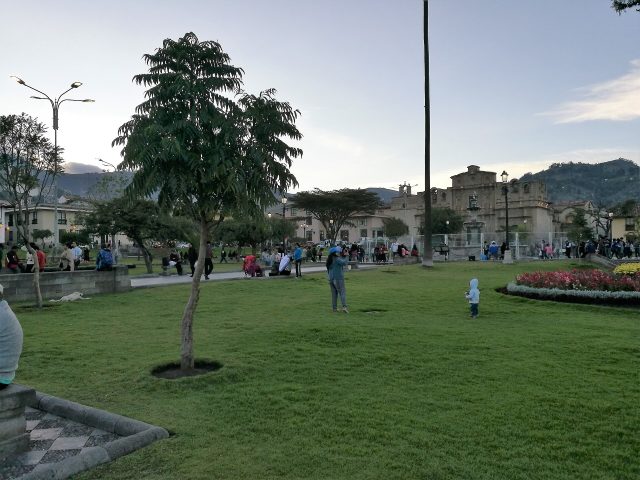
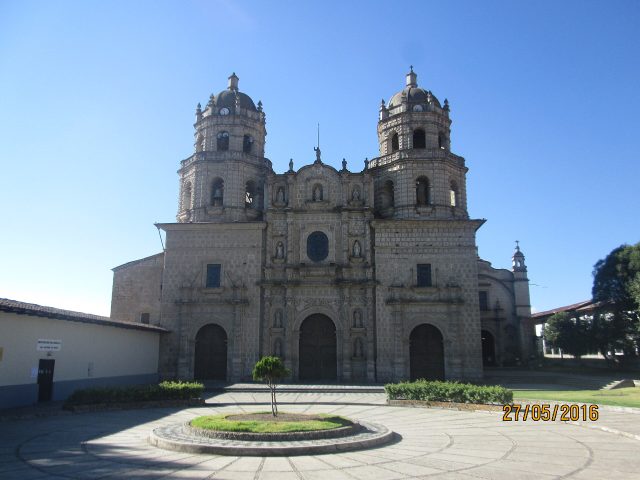
Cajamarca itself is a city where history isn’t something you visit—it’s something you walk through. The colonial architecture, the narrow streets leading to the plaza where Atahualpa was executed, the markets selling woolen ponchos and clay whistles shaped like birds—all of it carries echoes of the past. The Museum of Archaeology and Ethnography is where these echoes converge. It doesn’t try to dazzle with grandeur or spectacle, and that’s precisely why it works. Here, the past isn’t a distant, abstract concept but something tangible, something you can almost touch. After visiting, the city begins to reveal itself differently. The stones underfoot, the walls around you, the faces of the people you pass—they all become part of a larger story, one that stretches back centuries and continues to unfold.