The museum sits on a quiet street in this Patagonian town, where forests meet mountains. Inside, the past isn’t locked behind glass—it’s in the grain of wooden tools, the corners of black-and-white photographs, the handwritten labels on jars of volcanic ash. Nothing here is staged. The exhibits are what locals saved: a settler’s axe, a child’s schoolbook, a fisherman’s net mended too many times.
The building was once a home. Now its low ceilings and creaking floorboards hold the weight of a century. The air smells of old paper and damp wool. Displays line the walls without order—no grand themes, just objects grouped by time and use. A 1930s kerosene lamp stands next to a photograph of the family who used it. A rusted saw leans against a plank from the first sawmill.
Most of the collection came from attics and sheds. Neighbors brought what they’d kept: their grandparents’ wedding portrait, a broken clock stopped at the hour the volcano erupted, a Huilliche fishing spear found on the beach. The museum didn’t ask for these things. The town gave them because no one else would remember.
Settlers arrived in the 1920s, lured by government promises of land. They came from Germany, Croatia, the Chilean countryside—people who knew how to build with what they had. Winters here last eight months. Wind strips paint from houses in a season. The first roads were paths beaten by horses, later widened by trucks that broke down more often than they ran. The museum’s tools tell the story: a hammer with a head worn thin, a chisel sharpened to a needle’s point, a pair of boots soled with tire rubber.
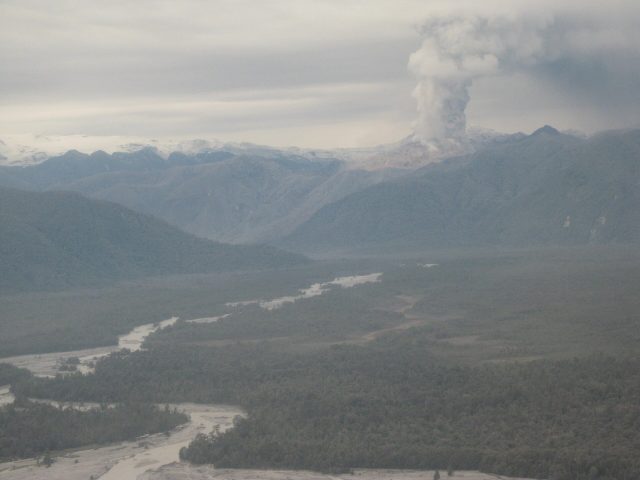
In 2008, the volcano woke. Ash fell like snow for weeks. Roofs collapsed under the weight. The river turned gray. The museum’s exhibit shows the town buried: cars half-sunk in ash, streets where only the tops of signs remained visible. A display case holds a chunk of pumice, light enough to float, and a gas mask with the elastic still stretched from use. The photographs don’t need captions. You can see the exhaustion in the faces of the people shoveling their homes free.
The Chono and Huilliche lived here for centuries before settlers. Their history is quiet—no written records, just stone knives, bone fishhooks, a canoe hollowed from a single log. The museum’s artifacts are few, but they ask questions. How did they navigate these waters without compasses? What did they eat when the rivers froze? The answers are in the land, if you know how to look.
There are no audio guides. No gift shop. The woman at the desk might point to a photograph and say, "That’s my uncle." She’ll tell you how the town rebuilt after the eruption, how the school reopened in a shipping container, how the first café served coffee from a thermos. The museum doesn’t end with the past. It keeps adding: a photograph of the new library, a flyer for last year’s festival, a child’s drawing of the volcano.
After you leave, the town feels different. You notice the way the planks on the boardwalk sag, the same way they did in the old photographs. The mountain looms, not just a landmark but a presence. The museum doesn’t give you a story with a beginning and an end. It gives you the pieces and lets you hold them, heavy in your hands.