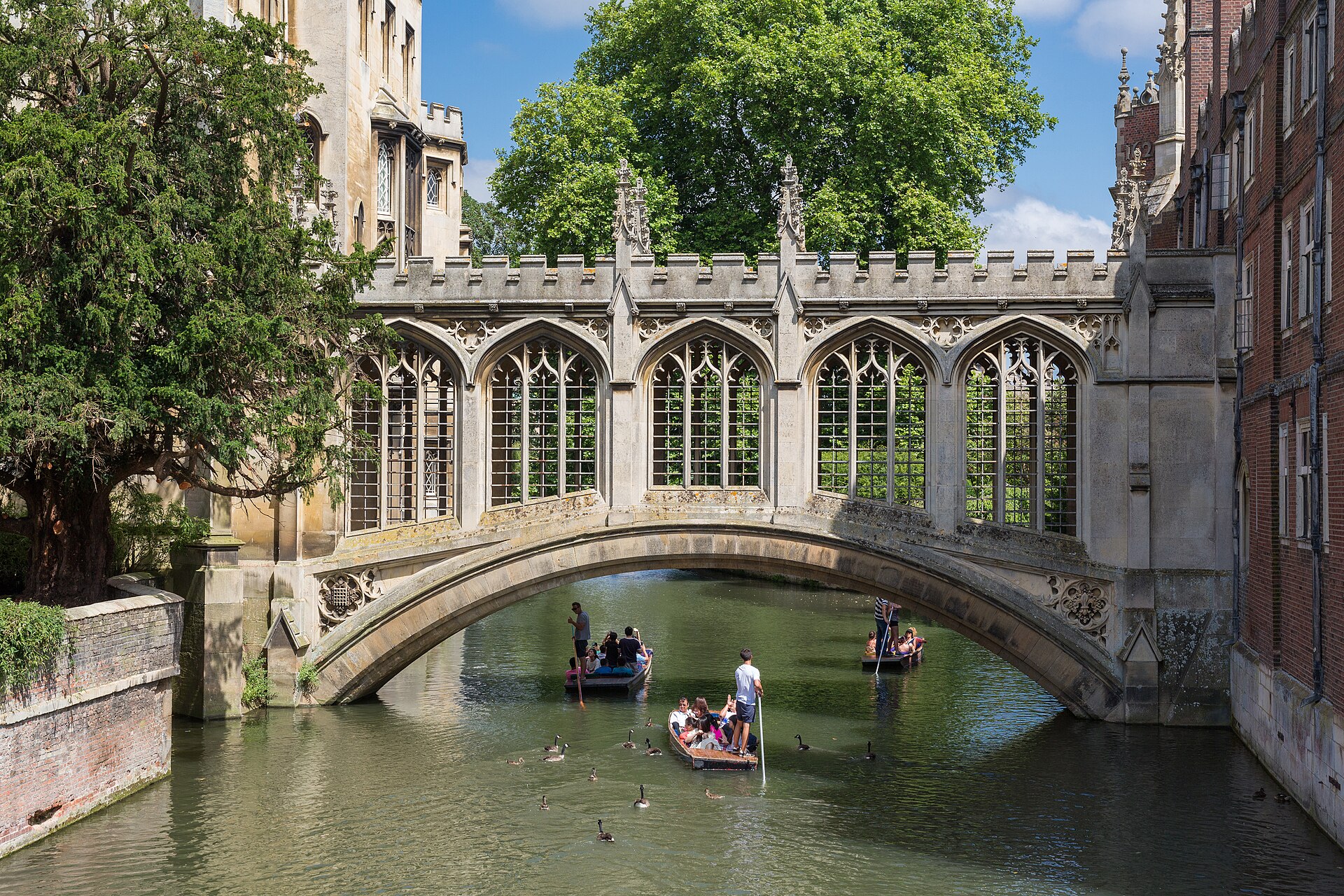
The Bridge of Sighs in Cambridge is one of those places that feels almost too picturesque to be real, yet it carries a quiet authenticity that postcards could never capture. Stretching across the River Cam, it connects two parts of St John’s College in a way that seems plucked straight from Venice. The resemblance isn’t accidental—this bridge was indeed inspired by its famous Italian counterpart, though the Cambridge version arrived much later, in the early 19th century. Designed by architect Henry Hutchinson in the Gothic Revival style, it has since become a defining feature of the university’s landscape, blending seamlessly into the city’s historic fabric.
The name itself carries a whiff of romance, though its origins are more practical than poetic. Students of St John’s College christened it the Bridge of Sighs, spinning tales of lovers parting ways beneath its arches, their farewells lingering in the air like echoes over the water. In reality, the bridge was built for far more mundane reasons—it provided a quick route between the college’s old and new courts, sparing undergraduates a longer walk. Still, the legend endures, adding a layer of charm to the stone structure. Whether or not anyone ever actually sighed here, the idea of it makes the place feel more alive.
Architecturally, the bridge is understated but elegant. Built from stone, it features delicate tracery in its arches, which ripple in the slow-moving waters of the Cam below. Unlike its Venetian namesake, it lacks a roof, but its small turret-like structures at either end give it a faintly medieval air, as if it might once have been part of a fortress. The proportions are just right—neither too grand nor too modest—fitting perfectly into the narrow riverbank lined with willows and the college buildings that flank it on both sides.
For those who study or work at Cambridge, the Bridge of Sighs is more than just a landmark; it’s a familiar part of daily life. Students cross it on their way to lectures, hurry back after tutorials, or simply wander across it during quiet moments between classes. On clear days, sunlight dances on the water, and the shadows of the arches stretch across the pavement in intricate patterns. When evening falls and the lamplight softens the stone, the bridge takes on a dreamlike quality, making it easy to imagine the whispers of history lingering in the air.
Tourists often pause to photograph the bridge, but few realize that the best view isn’t from the bank—it’s from the water. Punting along the Cam is one of Cambridge’s most enduring traditions, and gliding beneath the Bridge of Sighs offers a perspective that feels almost cinematic. As the boat passes under the arches, the structure seems to loom larger, its reflection doubling in the river below. It’s a moment that captures why this place has inspired so many artists and writers over the years—the way the light, water, and stone come together feels timeless.
The Bridge of Sighs isn’t the only romantically named bridge in Cambridge. Nearby, you’ll find the Mathematical Bridge, famously constructed without a single nail, and the Sigma Bridge, named after a mathematical symbol. Yet the Bridge of Sighs stands out, perhaps because it balances architectural grace with human stories. It may not be as ancient as some of the university’s other buildings, but that only adds to its appeal—it feels like a bridge between eras, a quiet witness to the passage of time.
Today, the bridge remains a subtle symbol of Cambridge, a city where intellect and imagination coexist. Unlike the crowded tourist spots of London, it doesn’t demand attention. Instead, it invites contemplation, a place for slow walks and fleeting thoughts. There’s no fanfare here, just the gentle presence of stone and water, a reminder that even in a world driven by logic and progress, there’s always room for beauty—and perhaps, a sigh or two.