King’s College Chapel stands as one of those rare places where time seems to have paused, preserving the spirit of an era when architecture was more than just design—it was a declaration of faith, power, and the pursuit of perfection. Built between the late 15th and early 16th centuries, the chapel embodies the late Gothic style, specifically the Perpendicular form that defines much of England’s architectural heritage from that period. Its construction spanned decades, a slow unfolding that mirrored the ambitions of its patrons and the shifting tides of history, from wars to the rise and fall of monarchs.
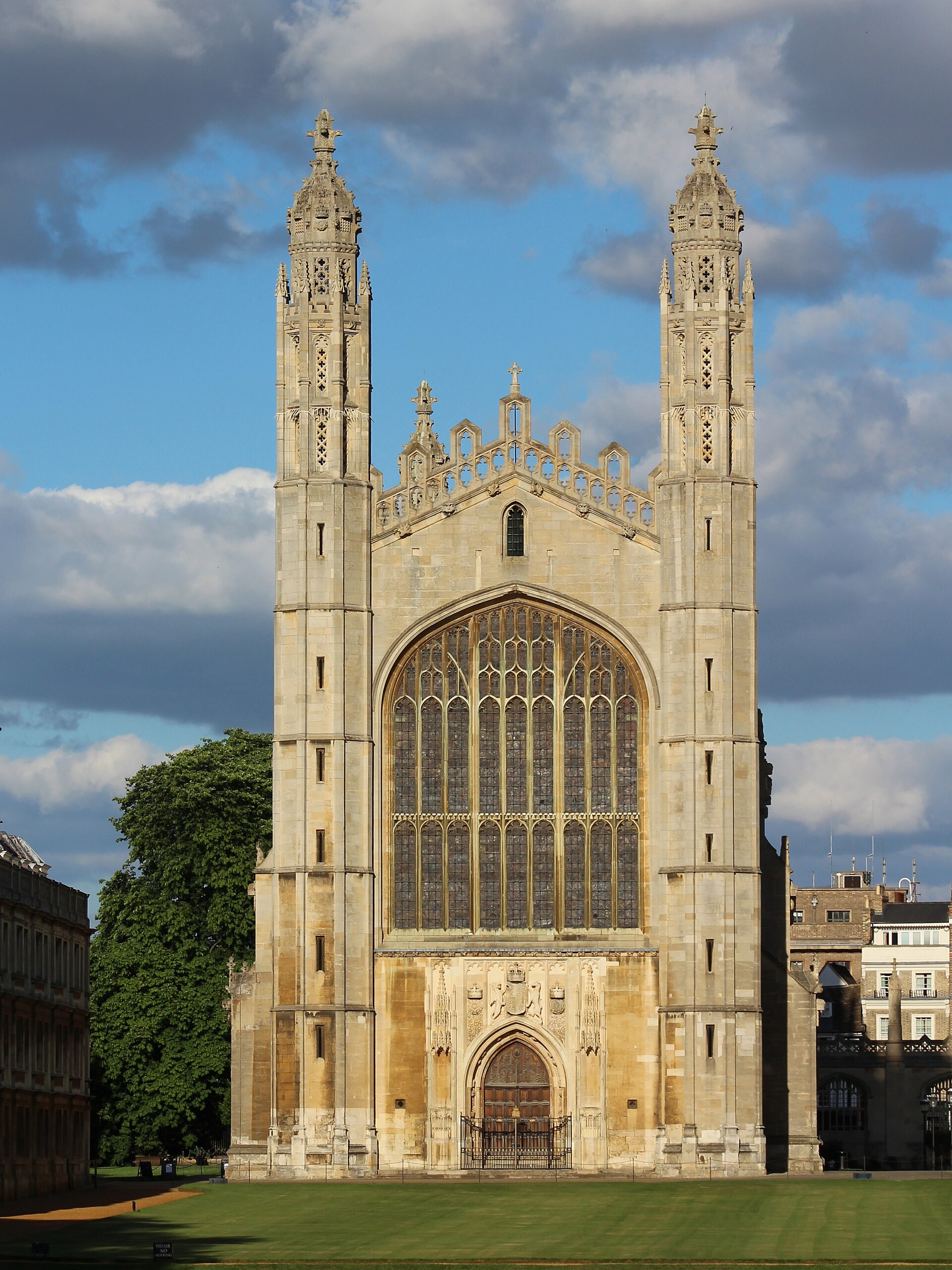
From the outside, the chapel commands attention even from those who know little of architecture. Its soaring pointed windows reach toward the sky, while the intricate pattern of buttresses lends the structure an almost delicate balance despite its massive stonework. The most striking feature, however, is the fan vaulting inside, a masterpiece of engineering and artistry that gives the ceiling an ethereal quality. The west façade, dominated by a vast stained-glass window, acts as a storyteller in light and color. On sunny days, the interior is bathed in soft hues, transforming the space into something resembling a jewel box.
Step inside, and the grandeur only deepens. The fan vault, considered one of the finest examples of its kind in the world, appears to float overhead. Its geometric precision—intersecting ribs forming a lattice of stone—creates an illusion of infinite depth, while the delicate carvings add a layer of refinement. The altar at the eastern end is framed by Renaissance-style wooden choir stalls, a contrast that highlights the evolution of taste over centuries. Every detail, from the intricately carved benches to the organ pipes that have resonated under these vaults for generations, speaks of history layered upon history.
The chapel is inseparable from the story of King’s College and, by extension, the University of Cambridge itself. Conceived as a place of worship and gathering for students and scholars, it grew into a symbol of the university’s prestige. Over the centuries, it has hosted pivotal ceremonies, none more famous than the annual Festival of Nine Lessons and Carols, a Christmas tradition that draws not only the faithful but also music lovers from around the world. The chapel’s choir, renowned for its purity and precision, performs hymns and works by ancient composers, filling the space with sounds that have echoed here since the Tudor era.
Like many historic buildings, the chapel has weathered its share of upheaval. During the English Civil War, it was looted, and some of its stained glass was destroyed. Yet through the efforts of restorers and the generosity of generations of alumni, it has retained much of its original character. Today, visitors can see not only medieval artifacts but also later additions, such as the Renaissance woodwork or the 19th-century organ, each layer telling a part of the chapel’s long story.
Visiting King’s College Chapel is less about ticking off a tourist attraction and more about stepping into a place where the past feels tangible. There’s no rush here, no crowds pressing in—just a quiet that invites reflection. Even those indifferent to history or architecture may find themselves pausing, struck by the weight of centuries in the air. How many people have walked through these doors? How many prayers have risen beneath these vaults? The chapel doesn’t offer answers, but it makes you wonder.
Cambridge is often seen as a city of students and scholars, a place of intellectual pursuit, but the chapel offers a different dimension. Set apart from the bustle of the streets, surrounded by manicured lawns and ancient trees, it feels like an oasis of calm at the heart of university life. In summer, sunlight dances across the stone, casting shifting patterns of light and shadow on the grass. The chapel’s presence is understated yet undeniable, a quiet counterpoint to the energy of the city around it.
The chapel is open to visitors for much of the year, and while there’s an admission fee, it’s a small price for the experience. Unlike the crowded halls of Westminster Abbey or St. Paul’s Cathedral, this is a place where you can linger, examine the details, or simply sit on a bench and absorb the atmosphere. If you’re lucky, you might catch a choir rehearsal or even a service, which adds another layer to the visit.
In the end, King’s College Chapel is more than just a building. It’s a living monument, still serving its original purpose while bridging past and present. It reminds us that some things endure, untouched by time, capable of inspiring awe even after five centuries. Whether you come for the architecture, the history, or the quiet, the chapel leaves an impression that lingers long after you’ve walked back out into the world.