Yushuakan Bridge is one of those quiet places in the Peruvian Andes that feels untouched by time. There are no tourist signs, no guides waiting to explain its history—just a simple wooden walkway stretched across a deep gorge, as much a part of the landscape as the river below or the mountains above. It doesn’t demand attention, yet it has stood for centuries, carrying not just people but pack animals and goods, enduring rain, wind, and the slow passage of years. The locals call it *the bridge*, nothing more, as if its purpose is too obvious to need elaboration.
Built during the colonial era, Yushuakan was a vital link in the network of trails connecting the remote Amazon settlements to the highlands. Traders passed here with salt, coca, and wool, while travelers made their way to Chachapoyas, a city that served as a key outpost between the coast and the jungle. The bridge has been rebuilt many times, but its design has always stayed true to traditional methods—thick ropes woven from plant fibers, wooden planks lashed together without a single nail. That simplicity is what makes it enduring. There’s no need for modern engineering when the old ways have proven themselves for generations.
Today, the bridge feels like a relic from another time, especially when you see it next to the steel and concrete structures that now span rivers elsewhere. But that’s what makes it special. When you step onto it, the wooden planks sway slightly underfoot, and the wind rushing through the gorge reminds you just how high you are. The Utcubamba River below murmurs steadily, as if telling stories of everyone who has crossed before. Around you, there’s nothing but mist-covered mountains in the morning, sunlit slopes by afternoon, and the occasional tree clinging to the cliffs. No railings, no warning signs—just the bridge, the land, and you.
For the people who live here, Yushuakan isn’t a tourist attraction. It’s still part of daily life. Some cross it to reach fields or pastures on the other side; others take it out of habit, choosing the direct path over the long road. During the rainy season, when the river swells, the bridge becomes the only way to get from one bank to the other. Without it, entire villages would be cut off. That’s why it’s treated with respect—not as a monument, but as something essential, something that keeps life moving.
The bridge’s construction is unassuming, yet there’s wisdom in its design. The ropes, made from agave or other local fibers, grow stronger with time, and the wooden planks, despite years of sun and rain, last for decades. In the past, communities appointed keepers to maintain the bridge, passing down knowledge from one generation to the next. Today, locals still take on that role, repairing the walkway or tightening the ropes when needed. It’s a shared responsibility, a reminder that some things belong to everyone and no one at the same time.
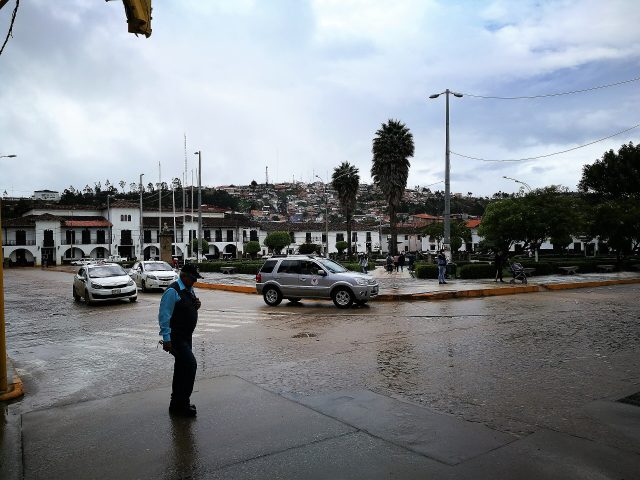
The easiest way to reach Yushuakan is from Chachapoyas, a small colonial town where life moves at its own unhurried pace. From there, you can walk or take local transport along a road that’s part of the journey itself. The route winds past hills dotted with shrubs and villages where time seems to have stood still. If you meet someone along the way, they’ll likely nod in greeting but won’t linger for conversation—here, people acknowledge strangers without intruding, a quiet courtesy that feels natural.
Crossing the bridge isn’t an adrenaline rush; it’s something quieter, almost meditative. Each step echoes on the wooden planks, and the wind tugs at your clothes, but there’s no real fear, just a faint thrill mixed with curiosity. At the midpoint, you can pause and look down at the river winding between the rocks or up at the mountains disappearing into the clouds. In those moments, it’s easy to see why this bridge has lasted so long. It doesn’t just connect two sides of a gorge—it connects people to their history, to the land, and to each other.
Yushuakan isn’t the kind of bridge that impresses with grandeur or spectacle. It’s modest, almost blending into the landscape, yet that’s where its strength lies. It doesn’t ask for admiration or try to amaze—it simply exists, as the river and the mountains do, as the people who still use it do. Maybe that’s its greatest value: it reminds us that true beauty often lies not in the extraordinary, but in the quiet, enduring things that have always been there.