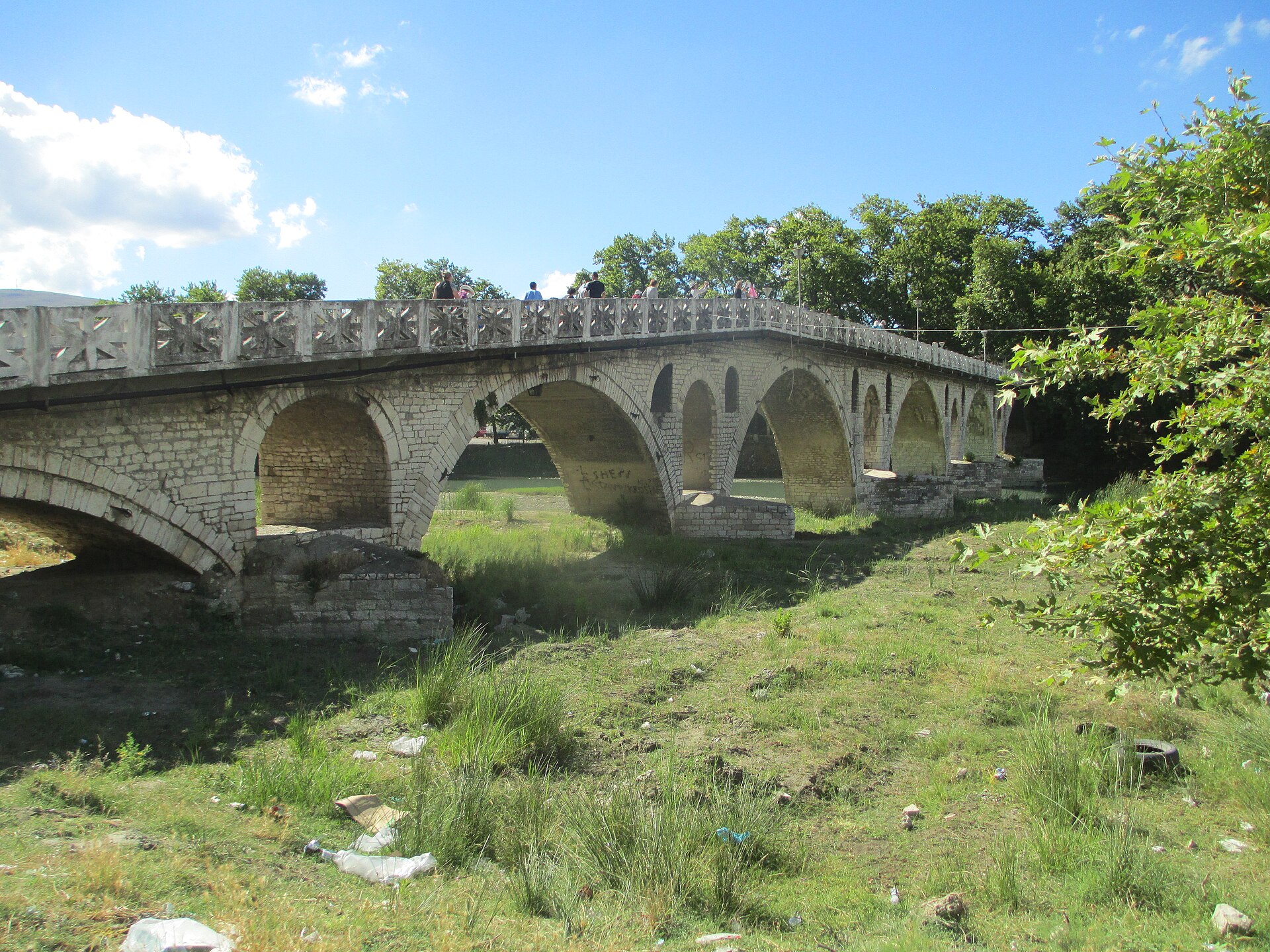
The Gorica Bridge in Berat is one of those rare places that feels untouched by time, as if the centuries have gently settled over it without disturbing its essence. Stretching across the Osum River, it connects the historic Mangalem district with the hillside neighborhood of Gorica, where whitewashed houses cascade down the slopes like layers of history. The bridge isn’t just a crossing—it’s a thread woven through the city’s past, a quiet witness to the many lives and cultures that have shaped Berat over the years.
Its architecture carries the unmistakable mark of the Ottoman era, though the story of this crossing goes back much further. Long before the current structure took shape, there was likely a simpler way to traverse the river, perhaps even in ancient times. The bridge we see today, with its seven graceful stone arches, was rebuilt and refined in the 18th and 19th centuries. The central arch, the tallest of them all, once allowed boats laden with goods to pass beneath, while now it frames the river’s slow-moving waters, reflecting the facades of the houses above. There’s a certain lightness to the design, a contrast between the weight of the stone and the way it seems to float above the water.
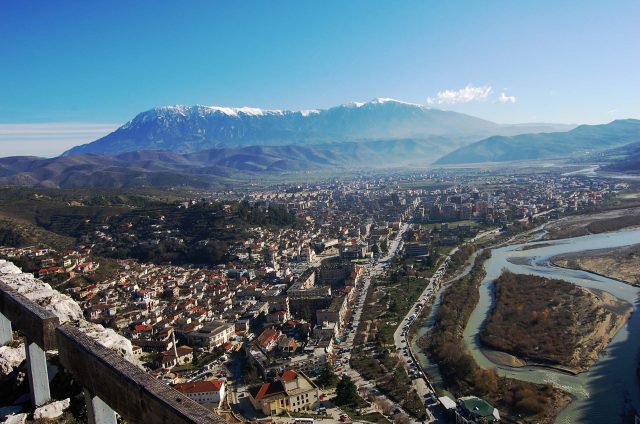
From the bridge, Berat reveals why it’s often called the "city of a thousand windows." The view is a patchwork of Ottoman-era houses, stacked precariously on the hillsides, their windows peering down at the river like curious eyes. At dusk, when the streetlights flicker to life, the scene transforms. The glow spills onto the water, the shadows of the houses stretch across the cobblestones, and the whole place takes on a dreamlike quality, as if the past and present have blurred into one.
The bridge has seen its share of history. During Ottoman rule, it was a vital link in the trade routes that carried goods from the Albanian interior to the Adriatic coast. Later, it became a battleground during the struggles for independence, where clashes between rebels and Turkish forces played out on its stones. Today, those tensions are long gone, replaced by the easy rhythm of daily life. Locals stroll across it, tourists pause to take photos, and the only urgency comes from the river rushing beneath.
It hasn’t always looked the way it does now. In the mid-20th century, the bridge was reinforced and widened to accommodate cars, a decision that later proved short-sighted. When it became clear that traffic was eroding its historic character, the bridge was restored to its original purpose as a pedestrian crossing. Now, walking across it feels like stepping back in time. The stones underfoot are worn smooth by generations of footsteps, and the occasional bench invites you to sit and listen to the river’s murmur.
For those who live in Berat, the Gorica Bridge is more than just a landmark—it’s part of the fabric of their lives. Couples meet here for evening walks, children play near the water’s edge, and elderly men gather on the banks to watch the current flow by. On festival days, the bridge and the riverside come alive with music, laughter, and the scent of grilled meat and fresh bread. Even on ordinary afternoons, there’s a warmth to the place, a sense that time moves a little slower here.
Berat itself feels like a living museum, where history isn’t confined to plaques and exhibits but is woven into the streets, the houses, and the very air. The Gorica Bridge is a perfect example of that. Walking across it, you can almost hear the echoes of the past—the creak of carts, the shouts of merchants, the distant clatter of hooves. It’s a place where the layers of time feel tangible, where the Ottoman era, the struggles for independence, and the quiet present all exist side by side.
If you find yourself in Berat, don’t rush past the bridge. Take a moment to stand in the middle, to look out at the river and the houses clinging to the hills. Watch the way the light plays on the water, the way the locals go about their day, and try to imagine the countless stories these stones could tell. It’s in these small, unscripted moments that travel feels most alive—when a place stops being just a destination and starts feeling like a memory in the making.