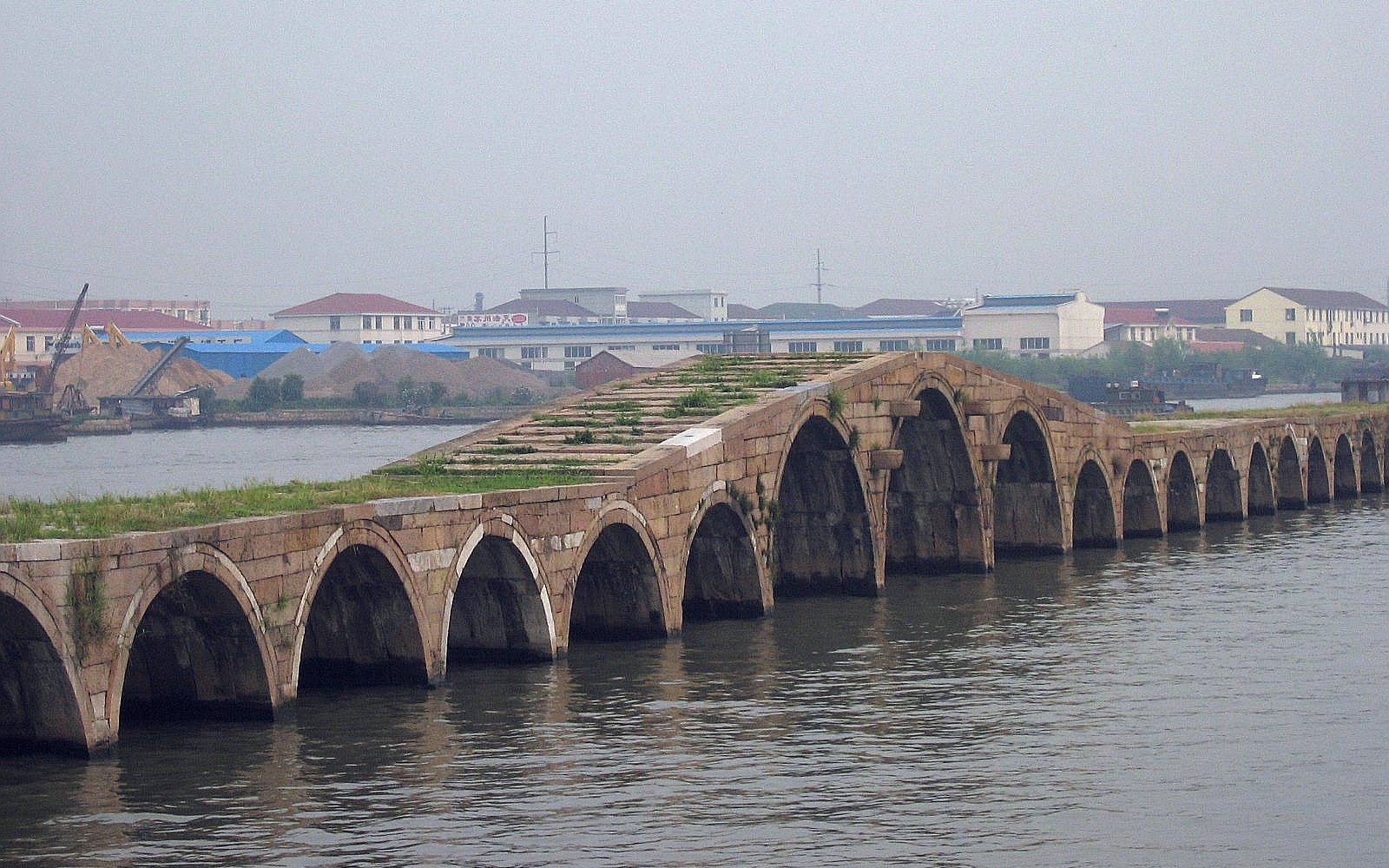
Baodai Bridge, or the Belt Bridge, is one of those places in Suzhou that feels like a step back in time. Stretching across the Grand Canal, it connects not just two banks but centuries of history. Built over a thousand years ago during the Tang Dynasty, the bridge has witnessed the ebb and flow of trade, the daily rhythms of a city famous for its canals and gardens, and the quiet evolution of life along the water. Its name isn’t arbitrary—the graceful curve of its arches does resemble the sash once worn by Chinese officials, a subtle nod to the way it seems to bind the city together, linking past and present.
The architecture of Baodai is striking in its simplicity and purpose. Fifty-three arches line up in a rhythmic pattern, their reflections dancing on the water below. Each arch bears its share of weight, yet together they form a structure strong enough to support not just pedestrians but the heavy loads that once traveled the canal. The bridge is built from gray stone, weathered by time into a soft, muted patina. In sunlight, the stone glows warmly; in the rain, it darkens, blending into the water and sky. There’s a quiet dignity to it, as if the bridge has absorbed the stories of those who’ve crossed it over the centuries.
Suzhou is often called the Venice of the East, and Baodai is one of the places where that comparison feels most fitting. The canals here aren’t just waterways—they’re the lifeblood of the city, shaping its pace and mood. The bridge isn’t just a crossing; it’s a vantage point, offering views of boats gliding beneath, tiled roofs of old houses, and the greenery of gardens peeking through the gaps. The best time to visit is at dusk, when the setting sun casts a golden hue over the water, and the first lanterns along the banks begin to flicker, their light rippling in the canal.
The bridge’s history is deeply tied to Suzhou’s rise as a center of trade and culture. During the Tang and Song dynasties, the city was one of China’s busiest ports, a hub for silk, tea, porcelain, and other goods moving across the empire and beyond. Baodai played a crucial role in this network, bearing the weight of commerce that made Suzhou wealthy and influential. Over time, the canals lost their importance as trade routes, but the bridge endured, becoming a monument to an era that shaped the city. Today, it stands as a reminder of how places change, yet some things remain.
Despite its age, Baodai hasn’t become a relic frozen in time. Locals still cross it on foot, tourists pause to take photos, and occasionally, a cyclist weaves through the crowd. The bridge isn’t cordoned off as a museum piece—it’s still very much part of everyday life. That’s part of its charm: it’s not just a historical landmark but a living, breathing part of the city. Walking across it, you can almost hear the footsteps of merchants, officials, and artisans who passed this way centuries ago, each with their own stories. It’s that sense of continuity that makes the bridge feel so alive.
The details of Baodai’s construction are as interesting as its overall design. The stone railings are carved with intricate patterns, once brightly painted but now faded, leaving only traces of their former grandeur. Some arches bear inscriptions—names of craftsmen or dates of repairs carried out over the years. These small marks tell their own story: of wars and floods, of restorations after damage, of the care taken to preserve the bridge so it could keep serving the people. Every stone feels like a testament to human effort, to the skill and attention poured into its creation.
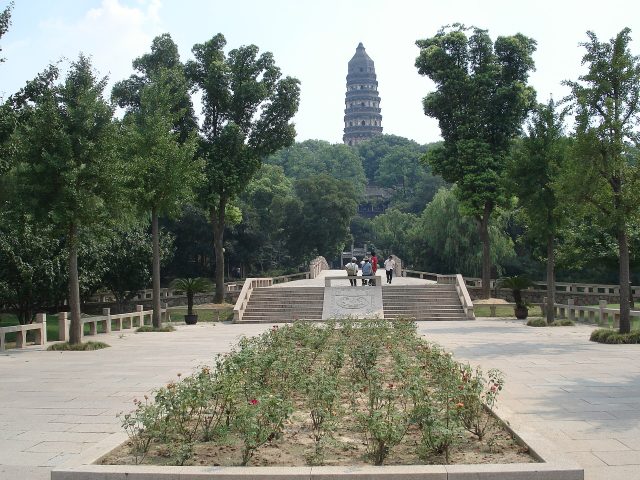
Suzhou is a city of contrasts, where ancient traditions brush up against modern life, and Baodai is one of the bridges—literally and figuratively—that connects these worlds. Nearby, you’ll find old pagodas standing beside contemporary buildings, narrow lanes lined with tiny workshops and shops. The bridge seems to invite you to pause, look around, and feel the pulse of the city. There’s no touristy hustle here, just the unhurried flow of life, moving as steadily as the water in the canal.
Visiting Baodai is best paired with a stroll along the surrounding canals. Renting a boat to glide beneath its arches offers a different perspective—the stone vaults loom larger, the water feels deeper, and the experience becomes almost dreamlike. The boats move slowly, turning the ride into a journey through time. If you’re lucky, you might catch the sound of traditional music drifting from the banks, a melody played on a stringed instrument, adding another layer to the moment.
Baodai Bridge isn’t just a sight to see; it’s a place where history becomes tangible. It doesn’t tell stories through plaques or guides—it shows them through its stones, the water flowing beneath, and the air that carries the echoes of the past. Here, you can touch something that has remained unchanged for centuries, feeling a connection to those who walked this path long before. That’s its magic: it doesn’t need explanations. It simply exists, a quiet witness to the passage of time.