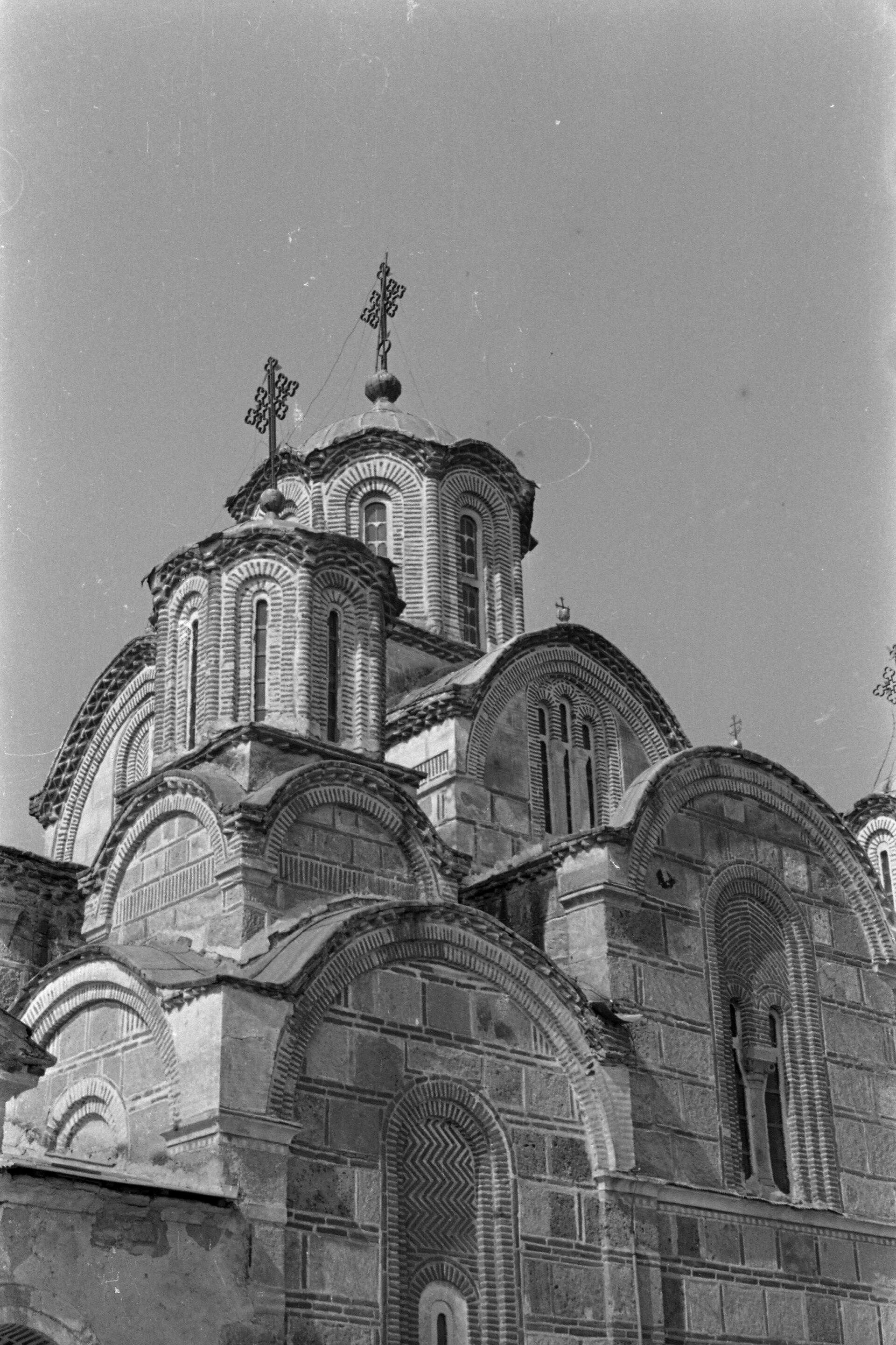
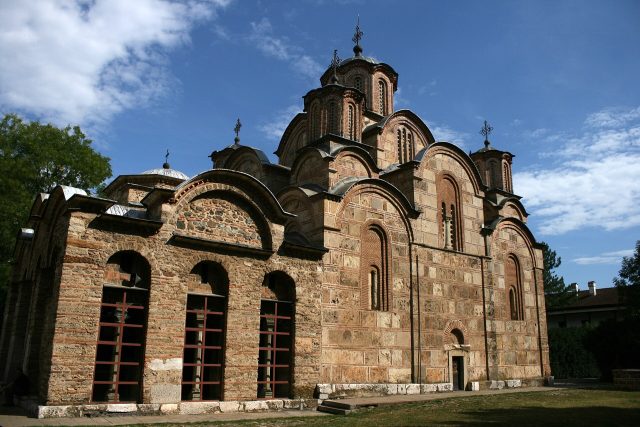
Gračanica is a quiet town just outside Pristina, known mostly for its monastery—a place that has stood for over seven centuries as one of Kosovo’s most important spiritual and cultural landmarks. More than just an architectural relic, the monastery is a living record of medieval Serbian history, art, and faith. Today, it houses a museum where rare manuscripts, icons, and frescoes offer a glimpse into the region’s past, preserving stories that might otherwise have faded with time.
The monastery itself is a masterpiece of Byzantine architecture, built in 1321 under the orders of King Stefan Milutin. Its design is striking in its balance: a cross-in-square church with five domes, constructed from light stone and brick, rising gracefully from the hillside. The exterior is elegant in its simplicity, but the real wonder lies within. The walls are covered in frescoes painted by some of the finest artists of the era, their colors still vivid despite the centuries. Biblical scenes, saints, and even portraits of King Milutin himself unfold across the surfaces, turning the monastery into both a religious sanctuary and a historical archive.
The museum inside the monastery is small but holds treasures of immense value. Among them is the Gračanica Tetraevangelion, one of the most significant examples of medieval Serbian manuscript art. Ancient parchments, icons, and monastic artifacts reveal the daily life of the monastery through different periods. Some of the most moving pieces are fragments of original frescoes that no longer exist on the church walls—carefully removed and preserved here, they serve as silent witnesses to the passage of time.
The history of Gračanica Monastery is deeply intertwined with the fate of the region. During Ottoman rule, it remained a bastion of Orthodoxy, a place where Serbian traditions and culture were kept alive. Monks not only prayed but also copied manuscripts, taught children, and maintained connections with other Orthodox centers. The 19th century brought hardship, yet the monastery endured. In the 20th century, after World War II, it was recognized as a cultural monument and placed under state protection, ensuring its survival for future generations.
Today, Gračanica is still an active religious site. Monks live within its walls, services are held regularly, and on major feast days, pilgrims gather from across Kosovo and beyond. The atmosphere is one of quiet reverence—the only sounds are the rustling of leaves, the distant call of birds, and the soft footsteps of visitors. The monastery garden, planted centuries ago, still blooms with flowers and fruit trees, while the stone walls hold the warmth of generations.
For those interested in Balkan history, Gračanica is a must-visit. It offers a rare chance to step into the medieval world, to see how people lived and created art seven hundred years ago. More than just a historical site, the monastery is a symbol of the region’s spiritual heritage, a place where the past is not just remembered but actively lived. It remains a living institution, where the boundaries between history and the present blur.
Visiting the monastery doesn’t require special preparation, but it’s worth remembering that it’s still a functioning place of worship. Modest dress is appreciated, and silence is expected inside the church. Photography is usually discouraged to maintain the sanctity of the space, though the museum area is slightly more relaxed. Even there, it’s best to move quietly and speak softly, respecting the atmosphere.
Gračanica is an easy trip from Pristina, reachable by bus or taxi in about twenty minutes. The journey itself is pleasant, winding through Kosovo’s rolling hills and fields. The town is small, and the monastery’s domes are visible from a distance, standing out against the landscape. There’s no tourist hustle here—just a peaceful setting where a walk through the surroundings can be as rewarding as the visit itself. A local café offers a chance to try traditional pastries, or you can simply sit on a bench, watching the light play on the ancient stones.
What makes Gračanica special is that it’s not just a monument frozen in time. It’s a place where history continues to breathe. The monastery reminds us of the importance of preserving cultural heritage, even as borders shift and eras change. For some, it’s an architectural marvel; for others, a spiritual anchor. For many, it’s simply a quiet corner where the weight of centuries feels a little lighter. No matter how you see it, Gračanica leaves an impression that lingers long after you’ve left.