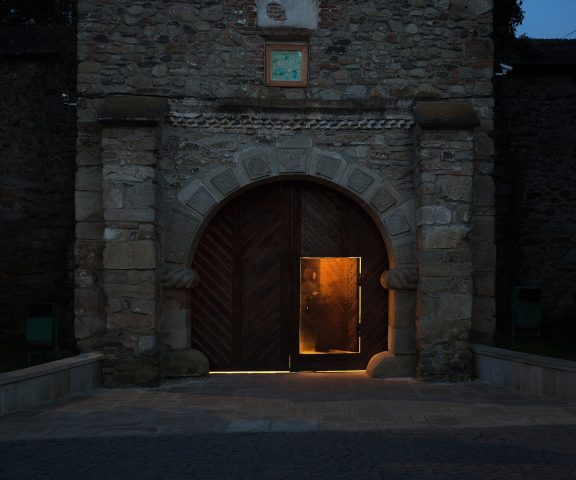
Voroneț Monastery is often called the Sistine Chapel of the East, and the comparison isn’t just poetic exaggeration. Nestled in the foothills of the Carpathians, where dense beech forests roll into gentle Bukovinian hills, it has a presence that stops you in your tracks—much like Michelangelo’s frescoes. But while the Sistine Chapel is a masterpiece preserved behind museum ropes, Voroneț remains inseparable from the world around it: the murmur of prayers, the rustle of leaves beyond the windows, the quiet breath of the mountains that have guarded this place for centuries.
Founded in the 15th century by Stephen the Great, the ruler of Moldavia, Voroneț was more than a refuge for monks—it was a spiritual stronghold for an entire nation. Stephen, who governed for nearly half a century, is remembered not only for his military victories but for his habit of building churches and monasteries after each battle, as both gratitude for protection and a plea for peace. Voroneț was erected in 1488 in just three months and three weeks, a feat that seemed miraculous at the time. Legend says Stephen himself took part in the construction, and once completed, the monastery was consecrated in honor of Saint George, the patron saint of warriors.
The architecture of Voroneț is a perfect example of medieval Moldavian design, yet it carries distinct features that set it apart from dozens of similar churches. The building is modest in size, but its proportions are flawless: a tall, slender nave framed by galleries, and the characteristic open porch—called an exonarthex—where pilgrims once gathered. The roof is tiled, and the walls, built from local stone and brick, give the structure a warm, almost organic hue. But the true marvel isn’t the stone itself—it’s what covers it.
The frescoes of Voroneț unfold like a world painted onto the walls, wrapping the church in sacred stories both inside and out. The most famous is the Last Judgment on the western facade, a dramatic composition teeming with movement. Angels blow their trumpets, the dead rise from their graves, the righteous and the damned are separated, and at the center, Christ radiates in a halo of light. The colors are astonishingly vivid: the deep blue background, known as "Voroneț blue," hasn’t faded in five centuries, and the reds, greens, and golds still glow as if freshly applied. The artists used local minerals and plant-based pigments, and perhaps that’s why the paintings have endured.
Inside, the frescoes are no less striking, though more restrained. Scenes from the lives of Christ, the Virgin Mary, and the saints fill the walls, alongside portraits of Moldavian rulers, including Stephen the Great himself. One of the most unusual depictions is the Tree of Jesse, a genealogical representation of Christ’s lineage. Here, it grows from the body of the sleeping Jesse, its branches reaching toward the heavens, bridging the earthly and the divine. These paintings weren’t mere decoration—they were a visual Bible for the illiterate, a story told in color and light for those who couldn’t read.
Voroneț remains an active monastery, its rhythms unchanged for centuries. The nuns who live here tend gardens, weave, pray, and welcome pilgrims. The courtyard is quiet, broken only by the occasional toll of a bell or the whisper of leaves overhead. Orchards of apple and cherry trees surround the monastery, and beyond the walls, the forest stretches thick and mysterious, as if lifted from a folktale. Locals say deer and bears still wander these woods, and at night, the howl of wolves drifts through the trees—not as a threat, but as a reminder that time moves differently here.
Visiting Voroneț isn’t just about admiring the frescoes. It’s a place where history feels tangible, where every stone and crack in the wall holds echoes of the past. You can almost hear the scratch of quills as monks copied manuscripts by oil lamp, or the footsteps of pilgrims who traveled through the mountains to reach this sanctuary. Stephen the Great himself may have stood in this very spot, gazing at the newly built church. Voroneț isn’t a museum—it’s a living place, still breathing, still praying, still inspiring.
The best time to come is early morning, when the first light touches the walls, or late evening, as the monastery sinks into twilight. At these hours, you’ll likely have the place to yourself, and the silence will settle around you like a second skin. Don’t rush to leave. Sit on a bench in the courtyard, listen to the birds, watch how the blues of the frescoes shift with the changing light. Voroneț doesn’t reveal its secrets all at once, but if you give it time, it will answer in kind—with a quiet, profound sense of peace.