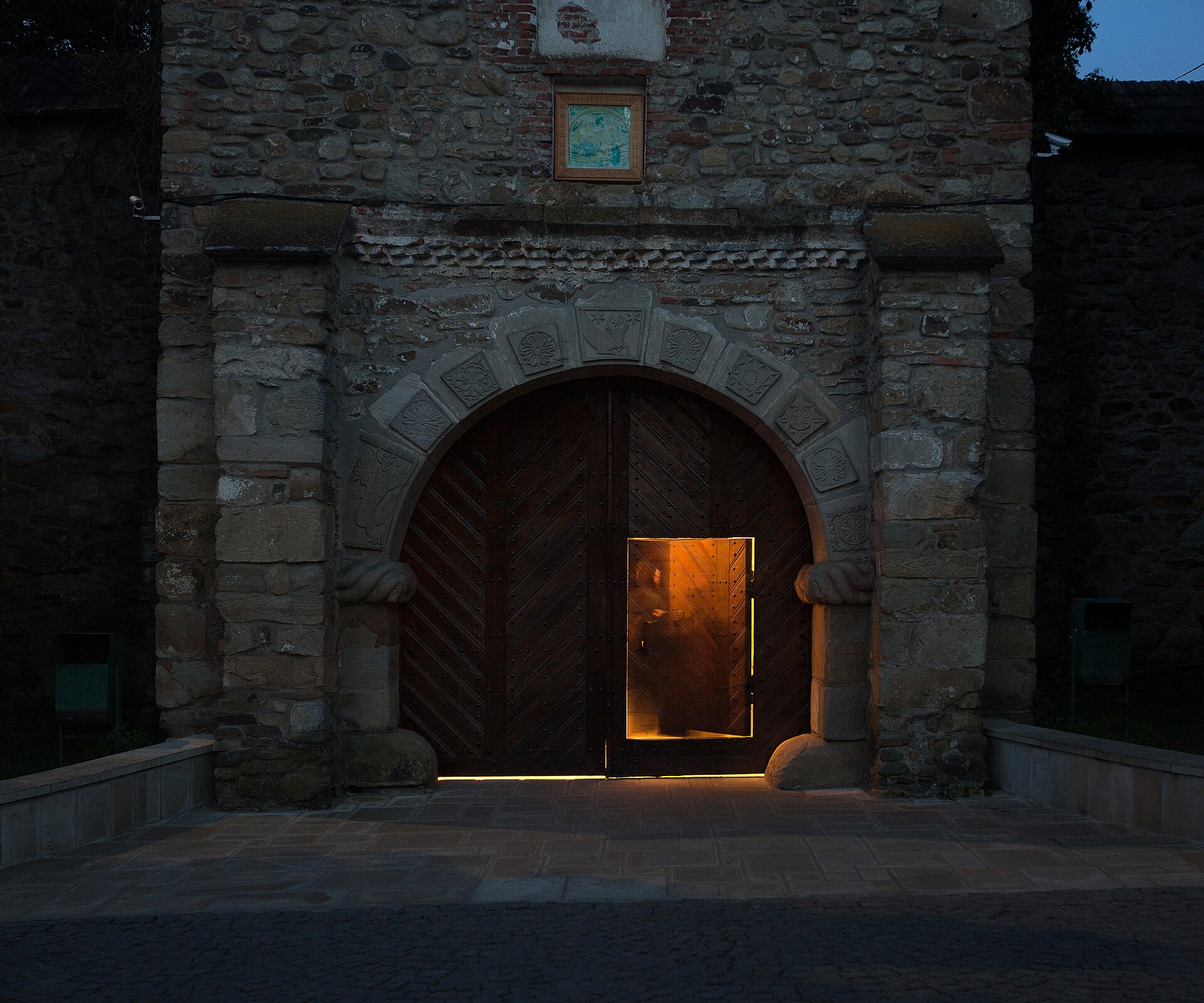
Nestled in the foothills of the Carpathians, where the mountains soften into rolling hills and dense forests give way to open pastures, Moldovița Monastery feels like a place time forgot. The journey there winds through narrow roads lined with villages of red-tiled houses, their wooden gates weathered by decades of sun and rain. The monastery itself is modest at first glance—a low stone wall encircling a cluster of buildings that have grown and changed over centuries. There are no crowds here, no hurried footsteps or raised voices. Even in summer, the air carries a quiet stillness, as if the world beyond these walls moves at a different pace.
Founded in the 15th century, Moldovița was more than a place of worship; it was a fortress of faith and culture on the edge of the Moldavian principality. Its founder, Stephen the Great, remains one of Romania’s most revered historical figures—a ruler who defended his land against invaders while also nurturing its spiritual life. Monasteries like this were the heart of medieval Moldavia, where monks copied manuscripts by candlelight, taught children to read, and preserved the stories of their people. Moldovița was no exception. Over the centuries, its halls echoed with the footsteps of scribes, artists, and messengers bearing letters from distant courts.
The architecture of the monastery tells its own story. The main church, dedicated to the Dormition of the Mother of God, rises slender and tall, its steep roof cutting a sharp line against the sky. The exterior is covered in frescoes—scenes from the Bible rendered in vivid blues, reds, and golds. These paintings were never just decoration; they were a way to teach the faith to those who couldn’t read. The colors have faded in places, but the deep cobalt blue, so characteristic of Moldavian monasteries, still glows as if freshly applied. Inside, the church is a study in contrasts: the ornate, gilded iconostasis gleams in the dim light, while the walls are lined with solemn faces of saints, their expressions serene yet watchful.
Moldovița was also a center of learning. Its library once held rare manuscripts and early printed books, some of which were produced by one of Moldavia’s first printers, who worked here in the 16th century. Wars and fires took their toll, and many treasures were lost, but a few survive, displayed in a small museum within the monastery. Visitors can see ancient icons, intricately embroidered vestments, and yellowed documents that offer glimpses into the daily life of the monks who lived and worked here.
Life at Moldovița follows a rhythm set centuries ago. The monks rise before dawn for the first prayers of the day, then tend to the monastery’s gardens, bees, and kitchens. Everything is done by hand, from baking bread to crafting candles from beeswax. Guests are welcome to join the services, which fill the church with chanting and the scent of incense, or simply sit in the courtyard, watching the sunlight shift across the frescoes. In summer, the air is thick with the smell of wildflowers and herbs; in winter, snow blankets the roofs, muffling the world outside.
The monastery isn’t just a relic of the past—it’s a living tradition. Monks still paint icons, grow medicinal plants, and welcome pilgrims, though they make no effort to draw crowds. For those who come, the experience is less about sightseeing and more about slowing down. There’s a sense of continuity here, as if the same hands that built these walls and painted these frescoes are still at work, keeping the past alive.
Beyond the monastery walls, the surrounding countryside offers its own quiet beauty. Forest paths wind through the hills, leading to villages where life moves at an unhurried pace. Some families still weave traditional rugs on old looms, their patterns passed down through generations. If you’re lucky, you might stumble upon a local festival, where music spills from open windows and dancers move in circles to the sound of fiddles and dulcimers.
Moldovița doesn’t demand attention. It doesn’t need grand gestures or modern attractions to leave an impression. What lingers is the sense of stepping into another time—a place where faith, art, and daily life have been woven together for centuries. Whether you stay for an hour or a few days, the monastery offers something rare: a chance to listen to the silence, to trace the lines of a fresco with your eyes, and to feel the weight of history in the stones beneath your feet. It’s not just a destination; it’s a quiet conversation with the past.