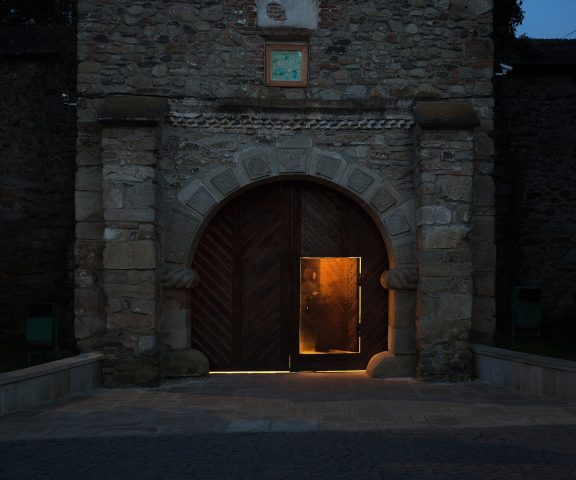
Sucevița Monastery sits quietly among the rolling hills of northern Romania, far from the well-trodden paths of mass tourism. Tucked away near the small town of Cajvana in Bukovina, it feels like a place where time moves differently—slower, deeper, as if the centuries themselves have settled into the stones and trees. The monastery isn’t hidden, but it doesn’t announce itself. Those who come here aren’t looking for grand spectacles or Instagram moments; they’re drawn by something harder to name—a stillness that lingers in the air, the weight of history in the walls, the way the light falls through the narrow windows of the church.
Founded in the late 16th century by the Moldavian rulers Ieremia Movilă and his brother Simion, Sucevița was more than a religious sanctuary. In an era when the region was squeezed between the expanding Catholic Polish-Lithuanian Commonwealth to the west and the Ottoman Empire to the east, monasteries like this one became strongholds of Orthodox faith, culture, and identity. The Movilă brothers built Sucevița not just as a place of worship but as a statement—one that would endure long after their reign. The frescoes that cover its outer walls are among the finest examples of Moldavian medieval art, blending biblical stories with local life. Saints wear the faces of peasants, and the landscapes behind them could be the very hills that surround the monastery today. The paintings aren’t just decoration; they’re a record of a world that once was, preserved in vivid colors despite wars, invasions, and the slow march of time.
The architecture of Sucevița follows the traditional Moldavian style, with a few distinctive touches. The main church, dedicated to Saint John the New, is shaped like a cross, its three apses and tall dome rising above the surrounding walls. What makes it unusual is the way the frescoes wrap around the exterior, turning the building itself into a canvas. The western wall is particularly striking, dominated by a dramatic depiction of the Last Judgment, where angels and demons, saints and sinners are locked in an eternal struggle. Inside, the church is simpler—wooden pews, flickering candles, the scent of incense lingering in the air—but no less powerful. The space feels intimate, as if the prayers of centuries past still echo in the quiet.
Sucevița hasn’t always been the peaceful retreat it is today. In the 17th century, Cossack raids left it in ruins, and under Austrian rule, it fell into neglect. By the 19th century, it had been restored, though not to its former glory. Now, a small community of monks lives within its walls, following the rhythms of prayer, work, and contemplation. Visitors are welcome, but the monastery asks for respect—modest clothing, quiet voices, an awareness that this is still a living place of worship. There’s a guesthouse where travelers can stay overnight, waking to the sound of church bells and the murmur of morning prayers. It’s a rare chance to step into a different pace of life, one governed by the sun and the seasons rather than clocks and schedules.
The countryside around Sucevița is just as compelling as the monastery itself. Bukovina is a land of gentle hills, dense forests, and villages that seem untouched by time. Wooden houses with carved shutters line narrow streets, and in some places, you can still find artisans at work—rugs on looms, wood being carved, clay shaped into pots. The roads here wind through valleys and over ridges, leading to hidden waterfalls, panoramic viewpoints, and other medieval churches, each with its own stories. Occasionally, a village festival brings the past to life with folk music and dancing, and if you’re there, it feels like a glimpse into a world that has somehow survived unchanged.
What makes Sucevița special isn’t just its age or its art, but the way it makes history feel tangible. The frescoes, darkened by time, seem to whisper. The icons, their gold leaf worn thin, glow softly in the candlelight. Even the air carries a weight—cool and still, as if the centuries have settled into it. There’s no grand spectacle here. The monastery simply exists, as it has for hundreds of years, a quiet witness to the passage of time. It doesn’t demand attention; it earns it, slowly, the way a deep conversation does.
For first-time visitors, the stillness can be jarring. The absence of noise, of crowds, of the usual tourist chatter, can feel almost unnatural at first. But if you give yourself time, something shifts. The hours stretch differently here. You might find yourself sitting on a bench in the courtyard, watching the light change over the hills, or tracing the lines of a fresco with your eyes, trying to decipher its symbols. There’s no rush, no agenda. The monastery doesn’t offer answers, but it gives you the space to ask questions—to wonder about the people who built it, the hands that painted its walls, the lives that have unfolded within its stones.
Sucevița isn’t just a relic of Romania’s past; it’s a living part of its present. The monks who tend to it, the farmers who come for services, the artists who study its frescoes, the travelers who seek its quiet—all of them are threads in its ongoing story. There’s nothing performative about this place. What you find here is authenticity, the kind that’s increasingly rare. That’s why, for those who return, it’s not just a destination but a kind of homecoming—a place where the noise of the modern world fades, and something older takes its place.