Nestled on a quiet side street in the heart of Santiago de Compostela, the Monastery of San Pelayo de Antealtares is easy to overlook amid the city’s more famous landmarks. Yet this unassuming place carries centuries of history within its walls. Founded in the 11th century by Benedictine monks, it was originally established to care for pilgrims arriving in Santiago after their long journey to the tomb of Saint James. The monastery takes its name from Saint Pelayo, a young martyr whose relics were brought here in the Middle Ages. Over time, it became a spiritual refuge, though it never sought the same fame as the grand cathedral nearby.
The architecture of San Pelayo is a quiet testament to the passage of time. Its sturdy Romanesque foundations blend with later additions, creating a layered effect that speaks of different eras. The main façade is austere, almost severe in its simplicity, but step inside, and you’ll find a peaceful cloister where monks once gathered for prayer and reflection. The arcaded courtyard, with its columns and capitals adorned with delicate foliage, feels like a place where time has stood still. The stonework, worn smooth by centuries, carries the weight of countless footsteps and whispered prayers.
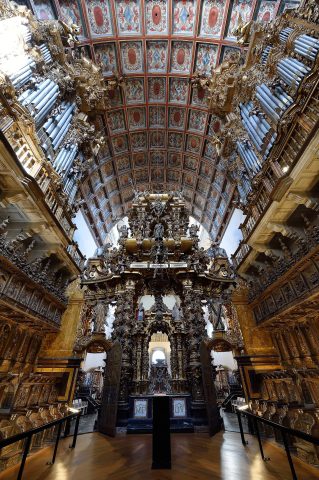
Inside the monastery, fragments of history remain visible in the old frescoes and carved wooden panels that line the walls. The Baroque altar, with its gilded details and figures of saints, stands as a striking contrast to the otherwise restrained interior. The church itself is small but deeply atmospheric—less about grandeur and more about the quiet power of faith. Narrow windows filter soft light onto the stone, casting gentle shadows that seem to invite contemplation rather than awe.
For centuries, San Pelayo was a place of rest and respite for pilgrims. In the Middle Ages, those walking the Camino de Santiago would stop here to recover before making their final approach to the cathedral. The monks provided not just shelter and food but also care for the sick, as the journey was often grueling. Today, the monastery still welcomes visitors, though in a more modest way. The community of nuns who now reside here continue the tradition of hospitality, offering a glimpse into a way of life that has endured for generations.
The monastery wasn’t always a home for women. Originally a Benedictine foundation, it later became a convent for the Order of Saint Clare in the 16th century, and the sisters have lived here ever since. Their life is one of seclusion, but the monastery isn’t entirely closed off. Visitors can buy traditional sweets made by the nuns—marzipan and biscuits prepared according to old recipes. These simple treats, like the monastery itself, carry the echoes of a time when pilgrims would gather here to share stories and find strength before their final steps to the cathedral.
In a city crowded with tourists and bustling squares, San Pelayo offers a rare sense of stillness. Unlike the lively streets filled with souvenir shops and cafés, this place feels untouched by the passage of time. A walk through the cloister or a moment spent in the small church can be a quiet escape, a chance to step away from the noise and reflect on what has remained unchanged for centuries. It’s not a place for those seeking spectacle, but for those who appreciate the quiet depth of history.
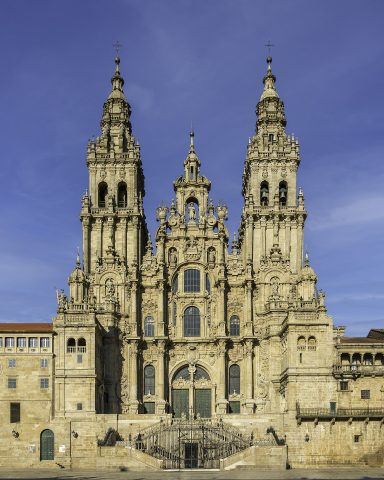
Santiago de Compostela is a city of contrasts—where medieval legends meet modern life, where the energy of pilgrims collides with the solitude of hidden corners. San Pelayo is one of those corners. It doesn’t demand attention or boast of its importance, and that’s precisely what makes it special. Here, you can sit on a bench in the courtyard, listen to the silence, and understand why people have traveled here for centuries, despite the hardships. The cathedral may be the city’s most famous landmark, but places like this monastery are what give Santiago its soul. In every stone, in every shadow, the past is still alive.