Perched on a hill overlooking the old town of Santiago de Compostela, the Monastery of San Martiño Pinario stands as a quiet witness to centuries of pilgrimage, faith, and everyday life. Its stone walls have seen generations of travelers, kings, and monks pass through, each leaving their mark on this place where history and the present coexist. Unlike the bustling cathedral nearby, the monastery offers a sense of stillness, a retreat from the well-trodden paths of tourism where one can step into a slower rhythm.
Founded in the 10th century as a modest Benedictine shelter for pilgrims walking the Camino de Santiago, the monastery grew in both size and influence over the centuries. By the 12th century, it had become a powerful spiritual and cultural hub under the Order of Saint Benedict. Its library was once renowned for its rare manuscripts, preserving knowledge that shaped the region. The monastery’s golden age came during the Baroque period, when it underwent extensive renovations, transforming into the grand complex visible today. Yet beneath the ornate facades lie traces of earlier eras—Gothic arches, Renaissance details, and even older foundations that tell a story of constant evolution.
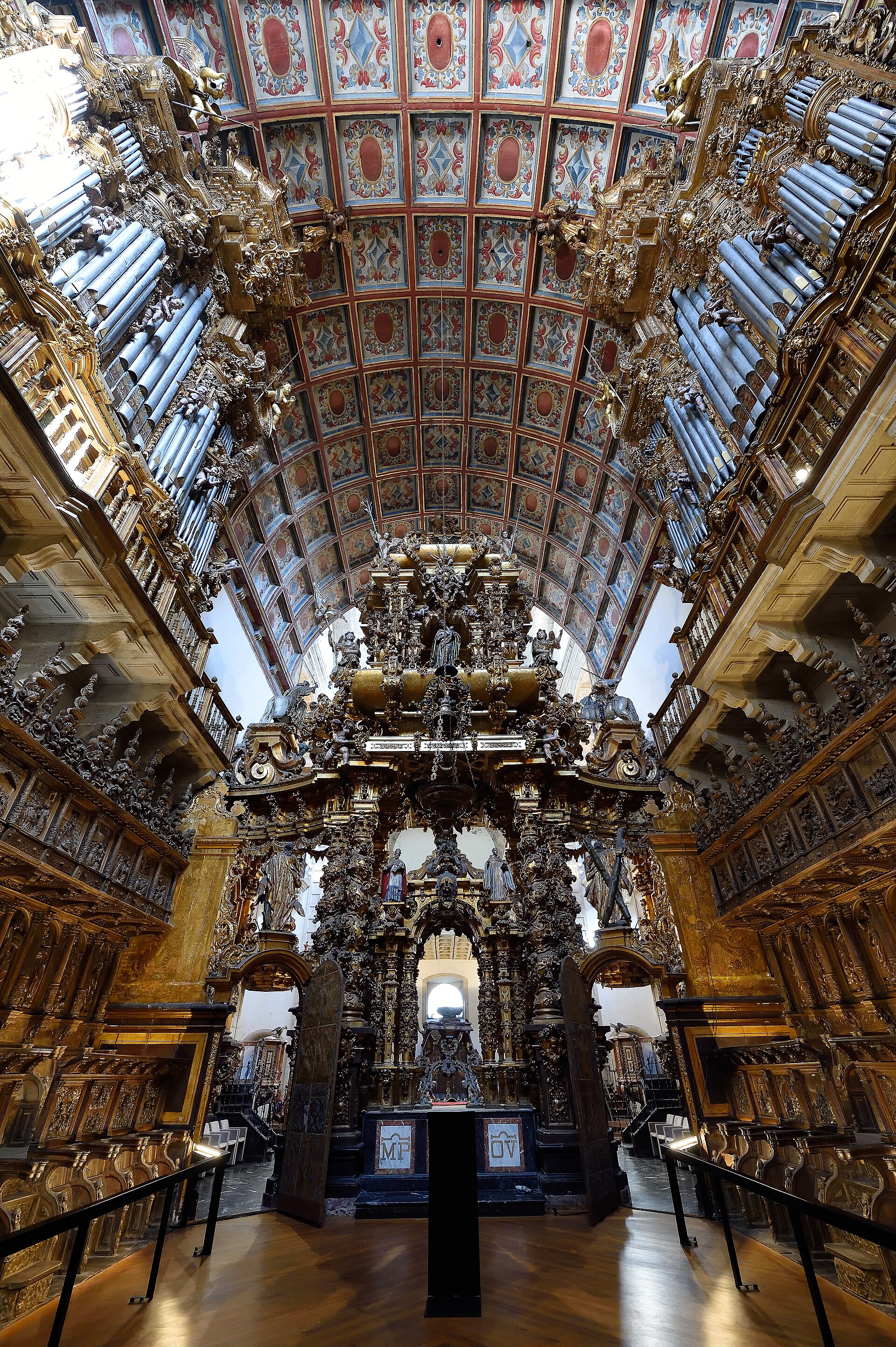
The architecture here is a layered narrative of time. The main entrance, adorned with the coat of arms of Spanish monarchs, hints at the monastery’s royal connections, having hosted kings and nobility over the centuries. Inside, the cloister is a place of quiet beauty, with its arched galleries and fountain offering a glimpse into the daily lives of the monks who once gathered here for prayer or contemplation. The church, with its gilded altars, intricate frescoes, and carved wooden choir stalls, exudes a sense of solemn grandeur, though it’s the smaller details—the worn stone steps, the faint echoes of footsteps—that often leave the deepest impression.
For much of its history, San Martiño Pinario was deeply intertwined with the life of Santiago de Compostela. In the Middle Ages, the monastery owned vast lands, mills, and even parts of the city’s fortifications. The monks were known for their charitable work, establishing schools and hospitals for pilgrims, many of whom arrived exhausted after their long journey. Today, the monastery remains a living institution rather than a relic of the past. Some of its buildings now house a guesthouse, where visitors can stay and experience the tranquility of monastic life, while others serve as educational facilities, ensuring the complex continues to serve a purpose beyond tourism.
Wandering through the monastery’s corridors feels like stepping into another era. The narrow passageways lead to simple cells where monks once lived, their high ceilings still carrying the faint resonance of chanting. In one of the galleries, an old clock stands frozen in time, a reminder of the hours once dedicated to prayer and work. Unlike the crowded cathedral square, the monastery sees few visitors, allowing for a more intimate exploration. There’s no rush here, no guided tour dictating the pace—just the quiet hum of history waiting to be discovered.
One of the monastery’s greatest charms is its location, slightly removed from the main tourist routes. From its hilltop perch, the view stretches over the rooftops of the old town, the spires of Santiago’s churches, and the rolling green hills of Galicia beyond. In the evening, as the sun dips below the horizon, the stone walls take on a warm, golden hue, and the scent of blooming gardens drifts through the air. It’s a place where time seems to slow, where the weight of centuries feels tangible without the distraction of crowds.
Even now, San Martiño Pinario remains an active part of Santiago’s cultural and spiritual life. The monastery hosts concerts of sacred music, art exhibitions, and lectures, drawing both locals and visitors. Prayers still echo within its walls, and its library continues to safeguard ancient texts, a testament to the enduring link between faith and knowledge. For many pilgrims completing their journey to the tomb of Saint James, the monastery offers a final moment of reflection before returning to the outside world.
Visiting San Martiño Pinario isn’t just about ticking off a landmark—it’s an encounter with history that feels personal. There are no rigid itineraries or obligatory photo stops, just the freedom to explore at one’s own pace. Some come for the architecture, others for the silence, and a few simply stumble upon it by chance, drawn in by the beauty of its ancient stones. Whatever the reason, the monastery lingers in the memory, a reminder that in a world that moves too quickly, there are still places where time stands still.