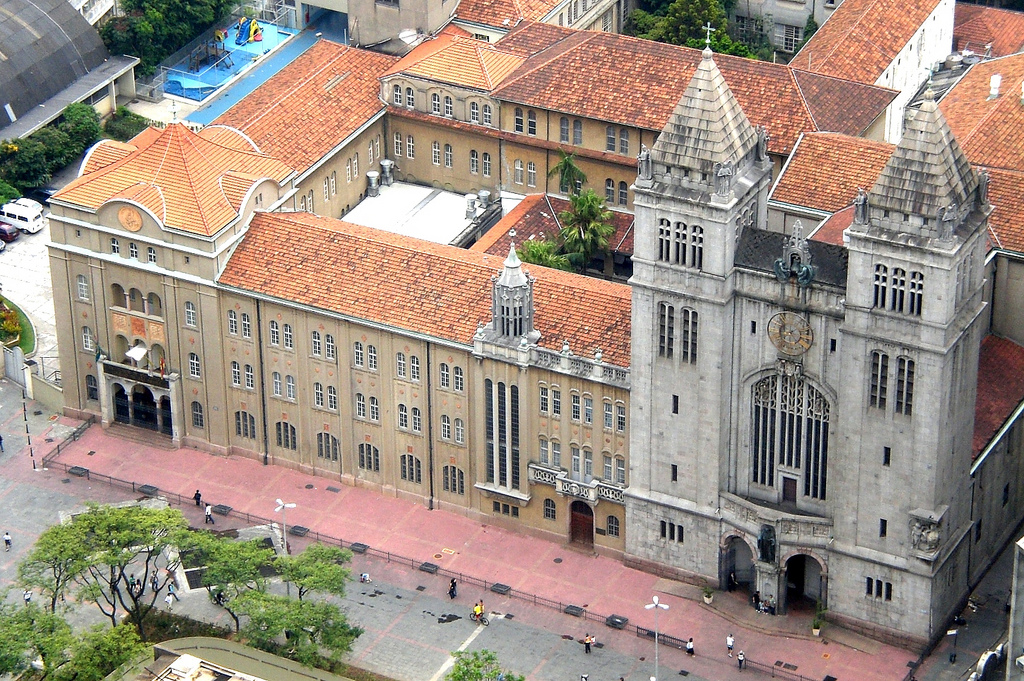
Perched on a hill overlooking the quiet town of Luz, the Monastery of São Bento feels like a place where time has gently paused. Its whitewashed walls, weathered yet still commanding, rise above the surrounding streets, a silent witness to centuries of history. Founded by Benedictine monks in the late 1500s, the monastery was more than a spiritual refuge—it became a cornerstone of the region, shaping the lives of those who lived in its shadow. The heavy oak doors, the secluded courtyards where monks once prayed in solitude, even the worn stone steps—everything here carries the weight of the past, not as a relic, but as something still very much alive.
The architecture tells its own story, blending the simplicity of colonial design with the ornate flourishes of Brazilian Baroque. From the outside, the monastery appears almost austere, its facade uncluttered by unnecessary decoration. But step inside, and the space unfolds in layers of intricate detail. Soaring ceilings are adorned with faded frescoes, their colors softened by time. The wooden altars, carved with precision, gleam under a thin layer of gold leaf, a technique known as *talha dourada* that makes the altars seem to glow in the dim light of the church. The main altar, in particular, is a masterpiece of craftsmanship, its gilded surfaces catching the light in a way that feels almost sacred.
Beyond its religious significance, the monastery played a vital role in the cultural and intellectual life of Minas Gerais. During the 17th and 18th centuries, it was a center of learning, where monks taught reading, writing, and trades to the local population. Some even offered music lessons, introducing European compositions to a new world. The Benedictines also acted as mediators between the Portuguese colonizers and the indigenous people, though their efforts to ease tensions were often overshadowed by the harsh realities of the time. Today, the monastery remains an active place of worship, its walls holding the memories of generations who passed through its doors.
The inner courtyard is where the monastery’s dual identity—European tradition and Brazilian adaptation—becomes most apparent. Enclosed by arched walkways, it resembles the cloisters of medieval Europe, yet the palm trees and flowering shrubs give it a distinctly local character. A small fountain trickles at its center, its sound mingling with the rustle of leaves. Even on the warmest days, the courtyard offers respite from the heat, the arches casting long shadows that shift with the sun. It’s easy to imagine monks pacing these paths centuries ago, lost in thought or conversation.
What makes São Bento special is its quiet persistence. Unlike many historic sites that have been turned into museums, this monastery is still a living place. Services are held in the chapel, and if you’re lucky, you might hear the monks chanting Gregorian hymns, their voices echoing under the vaulted ceilings. The sound is haunting, a reminder of the continuity between past and present. The library, too, feels alive, with shelves of ancient books, some dating back to the 1600s. The refectory’s massive oak tables, the kitchen’s copper pots, even the worn stone floors—all of it suggests a place that has never stopped functioning, even as the world outside has changed.
For the town of Luz, the monastery is more than just a landmark. It’s a symbol of endurance, a place where the rhythm of life moves at its own pace. Locals treat it with reverence, and visitors often leave surprised by how untouched it feels. There are no crowds, no signs warning you not to touch, no guided tours rushing you along. Instead, there’s space to wander, to sit in the courtyard and listen to the birds, or to stand in the chapel and let the light filtering through the stained glass wash over you.
The monastery doesn’t demand attention—it simply exists, as it has for centuries. You might come for the architecture, but you’ll stay for the atmosphere. The way the light slants through the windows in the late afternoon, the scent of old wood and incense lingering in the air, the sense that the walls have seen countless lives unfold—it all adds up to something rare. Here, history isn’t something to be observed from behind a rope. It’s something you can almost touch, if you’re quiet enough to listen.