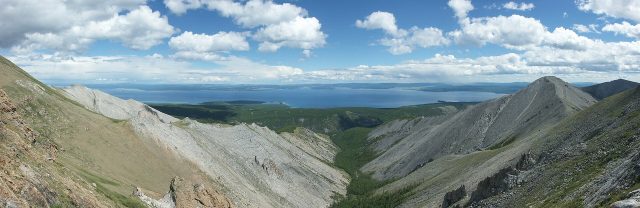
Danzadarjaa Monastery sits quietly on the shores of Khövsgöl Lake, a short distance from the small settlement of Khatgal. It doesn’t announce itself with grand facades or tourist crowds—just a cluster of modest wooden buildings nestled among rolling hills and larch forests. The real draw isn’t what you see at first glance, but what you feel: the stillness, broken only by the wind through the trees or the distant murmur of monks chanting. There are no guided tours here, no souvenir stalls, just the quiet rhythm of a place that has endured time and history.
The monastery’s story begins in the 18th century, when Buddhism flourished across Mongolia. Danzadarjaa was one of many religious centers built during this era, but its fate took an unusual turn. While most monasteries were destroyed during the political upheavals of the 1930s, this one survived, though not unscathed. For decades, its buildings stood abandoned, their walls bearing the marks of neglect. Revival came slowly in the late 20th century, and today, the monastery functions again, though on a smaller scale than in its heyday. The past lingers in the weathered wood and faded murals, a quiet testament to resilience.
The architecture here is unassuming, reflecting the practical traditions of northern Mongolia. Wooden structures with carved details, low roofs covered in wooden shingles, and small stupas scattered across the grounds—nothing ostentatious, just solid, functional design. The main temple is the most imposing building, its heavy doors and windows adorned with intricate patterns. Inside, the walls are covered in old frescoes depicting Buddhist saints and scenes from the life of the Buddha, their colors muted by time and damp. Nearby stands a suburgan, a stupa symbolizing spiritual purification, while the remains of old monks’ cells hint at the community that once lived here.
Life at Danzadarjaa moves at the pace of ritual. Mornings begin with prayers, the sound of bells and drums drifting through the air. Monks in deep red robes perform ceremonies that have been passed down for centuries, their voices rising and falling in ancient chants. Visitors are welcome to observe, to sit in silence, or even join in meditation. There’s no pressure, no expectation—just the quiet invitation to be present. During services, photography is discouraged, and most people respect the unspoken rule, allowing the space to retain its sense of reverence.
The surroundings are as much a part of the experience as the monastery itself. Khövsgöl Lake, often called Mongolia’s Blue Pearl, lies just a short walk away. Its waters are so clear that on a sunny day, you can see the lakebed several meters down. In summer, the water is bracingly cold, even at the height of the season, while winter transforms the lake into a vast sheet of ice. The landscape around the monastery is a mix of open pastures and dense forests, where yaks graze and deer move silently through the trees. Locals often come here to gather medicinal herbs, a tradition that has endured for generations.
Danzadarjaa isn’t just a destination for pilgrims. It draws travelers seeking solitude, artists inspired by the stark beauty of the landscape, and those curious about Mongolia’s living history. There’s no accommodation within the monastery, but Khatgal offers simple guesthouses where you can stay the night and try traditional dishes like buuz (steamed dumplings) or airag (fermented mare’s milk). The journey from Khatgal is easy—just a short taxi ride or a pleasant walk if the weather is fair.
Winter here is especially striking. Snow blankets the monastery’s roofs, the trees, and the surrounding hills, while the frozen lake stretches out like a silent expanse. The cold keeps most visitors away, leaving the place feeling suspended in time. Summer brings a different kind of life, particularly in July during the Naadam festival, when the region comes alive with horse races, archery competitions, and nomadic families setting up their gers. Yet even during these lively days, the monastery remains a place of calm, a counterpoint to the festivities beyond its walls.
For many Mongolians, Danzadarjaa is more than a historical site—it’s a living connection to their spiritual heritage. Rituals performed here carry deep meaning, passed down through generations. Walking clockwise around the stupa is believed to bring good fortune, while offering a hadag, a ceremonial silk scarf, is a sign of respect. These small acts turn a visit into something more than sightseeing; they offer a glimpse into the traditions that shape daily life in Mongolia.
If you find yourself here, take your time. Spend a few hours wandering the grounds, sitting by the lake, or listening to the wind in the trees. Danzadarjaa isn’t a place to rush through. It’s where the past feels tangible, where the landscape holds stories, and where the quiet has a weight of its own. For those who come seeking the essence of Mongolia—its vastness, its stillness, its unspoken history—this monastery offers a rare and understated kind of magic.