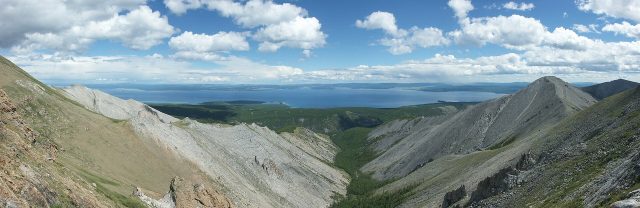
Khatgal is a quiet settlement tucked away in northern Mongolia, where life moves to the rhythm of Lake Khövsgöl and the wind sweeping down from the surrounding mountains. There’s no rush here—just the steady pace of a place where the land dictates the tempo. The central square is the heart of this small town, though it doesn’t resemble the plazas of Ulaanbaatar. Instead, it’s a modest gathering spot where herders from nearby pastures, shoppers stocking up on supplies, and travelers passing through on their way to the lake or the Russian border converge.
The square itself is unassuming, with a few low buildings arranged around an open space. Most of the structures are single-story, built from wood or corrugated metal. The local administration building stands at the center, its wide steps leading up to a flagpole with the Mongolian flag fluttering above. Nearby, small shops sell groceries, clothing, motorcycle parts, and jerrycans of fuel. In summer, vendors set up stalls with dried meat, wild berries, and dairy products from the surrounding countryside. The buildings are practical, serving the needs of those who live and work in Khatgal.
Khatgal’s history is tied to its role as a crossroads. Before it became a town, traders, herders, and travelers met here, exchanging goods and news along routes between Mongolia and Russia. During the Soviet era, the first administrative buildings were constructed, and Khatgal grew into a hub for trade and logistics. Today, the square remains a meeting point for locals, tourists, fishermen, and ger camp owners.
The atmosphere changes with the seasons. In summer, children kick soccer balls across the dusty ground, elders sit on benches, and musicians sometimes play the morin khuur in the evenings. Winter covers the square in snow, slowing life to a crawl. Spring and autumn bring rain, damp earth, and mist clinging to the mountains.
For visitors, the square offers a glimpse into rural Mongolian life. There are no museums or monuments—just a café where you can order buuz or a cup of airag from a local woman. Tourists pause here on their way to the lake, their conversations mixing with the town’s sounds. The real story of Khatgal isn’t in the photos but in the quiet moments between them.
Time moves differently here. Sit on a bench and watch: a man leading a horse, children chasing a ball, old men debating news. The square isn’t just a place to pass through—it’s a place to pause.
If you’re in Khatgal, don’t rush to the lake. Spend a few hours on the square. Wander the shops, talk to a local, or just sit. You might begin to understand life in Mongolia’s countryside—not just the landscapes or festivals, but the quiet existence of a place where people live in step with the land. When you leave, you’ll take more than photographs with you.