Nestled in the heart of Alberta’s badlands, Drumheller feels like a place where time has settled differently. The town itself is small, a quiet cluster of streets framed by rolling prairie and jagged rock formations that seem to ripple under the endless sky. But what makes this corner of Canada truly distinctive isn’t just the landscape—it’s the sense that the land itself remembers something far older than human history. Here, among the eroded hills and dry coulees, the past isn’t just preserved in books or museums; it’s written into the very earth. And nowhere is that more evident than at the World of Dinosaurs, a place where the ancient world isn’t just studied—it’s brought back to life.
The idea for the park took root in the 1950s, when paleontologists began uncovering fossil beds in the surrounding badlands. The discoveries were extraordinary—not just fragments, but entire skeletons, some of the most complete ever found. The region had been a floodplain millions of years ago, a fertile delta where dinosaurs thrived, died, and were buried under layers of sediment. Over time, erosion exposed their remains, turning the badlands into one of the richest dinosaur fossil sites in the world. Local enthusiasts and scientists saw an opportunity not just to excavate, but to share this legacy with the public. What began as a modest collection of finds grew into something far more ambitious: a park where visitors could walk among life-sized reconstructions of the creatures that once roamed these very lands.
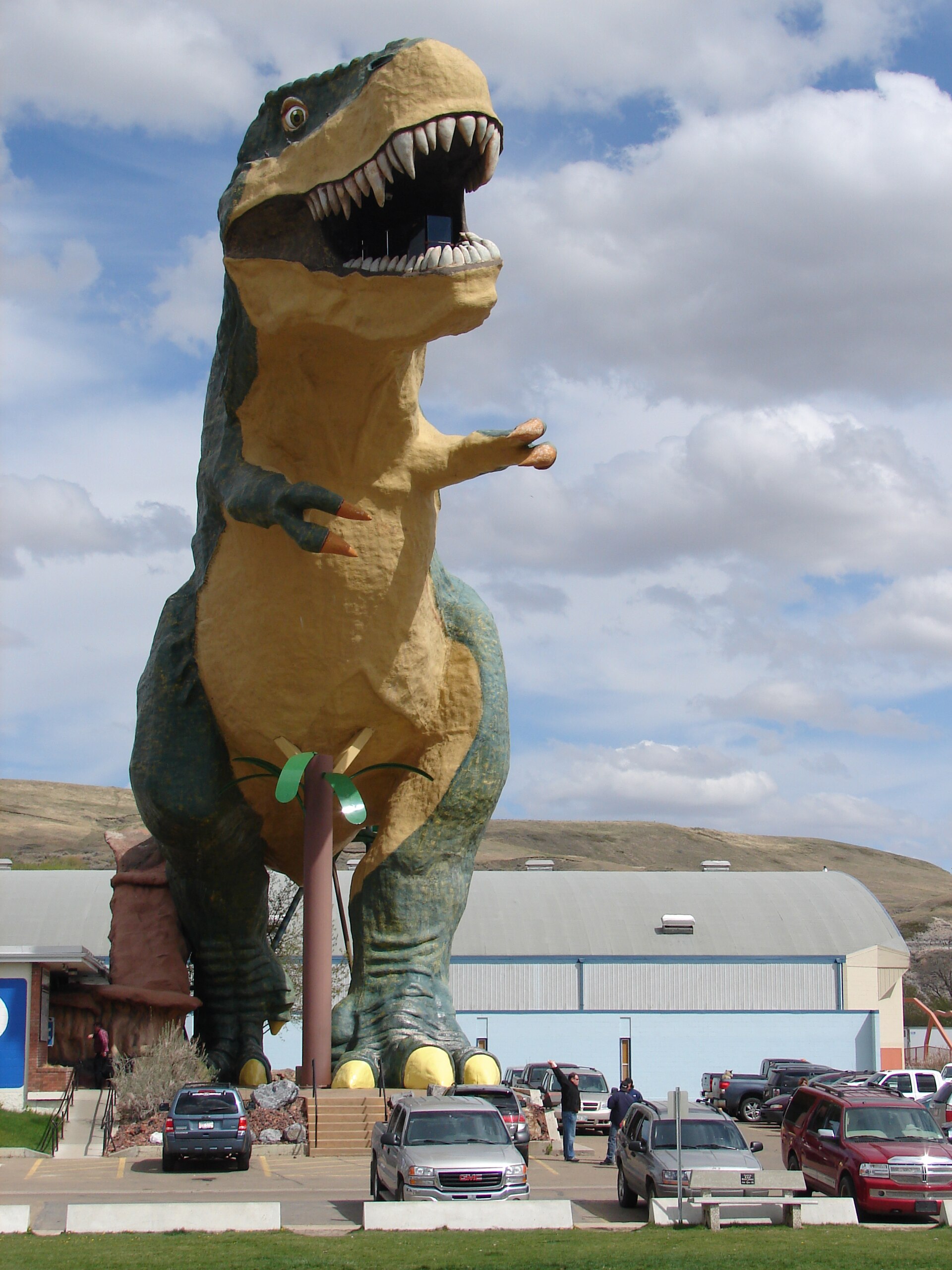
Walking through the World of Dinosaurs feels less like visiting a museum and more like stepping into another era. The park sprawls across a landscape that hasn’t changed much since the Cretaceous period—dry, windswept, and dotted with strange rock formations that look like the backdrop of a prehistoric scene. Along the winding paths, towering figures of dinosaurs emerge from the hills, their massive forms casting long shadows in the afternoon sun. There’s the familiar silhouette of a Tyrannosaurus rex, its jaws agape, and the three-horned profile of a Triceratops, but also lesser-known species like the spiky-backed Stegosaurus or the long-necked Alamosaurus. Each model is meticulously crafted, based on the latest scientific research, with attention to posture, scale, and even texture. Some stand as tall as a two-story building, and when you stand beneath them, it’s impossible not to feel a flicker of awe—or unease—at the sheer size of these creatures.
What makes the park more than just a collection of statues is its effort to recreate not just the appearance of dinosaurs, but their world. Sound systems hidden among the exhibits play deep rumbles, roars, and hisses—attempts to imagine what these animals might have sounded like, based on fossil evidence and comparisons to modern reptiles and birds. The effect is eerie, especially in the quiet of the badlands, where the wind carries the sounds across the open space. For those who want to go deeper, the park offers educational programs that explain how paleontologists piece together the past from fragments of bone, how ecosystems functioned millions of years ago, and why this particular region became such a treasure trove of fossils. In the summer, guided tours and evening light shows add another layer to the experience, turning the park into a place where history feels almost tangible.
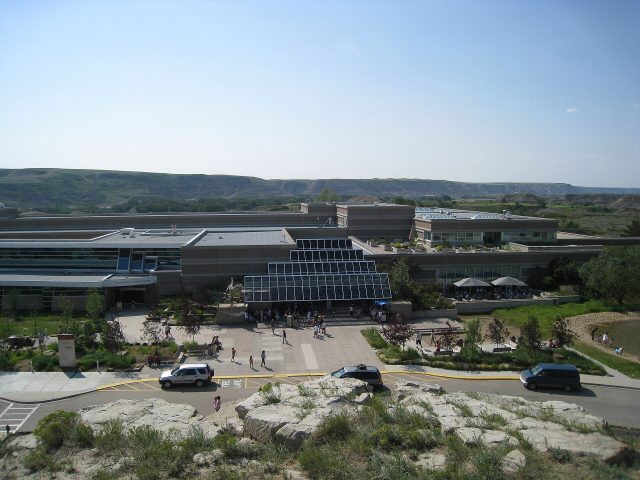
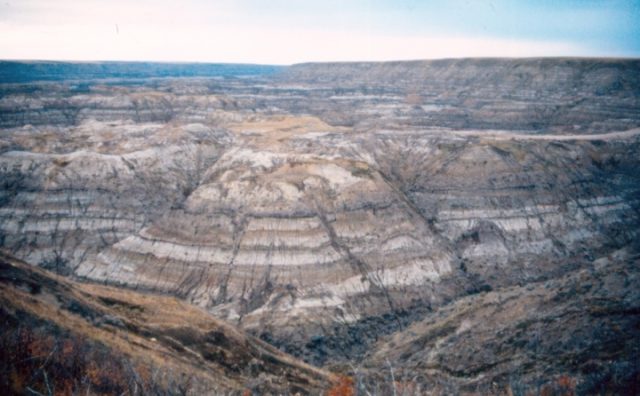
The badlands themselves are part of the story. The same forces that exposed the fossils—wind, water, and time—have sculpted the landscape into something surreal. The hills are striated with layers of sediment, each band a different shade of brown, red, or gray, like the pages of a book laid open. This is the Dinosaur Provincial Park, a UNESCO World Heritage Site just a short drive from Drumheller, where visitors can see real excavation sites and even watch paleontologists at work. The World of Dinosaurs serves as a kind of gateway to this larger history, a place where the science behind the discoveries is made accessible without losing its wonder. Inside the park’s museum, displays of real fossils—teeth, claws, and the occasional footprint—sit alongside interactive exhibits that explain how these fragments are used to reconstruct entire creatures.
The architecture of the park blends seamlessly with its surroundings. The main buildings have a retro, almost mid-century feel, with low-slung roofs and wooden beams that evoke the era when the first major fossil discoveries were being made. There’s a sense of practicality to the design, as if the structures were built to withstand the harsh prairie climate while serving a single purpose: to tell the story of the land. Inside, the exhibits are a mix of the scientific and the speculative. Skeletons are displayed alongside artist’s renderings of what these animals might have looked like in life, their skin textures and colors based on educated guesses. It’s a reminder that paleontology isn’t just about digging up bones—it’s about imagination, about filling in the gaps between what we know and what we can only guess.
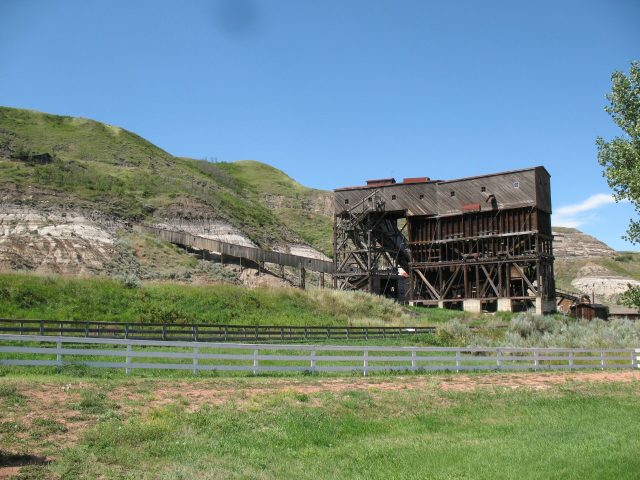
Drumheller itself is a town that wears its history lightly. It’s small enough that you can walk from one end to the other in an afternoon, but its past is layered—from the Indigenous peoples who first traversed these lands to the coal miners who settled here in the early 20th century. The World of Dinosaurs is just one piece of that story, but it’s a piece that connects the town to something far older and more profound. Nearby, the Atlas Coal Mine offers a glimpse into the region’s more recent industrial history, while the Hoodoos—a cluster of tall, thin rock spires—stand as natural monuments to the same forces that shaped the badlands. Together, these sites create a sense of place that’s hard to find elsewhere. Here, the past isn’t just something you read about; it’s something you can see, touch, and even walk through.
What lingers after a visit to the World of Dinosaurs isn’t just the memory of the dinosaurs themselves, but the way the park makes the past feel immediate. It’s easy to think of history as something distant, something that happened to other people in other places. But standing among the towering figures of creatures that lived millions of years ago, in a landscape that hasn’t changed all that much since their time, it’s impossible not to feel a connection to something larger. The wind still blows across the same hills, the same sun sets over the same horizon, and for a moment, the boundary between then and now feels thinner than it should. That’s the real magic of the place—not just that it brings the past to life, but that it makes you feel like a part of it.