Nestled along the historic Georgian Military Highway, Pasanauri is a quiet village where the Caucasus Mountains rise sharply from the earth, their slopes still wild and untamed. Here, mineral springs have bubbled up from the ground for centuries, drawing those who seek not just the promise of healing waters, but something simpler—a moment of stillness in a place where time seems to move at its own pace. Unlike the more famous spa towns of Borjomi or Tskaltubo, Pasanauri has remained largely untouched by mass tourism. There are no crowds, no polished resorts, just the quiet murmur of the Aragvi River and the faint scent of sulfur rising from the earth.
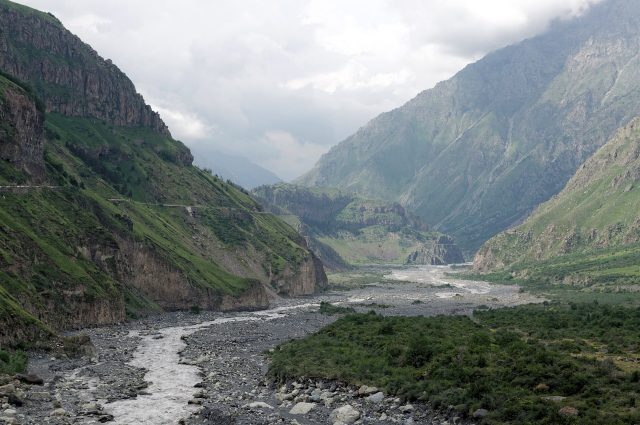
The springs themselves lie a short distance from the village, scattered along the riverbank in a landscape of rugged beauty. The water varies from scalding hot to barely warm, always thick with minerals—iron and sulfur leave a faint metallic tang on the tongue. Locals have long believed in its restorative powers, using it to soothe aching joints, skin ailments, and digestive troubles, though scientific studies on its benefits are scarce. Yet the real draw isn’t just the water; it’s the chance to sit by the river, listen to the rush of the current, and let the weight of the world slip away. The springs are unassuming—natural pools lined with stone or simple concrete basins built into the riverbank. There’s no grand architecture here, no spa complexes with marble floors. In the Soviet era, there were attempts to develop the area into a proper resort, but those plans never took hold. Today, the place has a slightly weathered charm, as if nature is slowly reclaiming what was briefly shaped by human hands.
Pasanauri isn’t just a destination; it’s a pause on a much older journey. The Georgian Military Highway, carved through the mountains in the 19th century, was once the main artery connecting Georgia to Russia, winding over the treacherous Jvari Pass. Along its route, ancient watchtowers, crumbling churches, and tiny villages cling to the hillsides, each with its own stories of travelers, traders, and soldiers who passed through. Pasanauri was one of those essential stops—a place to rest, refill water skins, and brace for the climb ahead. The road is quieter now, but the echoes of its past linger in the stone bridges and the way the wind carries the sound of distant church bells.
The water here doesn’t just flow; it forces its way to the surface, bursting from the earth in small, insistent fountains. Some of the natural pools that once dotted the area have silted up or been lost to landslides over the years, but enough remain to give a sense of what this place must have been like centuries ago. On a hot day, the contrast between the cool mountain air and the steam rising from the warm springs creates a hazy, almost dreamlike atmosphere. The water collects in shallow pools surrounded by grass and rocks, inviting visitors to wade in or simply sit at the edge, letting the minerals work their quiet magic.
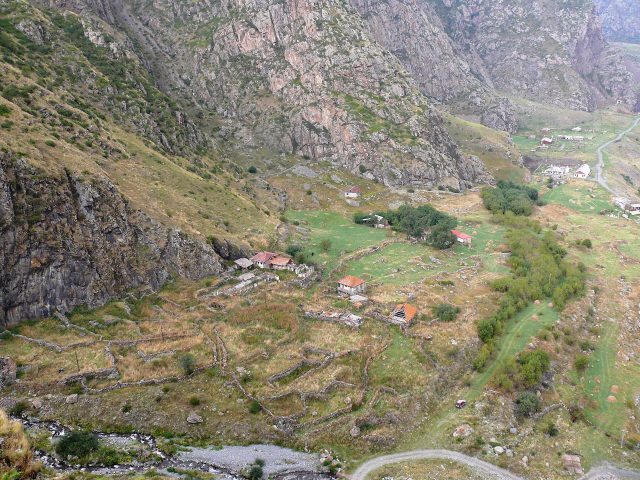
There’s a raw, unpolished honesty to Pasanauri. There are no luxury hotels or tourist traps, just a handful of guesthouses where locals offer a bed and a meal—khachapuri still warm from the oven, fresh cheese, and strong tea. The people here are welcoming but unobtrusive, used to travelers but not defined by them. In the evenings, when the sun dips behind the peaks and the air fills with the scent of woodsmoke and wild herbs, it’s easy to understand why some visitors keep returning. There’s a sense of being both nowhere and exactly where you’re meant to be.
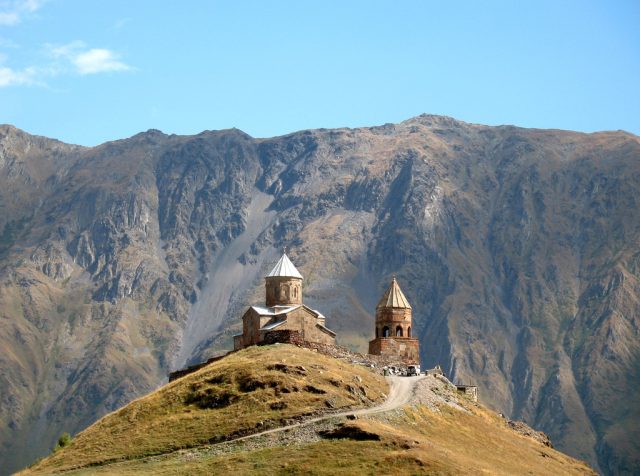
Reaching Pasanauri from Tbilisi takes about two hours, a journey that winds through some of Georgia’s most dramatic landscapes. The road passes Mtskheta, the ancient capital, where the golden domes of Svetitskhoveli Cathedral glint in the sunlight, and the Jhinvali Reservoir, its waters a deep, unnatural blue against the green of the mountains. Pasanauri isn’t the end of the road—it’s a waypoint, a place to catch your breath before heading higher, toward Kazbegi and the Gergeti Trinity Church, or farther still, toward the Russian border. But even a single day here leaves an impression, a quiet understanding of why this stretch of the Caucasus has always felt like something out of time.
The water in Pasanauri may not have the fame of Borjomi or the commercial appeal of other Georgian mineral springs, but that’s precisely what makes it feel real. There are no branded bottles, no glossy advertisements—just the earth, the water, and the people who have always known its power. This isn’t a place for those seeking entertainment or distraction. It’s for those who want to step away from the noise, to sit by a river that has flowed for centuries, and to remember what it’s like to simply be still. If you ever find yourself on the Georgian Military Highway, don’t rush past. Stop for a while. The mountains will still be there when you’re ready to move on.