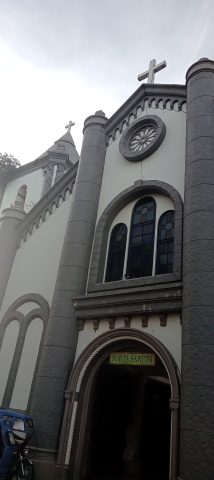
Tumauini’s town hall is one of those quiet places in the Philippines that feels suspended in another era, a relic of the colonial past that still breathes with the rhythms of daily life. It stands not just as the administrative heart of a small northern Luzon town, but as a living monument to the layers of history, culture, and architecture that define this corner of the country. Built in the late 1700s, the building has served its original purpose for centuries, though its role has expanded over time—now a symbol of continuity, where the past and present coexist without fanfare.
The architecture is striking in its balance of grandeur and practicality, especially considering its distance from the colonial power centers of the time. Designed in the Baroque style typical of Spanish settlements, the structure carries distinct local adaptations. The facade is adorned with intricate brick and stonework, its patterns both decorative and functional, shielding the interior from the harsh tropical sun and sudden downpours. The heavy wooden doors and shutters, worn smooth by generations of use, speak to a time when durability mattered as much as aesthetics. The bell tower, once a lookout post for pirates or rival forces, now stands as a silent sentinel over the town, its purpose shifted but its presence unchanged.
Inside, the building retains much of its original character, though time has softened some of its edges. High ceilings with exposed wooden beams, spacious halls bathed in soft, filtered light, and antique chandeliers lend an air of quiet dignity. The town hall still functions as a government building, hosting meetings and official events, but visitors are welcome to wander its corridors during quieter moments. Some rooms display old photographs and documents, offering glimpses into the town’s past—stories of resilience, change, and the slow march of progress.
What makes Tumauini’s town hall special is its unassuming authenticity. Unlike the polished tourist attractions of more famous destinations, this is a place that hasn’t been repackaged for outsiders. The town moves at its own pace, and the building remains a natural part of its fabric. For locals, it’s not a museum piece but a familiar landmark—where decisions are made, celebrations are held, and people gather in the shade of its walls to escape the midday heat. There’s no performative reverence here, just the quiet pride of a community that knows its history is worth preserving.
The story of the town hall is inseparable from that of Tumauini itself. Founded by Spanish colonizers in the 17th century as a northern outpost, the town was once a remote frontier where indigenous communities and missionaries coexisted uneasily. The building was erected as a symbol of authority, a physical manifestation of colonial order. Over time, it became more than just a seat of power—it was where laws were debated, justice was administered, and festivals brought the town together. It witnessed revolts, wars, and natural disasters, yet each time it was rebuilt, its original form preserved as a testament to endurance.
Today, the town hall stands as a reminder of the Philippines’ complex journey from colony to independent nation. There’s no grandiosity here, no attempt to impress with scale or opulence. Instead, there’s something far more compelling: the sense of a place that has simply endured. The creak of floorboards, the rustle of old papers, the faint echoes of voices long gone—these details make the building feel alive, as if the past is still lingering in the corners. It’s the kind of place that doesn’t demand attention but rewards those who take the time to notice.
A visit here isn’t about ticking off a landmark or snapping the perfect photo. It’s about stepping into a space where history isn’t just remembered but still felt. You can imagine the heated debates over taxes, the signing of decrees, the townspeople gathering in the square outside to hear the latest news. The small park surrounding the building, shaded by ancient trees, is where locals still come to relax, where festivals and markets spill into the streets, and where the town hall remains at the center of it all, just as it has for centuries.
Tumauini rarely appears in guidebooks, and that’s part of its charm. There are no crowds, no souvenir stalls, no scripted tours—just a town living its life, with the town hall as its quiet anchor. For travelers who venture here, it’s an opportunity to see the Philippines beyond the postcard images: not as a tropical getaway, but as a country with depth, character, and a history that’s still unfolding. The town hall, in its understated way, offers a glimpse of that reality—a place where the past isn’t just preserved, but still very much alive.